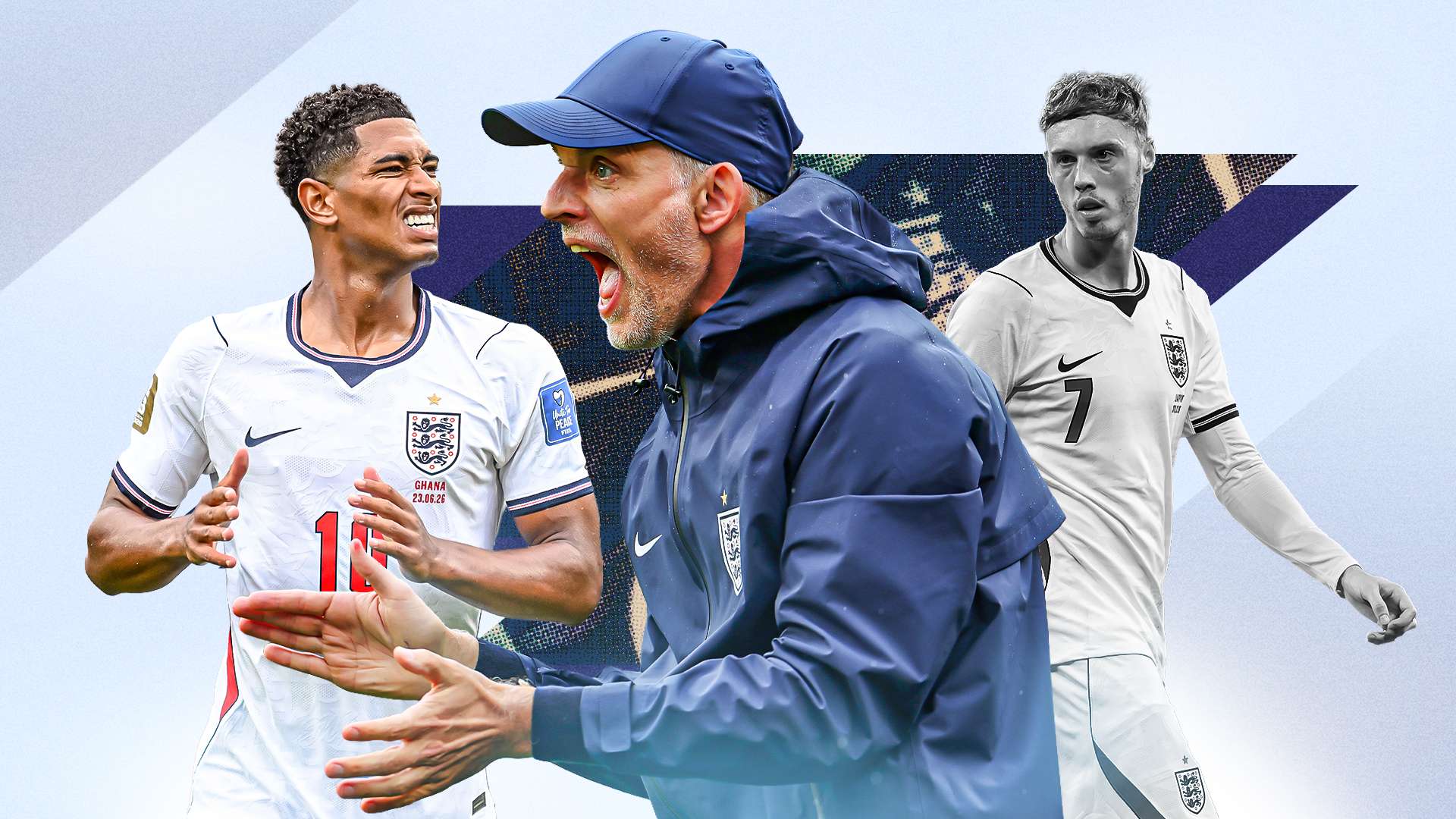
England supporters have witnessed Cole Palmer deliver for the national team before. In the Euro 2024 final, he nearly turned around a poor performance, scoring a crucial equaliser and injecting life into a seemingly defeated Three Lions side against Spain. However, as has been the case in many tournaments, England ultimately succumbed to defeat.
It is natural for fans to question decisions when results disappoint, and that has been the case following England’s uninspired 0-0 draw with Ghana on Tuesday. Many have criticised Thomas Tuchel’s decision to omit versatile attacking talents such as Palmer, arguing that players who can 'offer something different' were exactly what the team lacked.
The Chelsea midfielder’s absence from England’s World Cup squad stems largely from a series of underwhelming club performances over the last year and a half. Phil Foden, another player of similar style – though one who has also struggled to make an impact for England on the big stage – was likewise left out following two inconsistent seasons with Manchester City. After the scoreless draw in Boston, critics have been quick to question Tuchel’s selection choices.
However, such reactions may be premature. England’s difficulties against Ghana were primarily born out of a lack of creativity in midfield, but they also faced an opponent wholly uninterested in open football – something Ghana manager Carlos Queiroz openly admitted after the match. The 90 minutes were a frustrating display of a tactical system meeting its perfect counter.
When facing teams willing to play expansively, with space to exploit and opportunities to circulate the ball, Tuchel’s approach can be highly effective. For that reason, patience and trust in his process may be warranted.
Stalemate
England dominated possession with 80 percent of the ball against the Black Stars, completing close to 600 passes and registering 19 shots – though just three were on target. It took 36 minutes for them to fashion a chance from open play, as Declan Rice headed over the bar. Their best opportunity came in the 87th minute, when Nico O’Reilly’s header struck the crossbar and Harry Kane fired the rebound over the goal.
The game was characterised by endless sideways passing. Wingers Anthony Gordon and Noni Madueke were tightly marked whenever they received possession, while Jude Bellingham and Rice found themselves with little room to manoeuvre between Ghana’s compact lines.
“I am so proud of the way our players fought during the game, how much they stood behind the plan,” Queiroz said after full-time. “When you have to defend, you defend. I cannot play samba when they play rock and roll.”
Indeed, Ghana made no attempt to attack. Queiroz admitted their plan was to frustrate England for the first 45 minutes, employing a deep-lying block with all 11 players behind the ball. England were allowed possession only in non-threatening wide or central areas far from goal.
The outcome was a performance reminiscent of England’s less inspiring years – slow, predictable, and devoid of imagination. The team appeared hesitant to take risks in pursuit of victory.
Surprising squad
Tuchel has faced significant criticism both from supporters at the venue and from fans across the Atlantic. Yet such backlash was inevitable after his first disappointing result, given the bold selections in his squad.
His decision to leave out the likes of Foden, Palmer, Adam Wharton, and Trent Alexander-Arnold divided opinion. Instead, Tuchel assembled a squad suited for his preferred 4-2-3-1 formation, featuring a defined No.10, wide wingers who can beat defenders one-on-one, and balanced full-backs capable of filling central gaps. This structure relies on coordinated movement – when Kane drops deep, the wingers make runs behind, and when Rice and Elliot Anderson pull markers out, space opens for Bellingham.
These tactical principles are fundamental at elite level football, but they differ sharply from the philosophy under former manager Gareth Southgate, who encouraged creativity “off the cuff” and prioritised fielding his best players regardless of structure.
While Southgate achieved strong finishes – notably two European Championship finals – England often played uninspiring football for long stretches. Tuchel’s appointment was a natural countermeasure, though it has unsettled those who preferred Southgate’s approach.
Costly omissions?
Under Southgate, neither Palmer nor Foden would likely have been excluded, even amid poor form. Palmer was far from his best for Chelsea last season, while Foden’s performances dipped significantly after winning the PFA Player of the Year award in 2024. Tuchel has made clear that current form is his primary selection criterion, and neither player met his standards.
Nevertheless, their natural ability is undoubted. On pure talent, both rank among England’s finest. But within Tuchel’s system, their place is less obvious. Bellingham is the first-choice attacking midfielder, with Morgan Rogers and Eberechi Eze next in line, while Palmer is not a traditional right-winger of the type Tuchel prefers – and neither is Foden.
Reasons for hope
Tuchel referenced England’s opening match against Croatia after the Ghana draw, noting that it too posed challenges. England initially struggled, but a 20-minute spell in the second half showcased their attacking potential. The match finished 4-2, though it could easily have been a larger margin. More importantly, it demonstrated the system’s potency when space is available – England can overwhelm opponents when conditions suit.
Plenty of quality
Despite debates over omissions, this England squad remains packed with top-class talent. Bellingham, though not a classic No.10, is the same player who broke Cristiano Ronaldo’s goal-scoring records upon joining Real Madrid. Kane remains in contention for the Ballon d’Or, depending on England’s performance this summer. Meanwhile, Rogers, Marcus Rashford, Eze, and Bukayo Saka provide a wealth of attacking options.
Tuchel has rotated heavily, leaving Rogers, Eze, Saka, and Rashford on the bench at times. Few nations outside France or Spain can boast such depth. Tuchel’s emphasis on the concept of “starters” and “finishers” underscores his intent to cultivate healthy internal competition.
If England fall short in this World Cup, it will not be for lack of individual quality.
Change of plan
During his post-match press conference, Tuchel hinted that he might have a tactical adjustment in mind for teams employing ultra-defensive setups similar to Ghana’s.
“I had an idea in the last water break,” he revealed. “I was a bit hesitant. But I have an idea of how we can maybe commit a few more players centrally. I don’t want to explain it now because we might try it later in the tournament. But I don’t think we’ve become predictable.”
Whatever that new plan entails, Tuchel may need to deploy it soon. While renowned for his tactical acumen, he has yet to show full adaptability in his England tenure. After early experimentation, he has largely stuck to one blueprint. Now, with pressure mounting, he must find innovative solutions. Panama, England’s next group opponent, are likely to employ a similar defensive strategy when they meet on Saturday.
Tuchel has his squad and his system. It’s time to trust that he also has the flexibility to steer England away from another World Cup disappointment in North America.