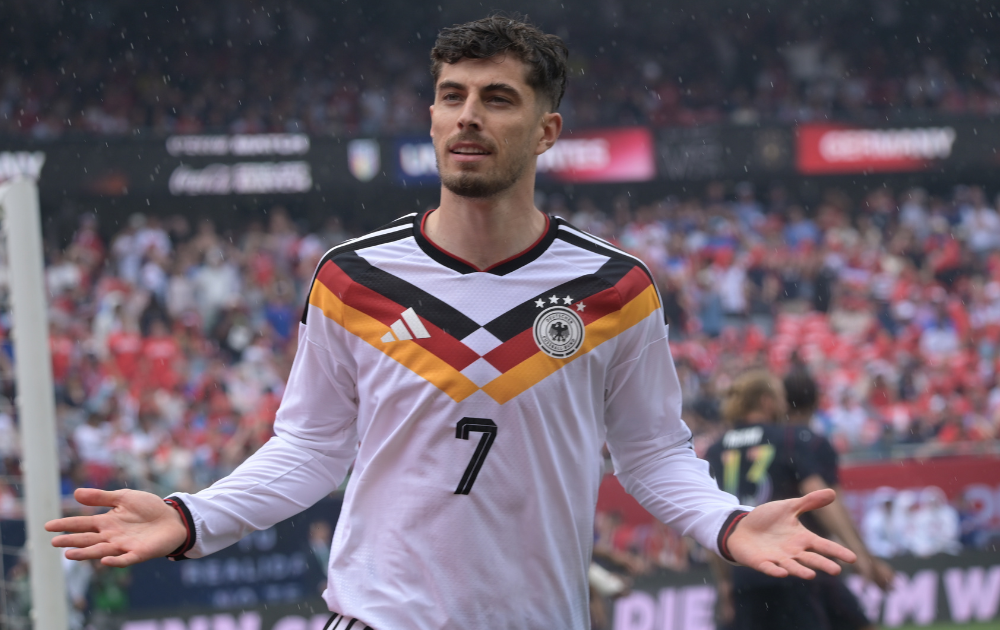
Germany have secured their place in the round of 32 at the World Cup. They are set to play at Gillette Stadium on Monday, June 29, with the winner advancing to Philadelphia for a round of 16 clash on July 4.
At first glance, there’s nothing problematic about this scenario, except that Germany still have one group stage match left. Their points tally is already out of reach for Ecuador, yet if the South Americans manage a win, Ivory Coast could still join Germany on six points.
Even then, it would make no difference. Even if Ivory Coast somehow overturned Germany’s massive advantage in goal difference, it wouldn’t matter. Germany defeated Ivory Coast in their earlier meeting, and under the new rule, head-to-head results decide group positions. This is the first World Cup edition where that system is being applied, and Germany’s win over Ivory Coast in their second match sealed their top spot.
It’s not an ideal scenario. This issue will likely impact several groups across the 2026 World Cup, dulling what should have been a set of thrilling simultaneous group finales—a disappointing outcome for many fans.
Group E offers a clear example of the problem. Germany’s goal difference was heavily boosted by their 7-1 hammering of Curacao. While that statistic might not seem like the most direct way to separate Germany and Ivory Coast in a tie, it would have made the final matches significantly more meaningful.
There’s no absolute right or wrong method for deciding tiebreakers, but the way this group stage has been structured and played out has left a slightly unsettling feeling as the final fixtures approach.
“Everyone understood the old rule based on goal difference,” wrote Daniel Storey of The i Paper, who is driving solo across the United States to experience everything the World Cup has to offer.
“You had three matches, and every one of them carried equal weight. Now, one game ends up being far more decisive—but you only realise which one after the fact.”
That perspective has gained traction among analysts, pundits, and commentators alike, and it’s easy to see why. When a tiebreaker that wasn’t an issue in one World Cup suddenly becomes one in the next, it’s worth questioning what changed.
However, the bigger issue isn’t just the flawed tiebreaker or Gianni Infantino’s unseemly attempts to align football with political figures like Donald Trump.
Scotland and South Korea woke up at their respective World Cup bases today uncertain whether they had qualified, despite having completed all three of their group matches.
This state of limbo, created by the tournament’s revived and uneven format, is a far greater mistake than the choice of an imperfect tiebreaker. It’s worth noting that the head-to-head rule doesn’t even apply to the ranking of third-placed teams.
One can argue that goal difference has flaws, just as head-to-head does. The current system may be worse, but both have their logic. What’s unacceptable is teams finishing their final group match and being left in the dark for days about whether they’ve qualified.
A 32-team format is the ideal size for a modern World Cup. Sixteen teams are too few, sixty-four far too many. The previous experiments with 24 and now 48 teams have only proved how awkward anything in between can be.
It may not be inherently unfair to rank third-placed teams and eliminate some, but forcing sides to wait for results elsewhere to decide their fate is unnecessarily clumsy and far more damaging to the tournament’s integrity than any questionable tiebreaker.
As the centenary of the World Cup approaches, there was talk of expanding the tournament again—to 64 teams. But 64 teams would mean 128 matches, including 96 group stage games—simply too much football.
That proposal was rejected in favour of sticking with a 48-team format, effectively repeating the same problems all over again.
A 32-team tournament leading seamlessly into a round of 16 is the perfect structure—no ranking of third-placed finishers, no long waits, and no dependence on results from unrelated groups.
While there are alternative ways to structure a 48-team competition, none matches the clean symmetry and competitive clarity of the traditional 32-team bracket. The beauty of that balance is mathematical—and unmistakably lost in the current setup.