Even today, no country in the world can predict when an earthquake will occur. But the few seconds between the start of an earthquake and the arrival of strong tremors can save the lives of many people. For this purpose, India has developed Earthquake Early Warning System for the Himalayan region. This technology can detect the initial P wave of an earthquake and send an alert a few seconds before a strong tremor occurs. However, this system does not predict earthquakes, but gives warning immediately after the earthquake starts. After all, let us understand how this technology works, in which areas it is being used and how much time people can get from it.
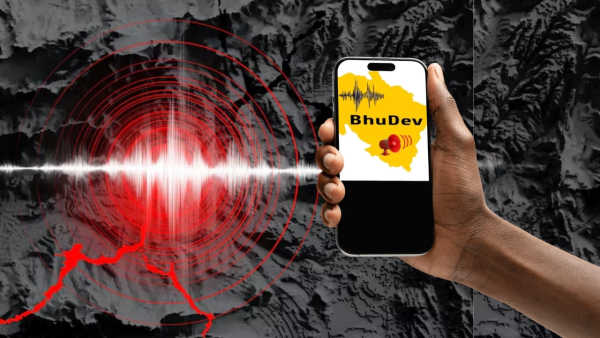
The government had told Parliament in December that India does not have any scientific technology to accurately predict earthquakes. But earthquake early warning system is being developed through real time seismic network in the Himalayan region. IIT Roorkee, in collaboration with the Uttarakhand government, has also developed a mobile app named BhuDEV, which works to provide instant alerts to the people. Along with this, the National Seismology Center is rapidly testing new algorithms for rapid identification of P wave, estimation of earthquake intensity and information about possible tremors.
When an earthquake occurs, the first wave that emerges is the P wave. It moves at the fastest speed within the earth and usually does not cause much harm. After this come secondary waves and surface waves, which cause the most destruction. The early warning system detects the P wave first. After this, after rapidly assessing the epicenter and possible impact of the earthquake, an alert is sent to distant areas. This gives people and administration a few seconds time in which emergency steps can be taken.
In India, at present this sensor network has been installed mainly in Garhwal and Kumaon regions. Sensors are installed near the active fault line so that the P wave can be detected immediately as soon as the earthquake starts. After this, an alert is sent to the cities below, which can give a few seconds before the strong shock reaches. However, this time depends on how far the concerned place is from the epicenter of the earthquake. If an area is very close to the center, there will be little or no warning time, while areas hundreds of kilometers away may get an extra few seconds. Japan, Taiwan and America have the most advanced such earthquake early warning systems in the world.