Documents for Indian Citizenship: Is an Indian passport the ultimate proof of citizenship? Find out what constitutes a valid legal document for proving Indian citizenship, based on statements from the Ministry of External Affairs and citizenship laws.
Documents for Indian Citizenship: A recent statement by the Ministry of External Affairs has sparked a nationwide debate. Whenever we are asked for identification, we confidently present our passport or other documents; however, the question now arises: if a passport is not the 'ultimate proof' of citizenship, then what exactly is the document that proves one is Indian?
This debate began when the Ministry of External Affairs clarified that a passport is primarily a 'travel document,' not a certificate of citizenship. In this article, we will explore the legal nuances and understand what this means for the average citizen.
What is the difference between a passport and citizenship?
Contrary to popular belief, passports and citizenship are governed by two separate laws. Understanding this distinction is crucial.
Passports Act, 1967: Passports are issued under this Act. Its primary objective is to facilitate international travel and verify an individual's identity during travel.
Citizenship Act, 1955: Indian citizenship is determined under this Act. It defines who qualifies as an Indian citizen and who does not.
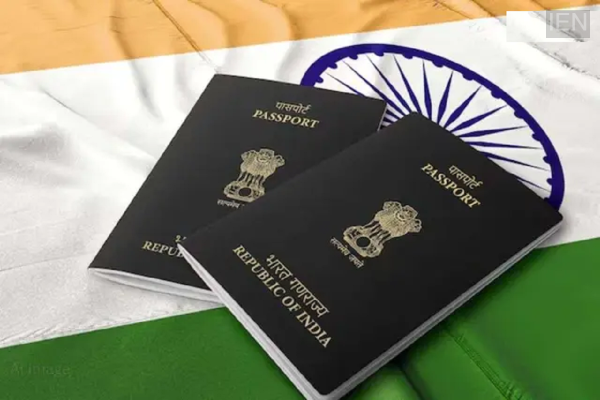
While holding a passport indicates that you are Indian, it is not legally the 'final, conclusive document' for citizenship. If an individual's citizenship is challenged in court, merely presenting a passport may not suffice.
Which documents are valid for proving citizenship?
In India, citizenship is not determined by a single 'universal card' but rather by the 'basis' on which citizenship was acquired. According to the law, there are five primary ways to acquire citizenship.
By birth: If you were born in India. By descent: Indian citizenship of parents.
By registration.
By naturalization.
By incorporation of territory: If a new area becomes part of India.
Birth certificates, school records, parents' documents, and certificates issued by the Ministry of Home Affairs are considered the most important documents for proving citizenship.
Will this debate affect the general public?
Many wonder if this clarification will cause difficulties for ordinary citizens—specifically those who lack sufficient records or concrete documents to prove their citizenship. In the future, the government might introduce an integrated policy to make the citizenship determination process more digital and streamlined, thereby avoiding confusion.
Cannot citizenship be proven using a passport?
A passport is a strong indicator of citizenship, but in cases of legal dispute, courts have refused to accept it as 'conclusive proof'.
If not a passport, then which is the most valid document?
A combination of a Voter ID, birth certificate, and government records substantiates citizenship claims.
Is the Aadhaar card proof of citizenship?
No, the Aadhaar card is merely 'proof of residence'; it is not a document proving citizenship.
Can foreign nationals also obtain an Indian passport?
Under the Passport Act, the Central Government can issue travel documents to foreign nationals in the public interest; this serves as a technical basis for the fact that a passport is not proof of citizenship.
Who should one contact if there is confusion regarding citizenship?
Citizenship matters fall under the jurisdiction of the Ministry of Home Affairs (MHA). In case of any legal ambiguity, contact your nearest District Magistrate's office or a legal expert.