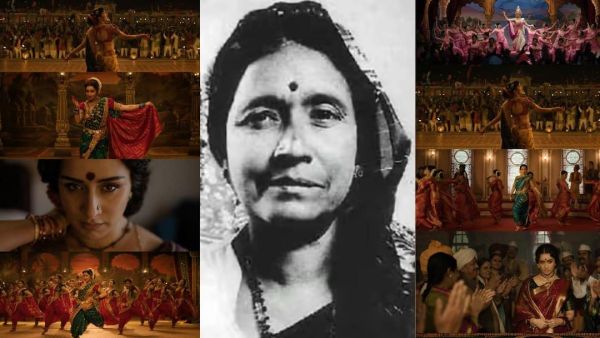
A woman walks off stage in the middle of a tamasha performance. Minutes later, she gives birth backstage and is ready to return to entertain the crowd. It sounds almost impossible to believe, yet this extraordinary story has long been linked to legendary tamasha and lavani artiste Vithabai Narayangaonkar.
With the teaser of Eetha, featuring Shraddha Kapoor in the lead role, sparking widespread curiosity, audiences are once again looking back at the remarkable life of one of Maharashtra’s greatest folk performers. Celebrated for her electrifying stage presence and deep love for traditional art, Vithabai’s journey was filled with triumphs, sacrifices and hardships that continue to inspire generations.
Vithabai Bhau Mang Narayangaonkar was born on July 1, 1935, in Pandharpur, in Maharashtra’s Solapur district. Folk theatre was not just a profession in her family, it was a way of life.
Her grandfather, Narayan Khude, had established a travelling tamasha troupe, which was later carried forward by her father, Bhau Bapu Narayangaonkar, and other family members. Growing up amid rehearsals, music and performances, Vithabai naturally developed a deep connection with folk art.
Despite receiving no formal acting training and showing little interest in academics, she possessed an instinctive flair for performing. The stage became her classroom, and years of performing before live audiences across Maharashtra transformed her into a powerful and unforgettable artiste.
A major turning point in Vithabai’s career came when acclaimed Marathi playwright Mama Varerkar watched her perform. Struck by her raw talent and commanding presence, he encouraged her and helped shape her artistic journey. His support proved invaluable, and over time Vithabai rose to become one of the brightest stars in Maharashtra’s folk theatre scene.
Audiences were captivated by her strong voice, expressive performances and effortless ability to connect with people. Her immense popularity eventually earned her the title ‘Tamasha Samradni’, meaning the Empress of Tamasha.
Among the many stories associated with Vithabai, one stands out above all others. According to widely circulated accounts, Vithabai was heavily pregnant when she went into labour during a tamasha performance. Rather than abandoning the show altogether, she reportedly stepped backstage and gave birth. The story goes on to say that she cut the umbilical cord with a stone and prepared to return to the stage soon afterwards. However, once the audience learnt what had happened, they stopped the performance and insisted that she rest.
Whether viewed as folklore or historical fact, the incident has come to symbolise her extraordinary dedication to her art. It remains one of the most talked-about episodes from her life and has also been recreated in Eetha.
As Vithabai’s fame spread, opportunities from the film industry naturally followed. Yet despite receiving offers, she chose to remain loyal to Tamasha. For Vithabai, the folk art form was more than a career — it was her identity. Instead of pursuing films full-time, she continued travelling with her troupe and performing live before audiences across Maharashtra. Her unwavering commitment played a crucial role in keeping traditional folk theatre alive at a time when modern forms of entertainment were rapidly gaining popularity.
Vithabai’s contribution to Indian folk art did not go unnoticed. According to published records, she was honoured by the President of India in both 1957 and 1990 for her immense contribution to tamasha and folk performance. Her troupe also received several prestigious honours, cementing her place as one of the most influential figures in Maharashtra’s cultural history. Over the years, Vithabai became synonymous with tamasha itself.
Despite her immense popularity and recognition, Vithabai’s later years were reportedly marked by financial struggles. Several reports suggest that she faced severe economic difficulties and did not receive the support many believed she deserved after dedicating her life to preserving traditional art. It is also reported that donations had to be collected to help meet some of her medical expenses.
Her story remains a poignant reminder that even celebrated folk artistes can face financial insecurity despite making invaluable contributions to culture.
Vithabai Narayangaonkar passed away in 2002, but her influence continues to resonate across Maharashtra’s cultural landscape. To honour her extraordinary contribution, the Maharashtra government instituted the Vithabai Narayangaonkar Lifetime Achievement Award in 2006. The award recognises artists who have made significant contributions to folk arts and cultural preservation. Many distinguished performers have received the honour over the years, ensuring that Vithabai’s legacy continues to inspire future generations.
The release of Eetha is bringing Vithabai Narayangaonkar’s inspiring story back into the spotlight.
While Shraddha Kapoor’s transformation into the iconic performer has generated considerable excitement, the film also shines a light on the struggles, sacrifices and achievements of a woman who devoted her entire life to her art. More than just a biopic, Eetha serves as a tribute to an extraordinary artiste whose life embodied resilience, passion and an unwavering commitment to preserving one of India’s oldest folk traditions.