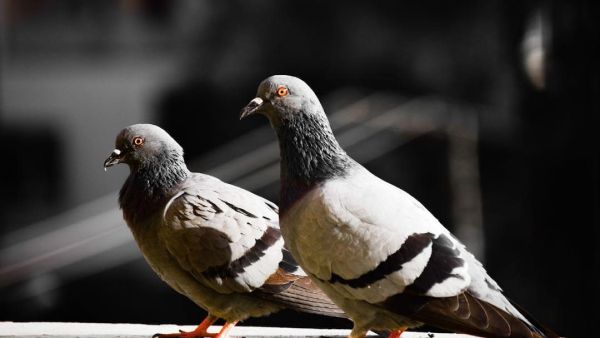
Pigeons are often associated with city streets rather than scientific laboratories, recent studies indicate that these birds may possess an unanticipated skill. Pigeons can be trained to identify subtle patterns in medical photographs, enabling them to discern between healthy and diseased tissue with amazing precision, according to a paper published in Popular Science. Although no one is proposing that pigeons will take the role of physicians, scientists think their visual skills could enhance cancer detection and perhaps aid in the creation of more intelligent artificial intelligence technologies. Cancer is one of the world's top causes of death, according to the World Health Organization (WHO), thus early and precise diagnosis is crucial for better treatment results. In order to improve medical imaging and decrease missed diagnoses, scientists are investigating novel approaches.
Dr. Michael DiGirolamo, a cognitive neuroscientist, used a reward-based learning system to teach pigeons to analyze chest CT scans, according to Popular Science. The birds progressively learned to differentiate healthy lungs from those exhibiting abnormalities and they were rewarded with food if they correctly identified scans containing lung nodules. Surprisingly, after learning to detect lung nodules, the pigeons also started to recognize other lung diseases such as ground-glass opacities and emphysema, even though they had never been trained to do so. The results are especially important for medical imaging studies since ground-glass opacities can occasionally be linked to early-stage lung cancer.
According to Dr. Michael DiGirolamo, ground-glass opacities, lung nodules and emphysema appear significantly different to the naked eye. However, the pigeons consistently identified all three, indicating that they might be picking up on tiny visual cues that people take in without realizing it stated by Popular Science. The study expands upon previous research conducted by Dr. Edward Wasserman, a professor of psychological and brain sciences at the University of Iowa and Dr. Richard Levenson, a professor of pathology and laboratory medicine at the University of California, Davis. Under a microscope, trained pigeons were able to discern between benign and cancerous breast cells, according to their groundbreaking study which was published in the journal PLOS One. These results demonstrated that, despite having brains that are very different from human brains, pigeons have extremely advanced visual discriminating skills.
Researchers emphasize that the objective is to gain a better understanding of how visual pattern recognition functions rather than using pigeons to identify cancer. According to Dr. DiGirolamo, the birds' exceptional performance may aid in the development of artificial intelligence systems intended to support radiologists. His group is creating AI models that integrate machine-learning algorithms with radiologists' eye-tracking data such as pupil responses and gaze patterns, stated in the report by Popular Science. Researchers seek to create algorithms that can uncover suspicious scans that could otherwise go unnoticed by learning how both humans and pigeons recognize tiny irregularities.
Experts stress that laboratory tests, medical imaging and qualified healthcare personnel will always be necessary for the diagnosis of cancer. Nonetheless, this unique study shows how researching animal behavior might spur medical advancements. The World Health Organization (WHO) states that one of the best strategies to enhance cancer outcomes is still early identification. In the next few years, scientists think that merging human experience with cutting edge AI guided by insights from unexpected sources like pigeons could help make cancer detection quicker, more accurate, and more dependable.
Disclaimer: The information provided in the article is intended for general informational purposes only. It is not a substitute for professional medical advice, diagnosis, or treatment. Always seek the advice of your physician or other qualified healthcare provider with any questions you may have regarding a medical condition.