Algeria and Austria are set to face each other in a decisive Group J encounter on Saturday night, one of the final matches of the group stage at the World Cup.
Both teams will enter the contest fully aware of what result they need to secure progression to the knockout rounds—either by finishing second in the group (with Argentina already confirmed as group leaders) or by qualifying among the eight best third-placed teams.
Interestingly, the standings have unfolded in such a way that both Austria and Algeria could potentially advance together if the result favours them. Four points would be sufficient to ensure progression, a situation that carries a deep sense of irony for those familiar with the storied history between these two nations.
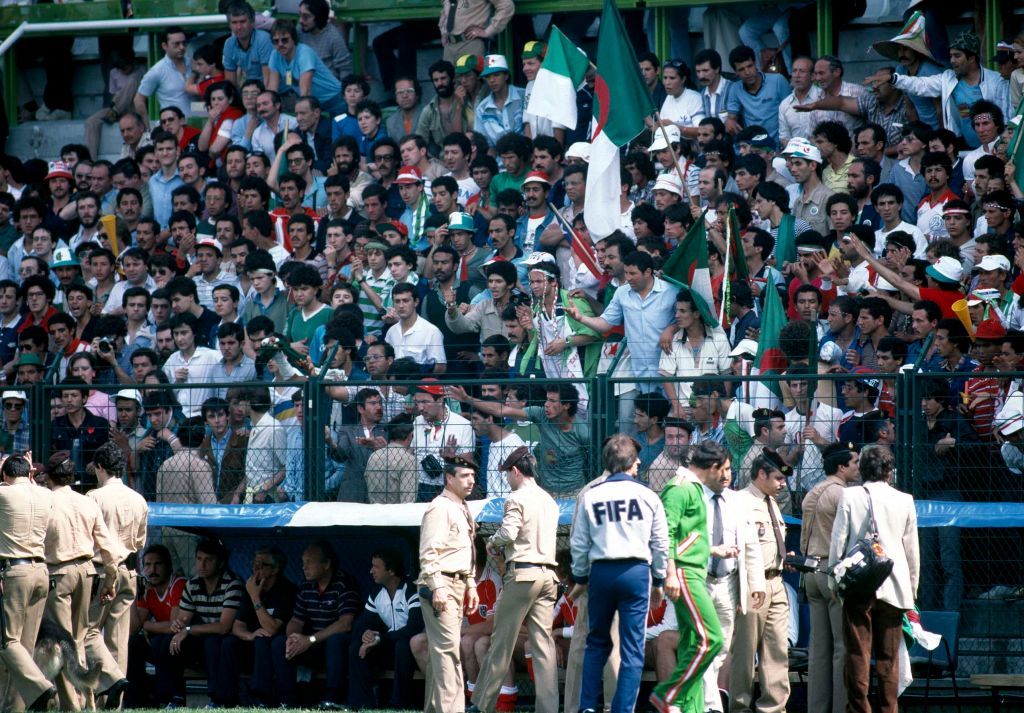
This scenario is reminiscent of a notorious episode from the 1982 World Cup in Spain, a tournament held before FIFA introduced simultaneous kick-offs for the final group matches.
At that time, only the top two teams in each group advanced, with two points awarded for a win, while the teams finishing third and fourth were eliminated.
In the final fixture of Group 2, the mathematics were clear: if third-placed West Germany defeated group leaders Austria by fewer than three goals, both European neighbours would proceed to the next round. Any other outcome would send one of them home.
What followed has gone down as one of the most infamous moments in World Cup history.
Horst Hrubesch opened the scoring for West Germany just ten minutes into the match, putting his side ahead 1-0 and effectively securing top spot, with Austria sitting comfortably in second place.
That, however, was virtually the end of the competitive football on display. Given that the backpass rule had not yet been introduced—it would not come into effect for another decade—goalkeepers were free to pick up passes from teammates, which they did repeatedly. Both teams made minimal effort to attack, particularly after the half-time break, and any shots attempted were hopelessly off target. To onlookers, the lack of intensity made the collusion painfully obvious.
The team that paid the price for this apparent arrangement was Algeria. Earlier in the tournament, they had stunned the footballing world by defeating West Germany in what was then the first-ever victory by an African team over a European side in World Cup history.
The final group standings read as follows:
1. Austria – Played 2, Goal Difference +3, Points 4
2. Algeria – Played 3, Goal Difference 0, Points 4
3. West Germany – Played 2, Goal Difference +2, Points 2
4. Chile – Played 3, Goal Difference -5, Points 0
For Algeria, and indeed much of the footballing world, the sight of two European teams appearing to engineer a mutually beneficial result was infuriating. The reaction was swift and severe. German and Austrian commentators openly criticised their own sides live on air, urging viewers to switch channels in protest. When the German team returned to their hotel, they were met by furious supporters who pelted their bus with eggs. In a bizarre twist, the players reportedly retaliated with water balloons—though how those ended up on the team bus remains a mystery.
The incident, forever remembered as the “Disgrace of Gijon,” forced FIFA to revise its tournament format, ensuring that the final group matches would henceforth be played simultaneously to prevent a repeat of such an episode.
Now, decades later, the football gods seem to have a sense of irony. Algeria and Austria once again find themselves in a situation where a draw—or even a narrow Austrian win—could see both teams advance. The parallels with 1982 are impossible to ignore.
Perhaps, after 44 long years, Algeria might finally find a measure of closure.