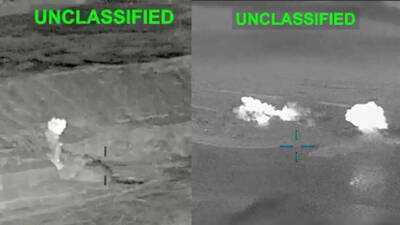
Recent tensions in West Asia have intensified as the United States launched a new series of military strikes against Iran. In response, Tehran initiated missile and drone attacks targeting US military bases in Kuwait and Bahrain. This exchange of hostilities marks the second consecutive day of US military actions against Iran, raising alarms about the already fragile ceasefire that both nations are negotiating for a broader peace agreement.
The US Central Command (CENTCOM) reported that American forces targeted ten Iranian military sites following an attack on a commercial oil tanker in the Strait of Hormuz. The strikes aimed at Iranian surveillance systems, communication networks, air defense installations, drone storage facilities, and minelayer capabilities in various locations around this crucial waterway. CENTCOM accused Iranian forces of using a one-way attack drone to target the oil tanker Kiku, which was carrying over two million barrels of crude oil. CENTCOM stated, "Iran had a chance to honor the ceasefire agreement but chose not to," emphasizing that US forces remain vigilant and prepared as commercial shipping continues through the Strait of Hormuz.
In response to the military strikes, former President Trump criticized Iran for its repeated violations of the ceasefire and warned of more severe military actions if the hostilities persist. He posted on Truth Social, "United States aircraft just struck Iranian missile and drone storage locations and coastal radar sites, for violating the Cease Fire Agreement, AGAIN!" Trump cautioned that should the US need to resume full-scale military operations, "the Islamic Republic of Iran will no longer exist."
Shortly after, Iran's Islamic Revolutionary Guard Corps (IRGC) announced a coordinated missile and drone operation targeting US military facilities in Kuwait and Bahrain. The IRGC claimed to have hit eight significant American military sites, including the Ali al-Salem Air Base in Kuwait and the US Fifth Fleet headquarters in Bahrain's Port Salman. They warned that any further military actions against Iran would provoke a "crushing response." Additionally, Iran's Khatam al-Anbiya Central Headquarters accused the US of breaching the ceasefire, stating that any future aggression would jeopardize ongoing diplomatic efforts. They also indicated that Iran would continue to regulate maritime traffic through the Strait of Hormuz and warned that hostile vessels would face stricter measures. The IRGC Navy threatened that US military bases in West Asia would experience severe consequences if attacks persisted.
Despite the renewed military tensions, diplomatic discussions between Washington and Tehran are still in progress. The two nations are negotiating terms to ensure the safe passage of commercial shipping through the Strait of Hormuz, the future of Iran's nuclear program, and the management of its highly enriched uranium stockpile. Under the interim agreement established earlier, both countries have a 60-day window to finalize the terms of a comprehensive peace deal.