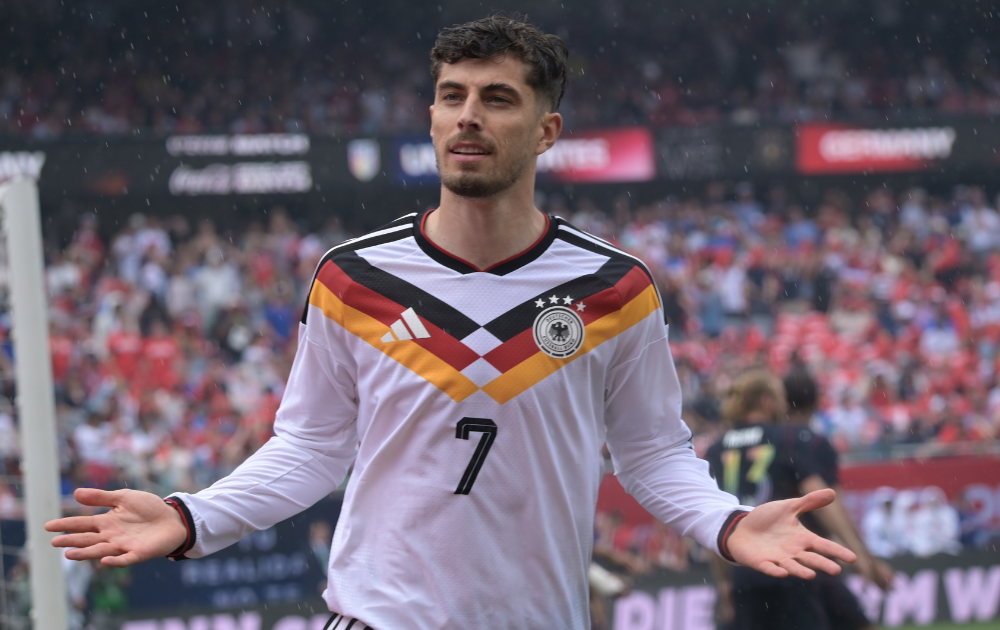
Germany have already booked their place in the round of 32 at the World Cup. They are set to play at Gillette Stadium on Monday, June 29, with a chance to move forward to Philadelphia for the round of 16 on July 4.
On the surface, that seems straightforward enough, but Germany still have one group stage fixture remaining. Their points tally cannot be overtaken by Ecuador, yet a victory for the South Americans could allow Ivory Coast to join Germany on six points.
Even if that happens, it won’t change anything. Not even a miraculous swing in goal difference would matter if Ivory Coast somehow managed it. Germany defeated Ivory Coast in their head-to-head clash, and under the new rules, that’s decisive. For the first time in World Cup history, group positions are being determined by head-to-head results — and Germany’s win over Ivory Coast in their second match seals the deal.
Clearly, that’s not an ideal scenario. It’s an issue that will likely affect several groups at the 2026 World Cup, and the decision to use this rule has taken much of the excitement away from what traditionally are thrilling simultaneous group finales.
Group E is a good example of how this can distort things. Germany’s goal difference was heavily boosted by their 7-1 thrashing of Curacao. While that might not be the most direct way to separate Germany and Ivory Coast in a tie, it would have made the final fixtures far more meaningful and suspenseful.
There’s no universally right or wrong method for breaking ties, but the way this group stage has been structured and unfolded leaves an awkward aftertaste as the closing games approach.
“Everybody knew the rules with goal difference,” wrote Daniel Storey of The i Paper, who is driving solo across the United States to experience the World Cup first-hand.
He continued, “You had three matches and all of them mattered equally. Now, one match is potentially far more significant — but the twist is, you only find out which one after it’s over.”
This sentiment is shared by many pundits and commentators, and it’s hard to argue against. When a rule change suddenly becomes a major talking point in one tournament after being a non-issue in the last, it’s worth questioning what exactly has changed.
However, there’s a deeper problem, and it’s not just about Gianni Infantino’s questionable leadership or his excessive admiration for certain political figures.
Scotland and South Korea woke up at their respective World Cup training bases today uncertain whether they were still in the competition after playing all three of their group matches.
This state of limbo — caused by the revived and uneven format — is a far greater blunder than adopting a less-than-ideal tiebreaker. It’s also worth noting that the head-to-head rule doesn’t even apply to the ranking of third-placed teams.
One can argue that goal difference has its flaws, just as head-to-head does, but the current system is proving to be the less effective of the two, even if both have some merit.
When teams finish their final group game and still can’t tell whether they’ve qualified for the knockout stage, that’s simply absurd. It undermines the immediacy and drama that define tournament football.
Thirty-two teams is the perfect number for a modern World Cup. Sixteen is too few, sixty-four far too many. The formats with twenty-four or forty-eight teams — both of which have now been tested — simply don’t make sense.
Although ranking third-placed teams and eliminating some may not seem inherently unfair, the confusion and delay that follow are unnecessarily awkward and more damaging to the competition’s integrity than any flawed tiebreaker could be.
As the World Cup approaches its centenary, there was even a proposal to expand it to sixty-four teams. But sixty-four teams mean 128 matches — an excessive and exhausting schedule, with 96 group-stage games alone.
That idea was ultimately rejected in favour of sticking with a 48-team format — bringing back the same complications once more.
Having 32 teams feeding directly into a round of 16 is the optimal structure — no third-place rankings, no waiting for other results, and no dependency on distant group outcomes.
While there may be alternative ways to organise a 48-team event, none come close to the mathematical elegance and competitive clarity of a perfectly balanced 32-team bracket.