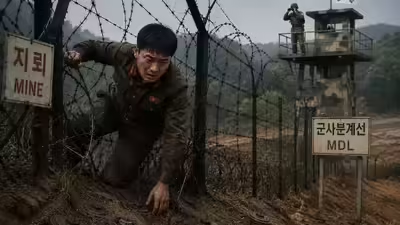
The Demilitarized Zone (DMZ) between North and South Korea is recognized as one of the most heavily fortified borders globally. This area has been surrounded for years by millions of landmines, tall fences, watchtowers, and advanced security systems. Recently, a North Korean soldier's daring escape across this perilous border into South Korea has captured worldwide attention.
According to reports, the soldier navigated a highly dangerous route filled with numerous landmines. Security forces stationed at the border successfully apprehended him. Currently, he is undergoing interrogation, and authorities are investigating his identity and the reasons behind his escape.
The nearly 250-kilometer-long DMZ has symbolized military tension for decades. Both North and South Korea maintain strict surveillance in this area, which is laden with landmines, barbed wire, sensors, and checkpoints, making unauthorized crossings nearly impossible.
Security experts emphasize that such escapes are not only physically challenging but also pose life-threatening risks at every step.
It is reported that the soldier took advantage of nighttime or low-visibility conditions. However, officials have not disclosed the full details of his route for security reasons. After crossing the border, he was safely detained by the South Korean military and underwent necessary medical evaluations.
Initial assessments indicate that the soldier's condition is stable. Authorities are now questioning him to understand why he made the decision to flee and whether any specific circumstances or pressures influenced his actions.
While incidents of fleeing North Korea are not new, it is exceedingly rare for an active military member to cross such a heavily guarded border. Most defectors attempt to reach other countries via China, as escaping through the DMZ is extremely perilous.
Experts suggest that strict control, limited freedoms, and harsh penalties in North Korea drive some individuals to seek escape, although each case often involves unique personal and situational factors.
The South Korean government and military are conducting a thorough investigation into the incident. Security agencies are also working to determine if there are broader security or military implications related to this event, while reviewing border security measures.
The crossing of a North Korean soldier into South Korea through one of the world's most secure and dangerous borders is considered an extraordinary event. However, the investigation is ongoing, and many critical facts remain to be uncovered. In the coming days, as the inquiry concludes, the true circumstances and reasons behind this escape may become clearer.