While the number of automobile manufacturers in the United States has declined from its early days, the country has seen nearly 3000 different automotive brands emerge over the past century. The ongoing transition to electrification has sparked a resurgence of new automakers, though not all of them are focusing on electric vehicles. One such newcomer is REO Industries, a Texas-based startup that has already set ambitious goals. The company says it is developing a range of three four-wheel-drive trucks and SUVs built to offer both affordability and capability. Interestingly, these REO vehicles are expected to be powered by gasoline engines and will offer manual transmissions, a combination that’s becoming increasingly rare.
Many may not recognise the REO badge immediately. The original REO Motor Car Company was founded in 1905 by Ransom Eli Olds after his departure from Oldsmobile. REO produced passenger cars until 1936 but became best known for its utility vehicles and trucks that remained in production longer. Among them, the Speed Wagon stands out as the brand’s most iconic model and is often credited as the inspiration for the modern pickup truck. It also inspired the name of the famous American rock band REO Speedwagon.
Over the decades, ownership of the REO name changed hands through various mergers and acquisitions until it was recently secured by REO Industries’ founder and CEO, Zach De Bernardi, who registered the trademark last month. De Bernardi explained that reviving the REO brand wasn’t his original intention, but he recognised the value of heritage and history in the automotive market. The brand’s storied past aligned perfectly with his vision, making the revival a natural fit.
De Bernardi is not a traditional auto industry veteran. His background is in real estate, primarily in the Dallas, Texas area, where his success allowed him to pursue his passion for automobiles. He has built and customised several overland-ready Toyota Land Cruisers, Lexus GXs, and Toyota 4Runners, and has owned performance-oriented cars like Mazda RX-7s, Honda Civics, and Nissan Stageas. His preference for 1990s and 2000s Japanese vehicles, particularly Toyotas, has shaped his philosophy for REO’s upcoming models, which emphasise mechanical simplicity and reliability.
“There’s a lot of Toyota DNA from the vehicles I love that’s going to be built into this project,” De Bernardi told Road & Track.
Contrary to what some might expect, REO Industries won’t be reviving the Speed Wagon name for its first model. Although the company owns that trademark, it will instead pay homage to Ransom Olds’ early work by introducing three models under the Runabout nameplate: the Runabout T4X, the Runabout T4C, and the Runabout S4C SUV.
The original Runabout—also known as the Curved Dash Olds—was Oldsmobile’s first car and became America’s best-selling automobile before the Ford Model T arrived. It was also one of the first affordable vehicles, retailing at $650 at the time, which equals roughly $25,000 in today’s currency. REO Industries aims to channel that same spirit of affordability, targeting a starting price of around $21,500 for the base T4X model.
So, how does REO plan to deliver trucks priced around $20,000? For starters, the company isn’t attempting to compete with full-size pickups like the Ram 1500, Chevrolet Colorado, or even Ford Maverick. De Bernardi describes these models as part of an “Ameri-Kei” category, drawing inspiration from Japan’s compact Kei vehicles but scaled up for American roads. The trucks will be minimalistic in nature—the base T4X may not even include a radio or fully finished door panels. Higher trims will offer additional creature comforts, and REO plans to provide à la carte options for customers who want extra features. However, the trucks will rely primarily on physical controls, keeping digital screens to a minimum.
The upcoming micro-trucks may also serve as an early test of President Donald Trump’s relaxed regulations on small vehicle imports and emissions compliance. In fact, De Bernardi credits the administration’s policy changes and its scepticism toward electric vehicles for making the project feasible in the first place.
“When the CAFE laws and associated fees were removed in December 2025, that was the biggest signal for me and my team that something like this could actually happen,” De Bernardi said. “We’ve been watching companies like Slate and the mini-truck market evolve. A lot of customer feedback we’ve seen is along the lines of, ‘This would be perfect if it had a diesel engine or a small four-cylinder,’ because that’s what American buyers are asking for—especially given how underdeveloped the EV charging infrastructure still is in the U.S.”
De Bernardi added that REO has not yet been in direct communication with the Trump Administration regarding the logistics of building these compact trucks domestically. However, he hopes to receive guidance and possibly support during the process. The company also expects to benefit from its Texas location, close to major manufacturing operations of Toyota and General Motors.
“Our goal is to redefine what a truck really is,” De Bernardi explained. “We’re building one that’s smaller, more affordable, and economically practical for a startup. We want to reach the broadest base of buyers possible. As we grow, we’ll explore adding different powertrains when political and environmental regulations shift again. If CAFE fees return or new green initiatives come in, we’ll adapt. But our focus now is a truck for the mass market.”
The entry-level Runabout T4X will measure approximately 180 inches in length, comparable to a Honda Civic or Mazda 3. It will stand about 74 inches tall and wide—similar to modern mid-size pickups. All models will feature a body-on-frame design and mechanical four-wheel drive. The maximum towing capacity is expected to be around 4500 pounds, which should satisfy most small truck buyers.
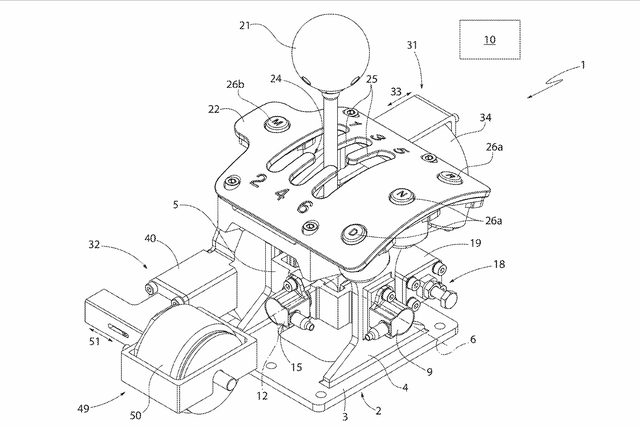
Power will come from a naturally aspirated four-cylinder engine paired with either a six-speed manual or automatic gearbox. REO hasn’t revealed its powertrain supplier yet, but De Bernardi has stated that he wants the engines to be American-built and simple in design, avoiding direct injection to keep maintenance costs low. The engines will also need to accommodate manual transmissions, which narrows the list of potential suppliers.
One of REO’s most innovative ideas is its “open-source” approach. Customers will have access to the truck’s technical data and will be encouraged to design and produce their own parts. REO engineers will validate these components, and approved parts can be sold directly through the company’s online platform. With the rise of additive manufacturing, this approach could create a thriving ecosystem of aftermarket accessories.
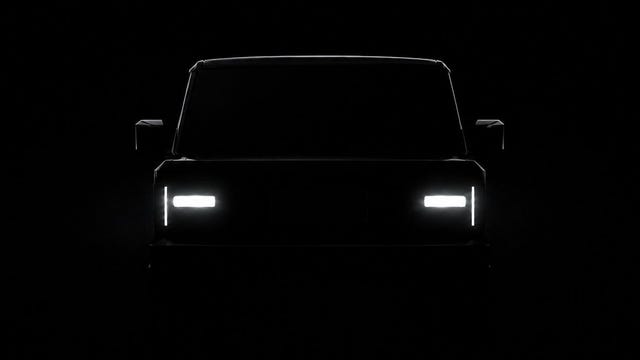
This collaborative philosophy extends beyond accessories. While REO is working with an unnamed international design firm, the company is still seeking feedback from potential customers before finalising the design. According to REO, the goal is to unveil the finished product by the fourth quarter of this year, and that timeline remains on track.
Regarding funding, De Bernardi confirmed, “We are funded,” adding, “I have a lot of my own money invested in the company.” He acknowledged that “starting a car company is not cheap” but said he’s willing to share more financial details as the project progresses.
The automotive industry is filled with examples of promising companies that failed to achieve mass production. Brands like Fisker, Lordstown, Faraday Future, Nikola, Canoo, and even Sony have all struggled to bring vehicles to market. While most of those companies focused on electric vehicles rather than gasoline-powered ones, they serve as reminders of how challenging the car business can be. Even with innovative products and heavy investor backing, scaling production remains a major hurdle. Tesla stands as the only recent startup to achieve sustained profitability, thanks largely to its immense global production capacity—a feat few others have matched.
Still, vehicle affordability remains a growing concern across the U.S., and startups like REO may help address it. If a small, Texas-based company can deliver a capable, inexpensive truck, it could challenge the status quo—much like another Texas automaker did not too long ago.
Update, June 22, 2026, 6:00 p.m. EST: This article has been updated with comments from CEO Zach De Bernardi regarding REO Industries’ financial backing.