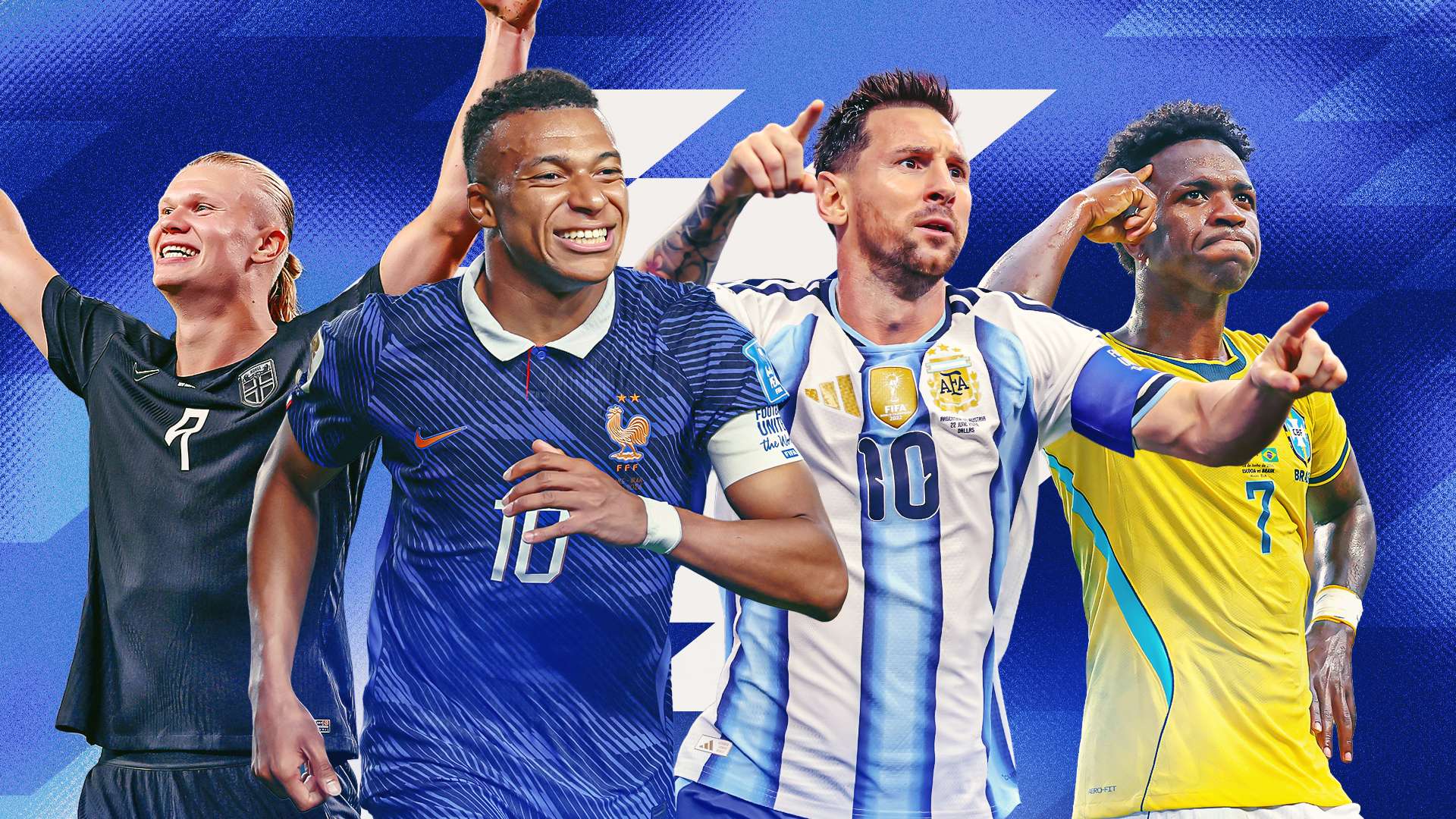
The Golden Boot doesn’t always guarantee team glory, yet this summer’s battle for the top scorer’s crown at the World Cup promises to be one of the most captivating in years.
Lionel Messi didn’t start against Jordan on Matchday 3 of the 2026 World Cup. Still, he inevitably left his mark. Argentina coach Lionel Scaloni had no real reason to use him. At that point, Argentina’s two-goal cushion had been reduced to one, and although a touch of anxiety crept into the minds of the Albiceleste fans, the match didn’t require Messi’s intervention.
But Messi wanted to be involved — or at least played like he did. In just over 20 minutes off the bench, he flipped the game’s momentum. The moment he stepped onto the pitch, the energy shifted. And then came that trademark moment. Yazeed Abulaila might feel he should have done better with Messi’s 80th-minute free kick — it was close enough to reach — but it whizzed past him anyway. With that, Argentina wrapped up a flawless group stage, and Messi gained a slight edge in the Golden Boot chase.
Golden Boots have always been curious honours. The top scorer rarely ends up in the championship-winning side. The last three World Cup-winning teams, in fact, didn’t include the player who scored the most goals. Goals and trophies don’t always go hand in hand.
However, in a time when football celebrates individual brilliance as much as collective success, such achievements carry immense weight. The World Cup remains the ultimate stage for individual excellence, and the 2026 edition boasts a truly thrilling contest — Messi, Mbappe, and Haaland, each driven by different motivations, turning goals into statements of intent. What’s not to enjoy?
World Cups have always celebrated those moments of individual genius.
An award built on moments
The 2014 World Cup was a spectacle — thrilling matches, spectacular goals, and a worthy champion in Germany. But it will forever be remembered for one moment. In Colombia’s clash with Uruguay, James Rodriguez produced a piece of magic — chesting the ball, letting it drop, and smashing it into the top corner from 25 yards. It earned the Puskas Award and remains one of the iconic World Cup goals.
That’s what this tournament is all about — unforgettable moments. For many fans, their first World Cup memory is tied to a goal. For an entire generation, it’s James’s 2014 volley. He scored five more that tournament, earning the Golden Boot — a prize that perfectly encapsulated his tournament of brilliance. The Golden Boot, at its core, rewards flashes of individual inspiration.
Does it translate to team triumph?
Whether it leads to team success is another matter. Since Ronaldo’s Golden Boot campaign in 2002, no World Cup winner has featured the tournament’s top scorer. Kylian Mbappe took it in 2022, Harry Kane in 2018, James Rodriguez in 2014, Thomas Muller in 2010, and Miroslav Klose in 2006 — none lifted the trophy that year. Their contributions were significant, but not decisive in team outcomes.
Mbappe’s 2022 tally was boosted by his final hat-trick, even as Argentina outplayed France overall. Kane’s 2018 haul was inflated by his group-stage hat-trick against Panama, but he faded in the knockout rounds as England fell to Croatia. Rodriguez’s Colombia thrilled fans but exited in the quarterfinals. Muller’s Germany lost in the 2010 semis to eventual champions Spain. Only Ronaldo in 2002 combined Golden Boot success with a title, scoring eight times — including twice in the final — to secure Brazil’s fifth crown and his own Ballon d’Or.
A team sport with exceptional contenders
Modern football has evolved into a collective game. The best sides are those built on balance, not star power. Argentina’s structure enables Messi to focus on creativity while others cover his defensive gaps. Spain excel through possession and tactical discipline. France’s system, though less defined, blends hard-working midfielders and full-backs who allow their forwards — like Ousmane Dembele — the freedom to excel.
This World Cup feels like a handover between eras. Messi and Cristiano Ronaldo are likely playing their final tournaments, while the new generation — Mbappe, Haaland, Vinicius Jr, Kane, and others — are at their peaks. Seven elite attackers, all capable of claiming the Golden Boot, make this race wide open.
Messi vs Mbappe
Messi leads with six goals and remains the favourite. At 39, he’s more selective in his involvement, but his finishing remains lethal. Three against Algeria, two against Austria, and another versus Jordan — all executed with trademark composure.
His upcoming opponents offer further opportunity. Cape Verde have impressed defensively, holding Spain goalless, but Argentina will be heavy favourites. Win that, and a quarterfinal against either Australia or Egypt awaits, with Ghana, Colombia, Switzerland, and Algeria also on that side of the draw — all potential scoring grounds. Messi already broke the all-time World Cup goals record this year and could reach double digits before the last eight.
Then there’s Mbappe — Messi’s great World Cup rival. The pair have met twice on this stage: Mbappe’s France beat Messi’s Argentina in the 2018 Round of 16, while Messi triumphed in the 2022 final despite Mbappe’s hat-trick. This time, Mbappe’s four goals and two assists show his usual productivity, though France’s rhythm still feels slightly off. Sweden could be the perfect opponent for him to rediscover peak form.
The other challengers
Beyond them, several names remain in contention. Kane began strongly with two goals in England’s opener — including a retaken penalty — but missed key chances later. He scored again in the third match but hasn’t yet found consistent scoring positions. Haaland struck four in his first two games before being rested for Norway’s final group tie.
Vinicius Jr. is another major threat. With four goals in three matches, he’s been sharper than ever in front of goal, doubling his best previous tournament tally. Ronaldo’s case is intriguing — still a poacher at 41 but far less a team player. His knockout record is poor, yet his positional instincts remain unmatched. He could still deliver defining moments.
Surprise names are emerging too. Folarin Balogun has been in explosive form for the USA, and a strong showing against Bosnia and Herzegovina could elevate him into the Golden Boot race. Dutch striker Brian Brobbey’s scoring streak also keeps him in contention.
The Ballon d’Or connection
For some, the Golden Boot could heavily sway the Ballon d’Or race. Kane is a strong candidate, but Bayern Munich’s European shortcomings could count against him. Mbappe topped La Liga’s scoring charts, yet Real Madrid’s trophyless season hurts his case. Dembele’s PSG swept domestic titles, but his personal contribution may not be enough for back-to-back wins. Messi, meanwhile, faces the MLS stigma — the league rarely produces Ballon d’Or winners. But a Golden Boot and World Cup triumph could change that narrative.
Ultimately, while the Golden Boot doesn’t always equate to team success, it symbolises the essence of football’s greatest stage: unforgettable moments. And if the World Cup is defined by moments, then this contest — featuring Mbappe, Haaland, Messi, Ronaldo, Vinicius, and Kane — is everything fans could hope for. Not all six can lift the trophy, but their pursuit of goals ensures that the 2026 World Cup will be remembered for its iconic flashes of brilliance.