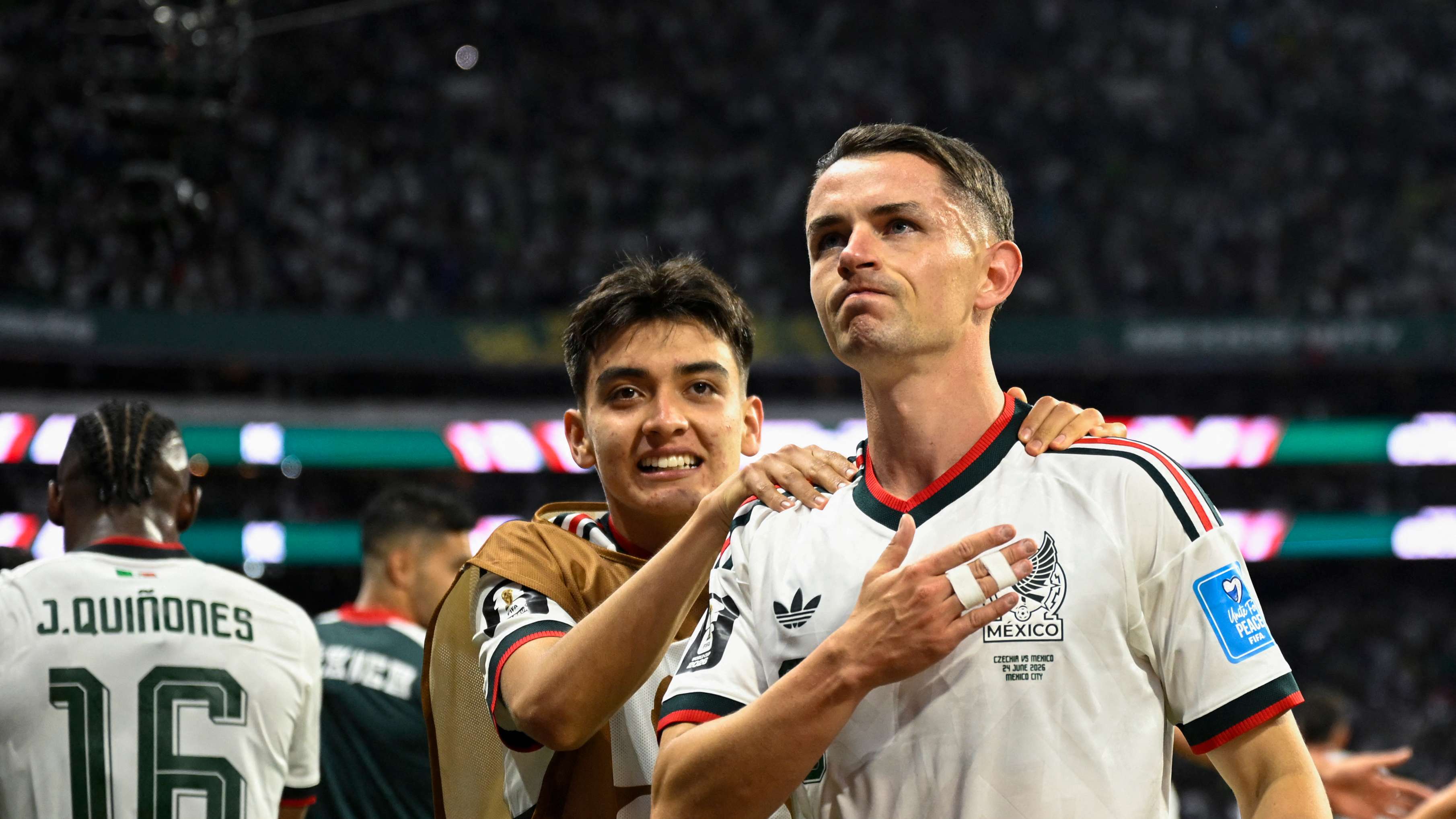
Álvaro Fidalgo, Julián Quiñones and Edson Álvarez lead Mexico into their decisive World Cup Round of 32 encounter against Ecuador, with GOAL highlighting five critical talking points to watch.
Back in 2002, Ecuador made their maiden appearance on the World Cup stage under Colombian coach Hernán Darío “Bolillo” Gómez. In their second group-stage fixture at Japan’s Sapporo Dome, Ecuador faced Mexico. That contest ended with a 2-1 victory for El Tri, guided by Javier “Vasco” Aguirre from the touchline.
That match carried a sense of familiarity. Several Ecuadorian players that year had connections to Mexican football, either past or present. The most notable example was Álex Aguinaga, who entered the tournament as a Necaxa player. Others like Agustín Delgado, Iván Hurtado, Nicolás Asencio, Iván Kaviedes, Edwin Tenorio and Giovanny Espinoza had all previously played in Mexico before Ecuador’s first World Cup appearance.
Fast forward 24 years, and the ties remain strong. Enner Valencia, Pedro Vite, Jackson Porozo, Félix Torres and Jordy Caicedo are among Ecuadorians who have played or are currently playing in Mexican football. It’s another example of how frequently these footballing cultures have intersected.
Any illusion that Mexico will meet an unfamiliar rival quickly vanishes. Ecuador will arrive in Mexico City fully aware of what El Tri stand for, what the Estadio Azteca represents, and what is at stake. This will be a battle between two teams who know each other’s history well, with a coveted Round of 16 berth on the line and the chance to achieve something exceptional.
Estadio Azteca’s enduring aura
El Tri have reason to feel confident. In six decades, Mexico have lost only two official matches at the Estadio Azteca — against Costa Rica in 2001 and Honduras in 2013, both during World Cup qualifying. They have never been defeated there in a World Cup match. Some of their most memorable nights have taken place in this iconic venue, including the 4-3 triumph over Brazil in the 1999 FIFA Confederations Cup final.
History also tips in Mexico’s favour when facing Ecuador in official tournaments. Ecuador have managed just one victory over Mexico — at the 2015 Copa América. In 1993, El Tri overcame La Tri in the Copa América semi-final held in Ecuador.
While Ecuador’s current squad is arguably their strongest ever, especially from midfield to defence, and they are notoriously hard to break down, playing Mexico at the Azteca is a different challenge altogether. It’s why optimism around El Tri feels justified.
Why Gilberto Mora deserves a starting spot
Gilberto Mora’s first significant minutes for Mexico came during the knockout stages of the 2025 Gold Cup. He then started every remaining match, including the final against the U.S. Men’s National Team. The image of Guillermo Ochoa carrying him on his shoulders during the celebrations became symbolic of his rise.
His inclusion in key matches wasn’t by chance. Mora offered Mexico something they had been lacking — a midfielder with exceptional composure and vision. He has the ability to slow down play without disrupting attacking flow, a rare attribute for someone his age.
The recent match against Czechia allowed Mora to regain rhythm after an injury-hit season with Xolos. He used those minutes effectively, showing his growing influence in Mexico’s attacking transitions at the Azteca.
At just 17, Mora continues to impress with his maturity. His teammates recognise his talent, and whether he starts or comes off the bench, he seems poised to make a meaningful impact in Tuesday’s crucial fixture.
Ecuador’s golden generation faces its defining challenge
Ecuador’s journey to the Azteca has been anything but simple. Yet manager Sebastián Beccacece and his squad have remained composed amid mounting scrutiny.
Following a goalless draw against Curaçao, criticism intensified, with many calling it a low point for Ecuador. The main concern was their lack of goals, though few acknowledged that the team was still creating clear chances — it was finishing, not structure, that was missing.
Perspective was lacking too. A narrow 1-0 defeat to a strong Ivory Coast side meant that Ecuador had conceded only once in 180 minutes before their final group-stage game. Then came a 2-1 victory over Germany, a result that showcased their resilience and ability to capitalise on opponents’ mistakes.
While Willian Pacho, Piero Hincapié and Moisés Caicedo are the standout faces of this golden generation, Beccacece has built a cohesive and disciplined side around them. Ecuador are also among the youngest squads in the tournament, making their progress even more impressive. Should they upset Mexico at the Azteca, this team will be celebrated for decades back home.
For Mexico, a shot at redemption and respect
This isn’t just another knockout fixture for Mexico — it’s a chance to reclaim lost respect. El Tri once commanded admiration in South America’s premier tournament, having reached the Copa América finals twice as invited participants — in 1993 and 2001. Those campaigns helped solidify Mexico’s reputation as a team capable of competing beyond CONCACAF.
However, that image has taken a hit in recent years. The 7-0 loss to Chile in the 2016 Copa América Centenario remains one of the most painful defeats in Mexico’s modern football history. The disappointment deepened in the 2024 Copa América, also held in the United States, where Mexico failed to progress past the group stage following a goalless draw with Ecuador. What was once a stage for pride became a reflection of decline.
Tuesday night in Mexico City offers a chance for renewal. While the match won’t erase the memories of 2016 or mend all that went wrong in 2024, it presents an opportunity to restore pride. Facing an Ecuador team that contributed to their recent struggles, El Tri can begin to reclaim their standing.
Fidalgo and Quiñones already making history
Even before kick-off against Ecuador, Álvaro Fidalgo and Julián Quiñones have already left an indelible mark on this World Cup. Quiñones opened the tournament with a goal against South Africa and later netted again versus Czechia. Fidalgo added the finishing touch to the 3-0 victory over the Czechs, ensuring Mexico completed a flawless group stage — with two naturalised players at the forefront of one of the best starts in the nation’s World Cup history.
Their influence extends beyond goals. Quiñones’ relentless pressing and movement unsettle defenders, while Fidalgo’s composure and control in possession bring balance to Mexico’s play. Their work ethic has inspired teammates, earning admiration throughout the squad.
Their contributions carry even greater weight as Mexico aim to achieve something they haven’t done since 1986 — win a knockout match at a World Cup. It’s rare for two naturalised players to have such a pivotal impact on El Tri, particularly in the same tournament. Against Ecuador, their presence could be instrumental in helping Mexico take the long-awaited next step — and do so in front of their home supporters in Mexico City.