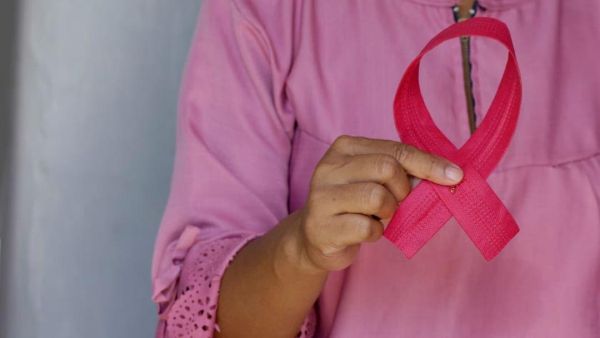
The World Health Organization (WHO) reports that over 2.3 million new instances of breast cancer are diagnosed annually, making it the most frequent cancer among women globally. Researchers are now looking into how obesity may impact the disease, even though age, genetics and hormonal changes continue to be among the most well-known risk factors. According to a recent study, having too much body fat may not only increase the risk of breast cancer but also provide the conditions necessary for early-stage tumors to spread.
According to the report by Press Trust India, Dr Bethany Hannafon and Dr Elizabeth Wellberg of the University of Oklahoma Health Sciences Center led the study, which examined tissue samples from patients with ductal carcinoma in situ (DCIS), a non-invasive type of breast cancer in which aberrant cells stay inside the milk ducts.
According to Dr Hannafon, the team discovered that obesity alters the surrounding tissue of a tumour, perhaps fostering the spread of cancer cells beyond the ducts into adjacent breast tissue. Obesity seems to alter immunological responses, inflammation and cell-to-cell communication rather than just cancer cells. Speaking about the results, PTI quoted Dr Wellberg as clarifying that a variety of cell types interact inside fat breast tissue, contributing to the development of conditions that facilitate the growth of tumours.
The scientists also detected significantly greater levels of a protein called Sulfatase 2 (SULF2) in breast tissue from women with obesity. She clarified that SULF2 seems to be crucial in altering the tumour microenvironment through cellular signalling and inflammation, which may facilitate the development of invasive early-stage breast cancer.
Obesity impacts not only cancer cells but also a number of surrounding cell types that cooperate to accelerate the growth of tumours, according to Dr Elizabeth Wellberg. Targeting proteins like SULF2, according to the researchers, may eventually assist in identifying women who are more likely to develop invasive breast cancer, as stated by PTI.
It has long been known that obesity and breast cancer are related, especially after menopause. Excess body fat raises insulin, estrogen and chronic inflammation levels, all of which are linked to an increased risk of breast cancer, according to the World Cancer Research Fund (WCRF). Additionally, obesity changes hormonal and metabolic pathways that may promote tumour growth and progression, according to the US National Cancer Institute (NCI).
The most recent study, according to researchers, helps explain why women who are obese have a higher risk of developing invasive breast cancer than those who maintain a healthy body weight.
Dr Hannafon and Dr Wellberg emphasised that before these findings alter standard clinical practice, more research is required, as quoted by PTI. Nonetheless, they think that by comprehending how obesity alters the tissue surrounding breast tumours, medical professionals will eventually be able to determine which early breast cancers are most likely to progress to invasive stages. The results provide yet another reminder that keeping a healthy weight is crucial for both long-term cancer prevention and general welfare when combined with good lifestyle choices, routine screenings, and ongoing research.
Disclaimer: The information provided in the article is intended for general informational purposes only. It is not a substitute for professional medical advice, diagnosis, or treatment. Always seek the advice of your physician or other qualified healthcare provider with any questions you may have regarding a medical condition.