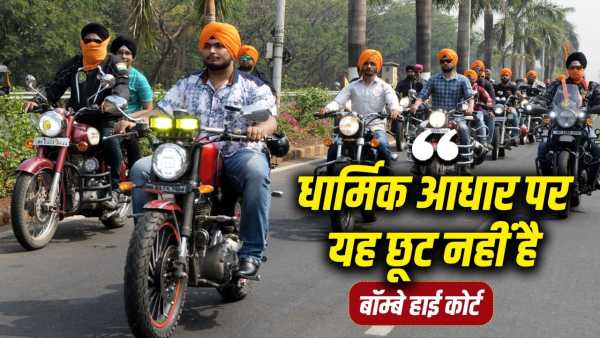
In India, if someone is seen riding a bike without a helmet, it is almost certain that he will be challaned. Under road safety rules, wearing a helmet is considered mandatory for every two-wheeler driver and pillion rider. But, when it comes to turban wearing Sikhs, this rule changes. This is the reason why the question often arises in people's minds that why have Sikhs been exempted from wearing helmets? Is this a special facility given only on religious grounds or is there any legal and practical reason behind it?
This question once again came into discussion when the Bombay High Court, while hearing a petition challenging the helmet rule in Maharashtra, clearly said that the exemption given to turbaned Sikhs from wearing helmets is not only on the basis of religion, but is based on the principle of reasonable classification. The court accepted that this system does not violate the right to equality of the Constitution.
This case was related to the petition of 23 year old student Kirtesh Chaudhary. The petitioner had argued that if helmet is necessary for everyone's safety, then why should any one section be exempted from it? Hearing this, the court said that the Constitution definitely talks about equality, but it also talks about equal treatment in equal circumstances. If the circumstances of any class are different, then separate rules can be made for them.
In fact, the court believes that turban is not just a symbol of religious identity, but is considered an essential part of Sikhism. It is not possible to wear a normal helmet over a turban. In such a situation, the government has given this relaxation to strike a balance between security and religious tradition. Therefore it cannot be called discrimination, because it comes under the law. However, this law does not apply to Sikhs wearing ordinary patka or patka, it is mandatory for them to wear helmet.
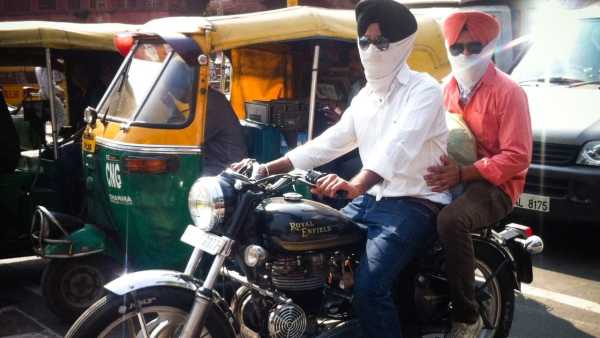
Sikhs exempted from helmet rule (Kristen Elsby / Contributor/Getty Images)
In India, the rule of wearing helmet is enforced under Section 129 of the Motor Vehicles Act, 1988. According to this law, it is mandatory for both the two-wheeler rider and the pillion rider to wear a helmet. However, in this same law, states have also been given the right to give exemption in some special circumstances. On the basis of this provision, many states have exempted turban-wearing Sikhs from wearing helmets. That is, this is not an oral tradition or special grace, but a valid arrangement given under the law.
The government's stand is also almost the same. The government says that this exemption has not been given to give special rights to any religion, but has been made in view of practical difficulties. Turban is considered an important part of the religious identity associated with the five Kakars of Sikhism. It is almost impossible to wear a normal helmet over that. In such a situation, the government has tried to strike a balance between the two things. Bombay High Court also accepted that this decision is completely correct on the basis of Reasonable Classification under Article 14 of the Constitution.
Often the question also arises whether this exemption is applicable in the entire country? The answer is that the Motor Vehicles Act gives the states the right to make rules. Therefore, there may be some difference in the rules applicable in different states. However, in most states, turban-wearing Sikhs have been exempted from wearing helmets. As far as the Sikh community is concerned, according to the Census of India 2011, there are about 2.08 crore Sikhs living in the country, which is about 1.7 percent of the total population of the country. The largest Sikh population lives in Punjab.
The use of two-wheelers is also very high in Punjab. However, there is no official government data available on how many Sikhs regularly ride bikes or scooters across the country. Therefore it is not possible to give any definite number in this regard. Road safety experts say that helmets are the most effective means of protecting against serious head injuries. Many international organizations including the World Health Organization (WHO) believe that wearing a helmet reduces the risk of death and serious injuries in road accidents to a great extent. This is the reason why wearing a helmet is considered necessary wherever the law is applicable.
However, it is also believed that the situation of turban wearing Sikhs is different. For this reason, there has been discussion from time to time on developing special safety equipment or alternative helmets that can be used with the turban. At present no such comprehensive solution has been implemented. It is important to understand one more thing in this matter that exemption from helmet does not mean complete exemption from the law. Traffic rules, responsibility of driving and all other rules of road safety apply to turban-wearing Sikhs as much as to any other citizen. The relaxation is limited to the rule of wearing helmet only.