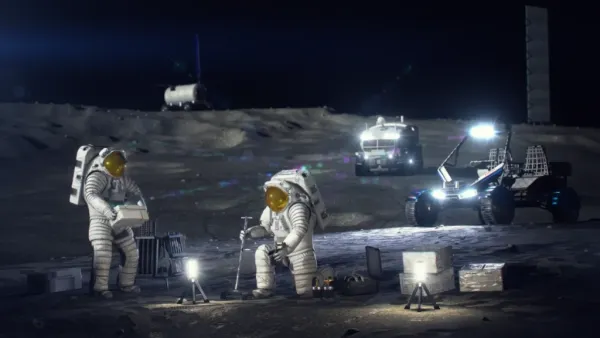
As reported by NASA, the agency has unveiled NASA NextSTEP-3 Appendix B, inviting industry partners to demonstrate technologies that could shape the next generation of lunar infrastructure. While the announcement is brief, it signals another step toward making a permanent human presence on the Moon a practical reality.
NASA’s Next Space Technologies for Exploration Partnerships (NextSTEP) program has long served as a bridge between government led exploration and private sector innovation. Through its latest Appendix B solicitation, the agency is looking for technologies that can be demonstrated on Earth before eventually supporting missions on the lunar surface.
Rather than developing every component internally, NASA continues to lean on commercial expertise to mature technologies faster and lower development costs. This collaborative approach has already played a key role in programs such as the Human Landing System and commercial cargo missions.
The newly announced demonstrations are expected to focus on systems that improve the safety, efficiency, and sustainability of future Moon operations, particularly as Artemis missions become more ambitious over the coming decade.
The latest solicitation is designed to validate technologies before they are integrated into lunar missions.
| Focus Area | Expected Role |
| Surface infrastructure | Supports long duration astronaut missions |
| Habitat technologies | Improves crew safety and living conditions |
| Resource management | Enhances sustainability on the Moon |
| Power and operational systems | Enables continuous surface operations |
| Technology demonstrations | Reduces engineering and mission risks |
Instead of waiting until equipment reaches the Moon, NASA wants these systems tested in realistic environments on Earth. That approach helps identify design challenges early while allowing commercial partners to refine their technologies before space deployment.
If you’ve followed NASA’s recent exploration roadmap, this announcement fits into a much bigger picture. The Artemis program is no longer focused solely on returning astronauts to the lunar surface. The long-term objective is to establish infrastructure that supports repeated missions, scientific research, and eventually a sustained human presence.
That vision requires far more than rockets and spacecraft. Future lunar operations will depend on reliable habitats, surface mobility systems, communications networks, power generation, construction methods, and technologies capable of operating through the Moon’s harsh environment.
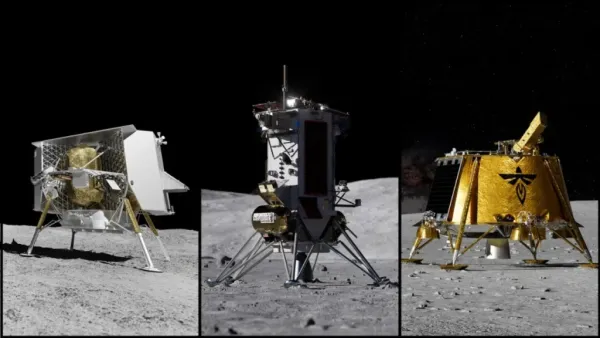
Programs like NextSTEP help distribute that workload across industry partners while encouraging innovation beyond traditional aerospace contractors. This model has already produced tangible results. Companies working with NASA have contributed to commercial crew transportation, lunar landers, and cargo delivery systems, demonstrating that public-private partnerships can accelerate exploration while spreading development costs.
One of the biggest challenges facing long-duration lunar missions is infrastructure. Unlike Apollo, where astronauts spent only a short period on the Moon, Artemis aims to support repeated visits and longer stays. That demands systems capable of surviving extreme temperature swings, abrasive lunar dust, radiation exposure, and long periods without direct human maintenance.
The technologies explored under NextSTEP-3 could eventually contribute to:
While NASA has not disclosed every technology area covered under Appendix B, the demonstrations are expected to reduce uncertainty before future flight hardware is selected. For commercial companies, the program also offers an opportunity to mature technologies that could serve both government missions and future commercial activities in cislunar space.
At first glance, NextSTEP-3 Appendix B may appear to be another procurement notice. Dig a little deeper, though, and there’s a broader shift taking shape. NASA is steadily moving away from building every exploration system in-house. Instead, it’s creating an ecosystem where commercial companies develop technologies that can support multiple missions and customers over time.

That strategy not only accelerates innovation but also lays the groundwork for a growing lunar economy, where infrastructure, transportation, research, and resource utilization become shared capabilities rather than one-off government projects. As Artemis continues to evolve, initiatives like NextSTEP ensure that critical technologies are validated long before astronauts depend on them hundreds of thousands of kilometers from Earth.
NASA’s latest NextSTEP-3 announcement may not carry the spectacle of a rocket launch, but it highlights one of the most important aspects of future lunar exploration: building dependable infrastructure before humans return for extended stays. The technologies demonstrated through this program could shape how astronauts live and work on the Moon in the years ahead.
The Moon’s future starts with today’s technology.