At the 2026 World Cup, several players have been sent off for covering their mouths during matches — a development that has left many fans puzzled.
Now well past the halfway stage, the 2026 World Cup has already provided plenty of drama. Yet, it is the unusual dismissals for mouth-covering that have become one of the tournament’s most talked-about controversies.
These expulsions are unprecedented in football history and have now occurred twice across North American venues hosting the tournament.
Before this World Cup began, FIFA rolled out a number of new regulations. Among them was a rule penalising players for covering their mouths during confrontations — but why was such a measure introduced in the first place?
The rule’s name originates from the player whose actions prompted the creation of this regulation.
Benfica winger Gianluca Prestianni was accused in February of using racially abusive language towards Real Madrid forward Vinicius Junior during a match.
In response to that incident, FIFA President Gianni Infantino pushed for a new law that prohibits players from covering their mouths while speaking in emotionally charged exchanges, to ensure that any potentially abusive language can be monitored.
The regulation was designed to prevent a repeat of the controversy involving Vinicius and Prestianni, where the Brazilian claimed he was racially abused, while the Argentine denied the allegation.
The rule serves as a strong deterrent — being sent off is the ultimate warning to players not to conceal their mouths in heated situations. It ensures that no player can later claim innocence on the grounds that no one could see what was said.
This approach allows cameras and fellow professionals to clearly observe if a player uses inappropriate language during disputes on the pitch.
However, the rule is only enforced in specific contexts — when it is clear that a player is directly confronting another in a tense exchange.
It does not apply to players who are covering their mouths for legitimate reasons unrelated to confrontation, such as discussing tactics with teammates or deciding who will take a set-piece.
For example, players can still cover their mouths while speaking privately with teammates about strategy, like deciding on free-kick responsibilities.
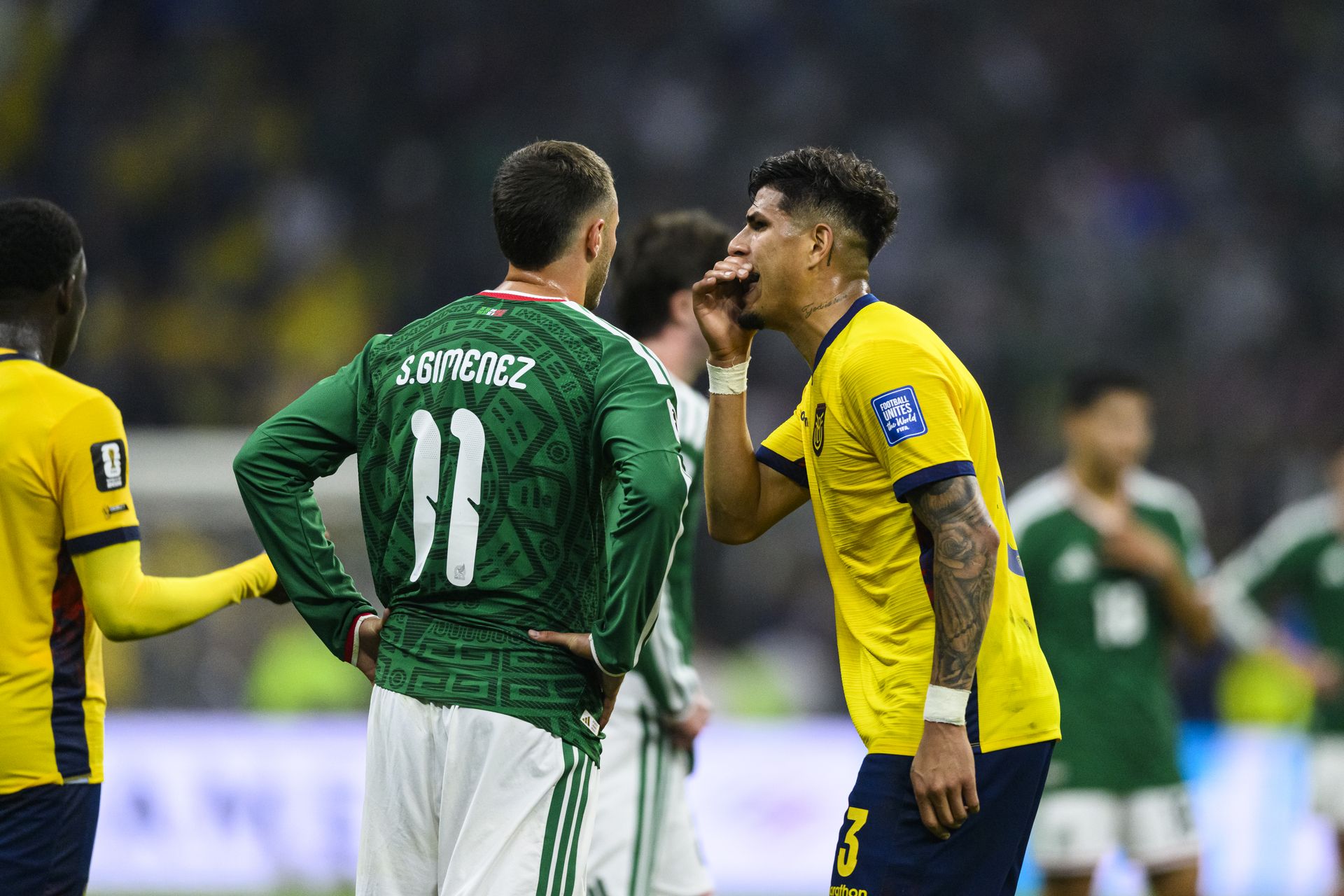
So far, two players have been dismissed under this new rule at the 2026 World Cup: Piero Hincapie of Ecuador, during their match against Mexico, and Miguel Almiron of Paraguay.
The regulation aims to reduce the use of abusive language in football. Offending players face not only immediate dismissal but also a one-match suspension and potentially further disciplinary action if found guilty of verbal abuse.