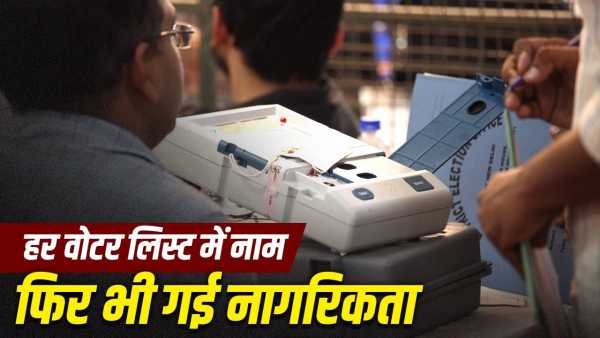
If a person is living in India and has to prove his citizenship, then there are many documents which will help him in this. No person can prove his citizenship merely by verbally telling about his family or by showing his relationship. However, if you submit documents but they do not match with each other, then this will also cause a lot of difficulty in proving citizenship. A similar case that came to light from Assam is in the news these days, where a person took the help of many documents from 1951 to 2014 to prove himself an Indian citizen, but due to some discrepancy, he could not get Indian citizenship.
This case is related to a person resident of Assam. In the year 2017, the Foreigners Tribunal had declared him a post-1971 foreigner who came to India after March 25, 1971. The tribunal said that the petitioner could not prove that he was an Indian citizen. After this he challenged this decision in the Gauhati High Court. The person had applied for citizenship in the High Court through a writ petition and for this he presented many documents. Despite this the court rejected the petition. The reason for this is that he did not submit many important documents in the court and many mistakes were found in the documents he submitted.
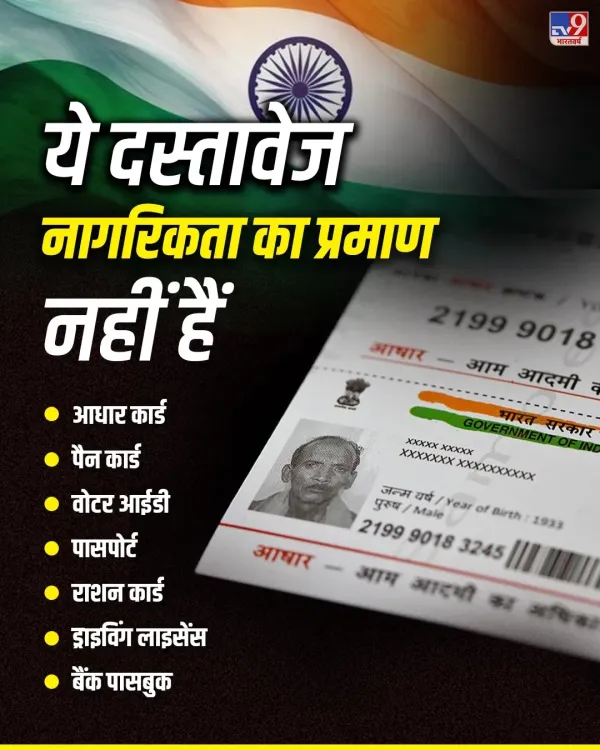
These documents will not prove citizenship
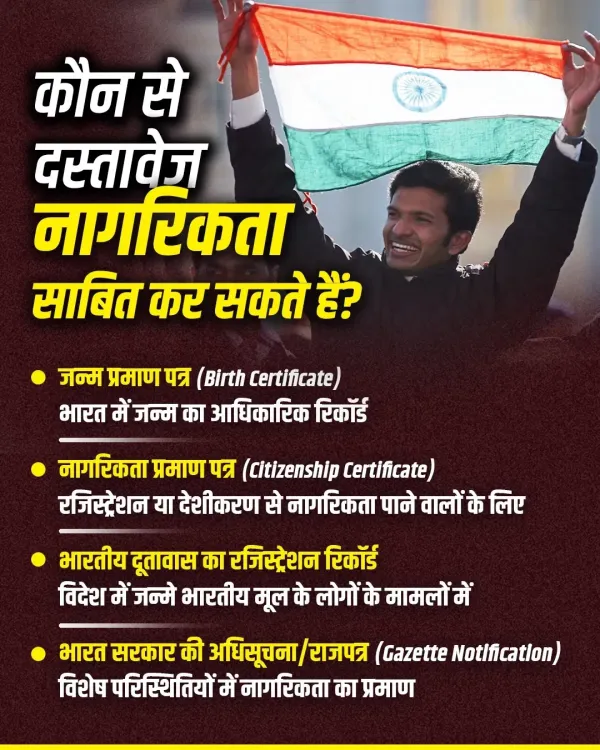
Indian Citizenship Proof
This case is of a person resident of Nagaon district of Assam, who has been declared a foreigner. He filed a petition against this in the Gauhati High Court. The petitioner said that he is an Indian citizen by birth. He claimed that his father's name was recorded in the voter list of 1970. He also said that his elder brother's name is present in the voter list of 1965. Apart from this, he also cited his name being in the voter lists of 2005, 2011 and 2014. When it came to documents, the petitioner's argument was that due to floods in the old village, many important documents had got damaged. For this reason they could not present all the records. He appealed to the court to provide relief on humanitarian grounds.
The High Court examined all the records given by the petitioner, after which it was found that the biggest weakness of the petitioner was the lack of documents proving family relationship. The court said that merely stating one's relationship verbally is not enough. It is also necessary to prove it through government records or any documents. During the investigation, it also came to light that in the voter list cited, the information given about many names and relationships was not matching with each other. For example, the name of the father of the person whom the petitioners were claiming as their elder brother was recorded differently in the records. This cast doubt on the entire claim. The petitioner could not prove his relationship with his brother.
Often people think that if their or their family's name is in the voter list, then citizenship is automatically proved. But the court made it clear that this is not so. The court said that the voter list is only a document. It will be considered effective only when it is proved that the person recorded in it is actually related to the petitioner's family. In this case, voter lists of 1965, 1970, 2005, 2011 and 2014 were presented, but there was no document that could link all these records with each other. Therefore, the court held that Indian citizenship cannot be proved on the basis of voter list alone. The petitioner also argued that the previous lawyer did not give proper legal advice, hence the necessary documents could not be produced on time.
The petitioner's lawyer argued that the petitioner did not get proper advice from his lawyer who was fighting the case before the Foreigners Tribunal. But the High Court did not accept this argument, for which two reasons have emerged. First, the court said that no allegations have been made against the petitioner's lawyer in the writ petition and the petitioner did not involve his old lawyer in the matter nor did he file any complaint against him. The petitioner has not filed any complaint against his lawyer before the competent authority to decide on cases of misconduct by lawyers. Therefore, merely saying that the lawyer did not give proper advice cannot be a basis for hearing the case again. For this reason, the High Court rejected the petition and upheld the 2017 decision of the Foreigners Tribunal.
Documents required for citizenship
In India, documents like Aadhar Card, PAN Card, Voter ID and Passport are very important for identity. But, according to law, these alone are not considered as final proof of Indian citizenship. Indian citizenship is determined under the Citizenship Act, 1955. Citizenship can be obtained on the basis of birth, descent, registration, naturalization or inclusion of any new territory in India. If someone is an Indian citizen by birth, his birth certificate can be an important document. At the same time, the government issues citizenship certificate to those who get citizenship through registration or naturalization. That is, to prove citizenship in India, every case is decided on the basis of law and related records.