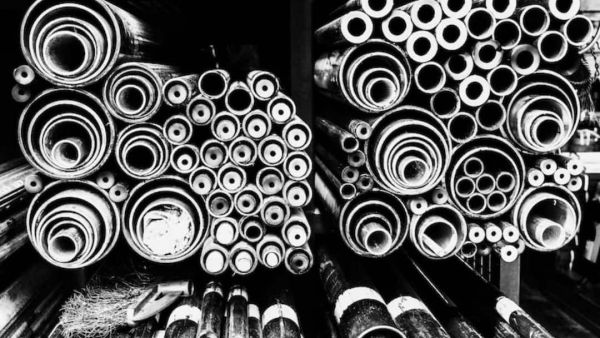
India's steel exporters are set to retain a competitive position in the United Kingdom and the European Union even as both markets roll out stricter import controls aimed at addressing excess global steel capacity.
According to a report by the Financial Express, the new trade measures, which came into force on Wednesday, preserve India's relative advantage because of its free trade agreements with both the UK and the EU.
The UK and the EU have introduced the revised quota regimes to curb the inflow of what they describe as state-subsidised steel and to encourage greater utilisation of domestic production capacity. The new framework replaces the steel safeguard mechanism that expired on June 30.
While both markets have tightened overall duty-free steel imports, countries covered by free trade agreements have received preferential treatment.
EU has reduced its overall duty-free steel import quota by 47 per cent to 18.3 million tonnes. However, half of this allocation has been reserved for countries that already have, or are close to concluding, free trade agreements with the bloc.
India and the EU have completed negotiations on their proposed free trade agreement and are aiming to sign it before the end of the year.
Under the revised arrangement, India has secured around 2 million tonnes of quota across 16 steel products, compared with exports of about 2.2 million tonnes to the EU during 2025-26.
The allocation is the largest among the EU's FTA partners. The European bloc remains India's biggest overseas steel market, accounting for 34.4 per cent of the country's total steel exports of 6.6 million tonnes.
The UK has also modified its steel import regime following discussions with India.
According to the report, Britain's initial proposal announced in March envisaged a 60 per cent reduction in duty-free steel imports. Following negotiations, the final cut has been revised to 51 per cent.
Imports exceeding the prescribed quota will now attract a 50 per cent tariff, compared with the 25 per cent duty applicable under the earlier safeguard mechanism.
Britain has fixed its global duty-free steel quota at 3.2 million tonnes annually, up from the earlier provisional cap of 2.66 million tonnes.
The revised framework also provides greater room for Indian exports in certain product categories. India's quota for hot rolled coil has been increased by 169 per cent to 33,456 tonnes from the earlier proposal of 12,405 tonnes. The quota for metallic coated sheets remains unchanged at 1.25 lakh tonnes.
Overall, India's steel quota in the UK has been set at 1.67 lakh tonnes, while its current exports to the British market stand at about 1.37 lakh tonnes.
The quota revisions come after India raised concerns over the UK's initial proposal, arguing that the restrictions were inconsistent with the spirit of the Comprehensive Economic and Trade Agreement (CETA), which had already been concluded between the two countries.
The issue prompted several rounds of discussions involving ministers and senior officials before both sides reached an understanding on June 17.
Subsequently, during a meeting between Prime Minister Narendra Modi and UK Prime Minister Keir Starmer on the sidelines of the G7 Summit, the two leaders agreed to operationalise the CETA from July 15.
Although both the UK and the EU have adopted stricter safeguards against steel imports, India's position appears relatively protected because of its trade agreements and ongoing negotiations.
Under the revised systems, FTA partners can also access residual quota allocations under specified conditions. However, exports beyond the quota limits will attract a 50 per cent tariff in both markets, replacing the earlier 25 per cent duty applicable under the expired safeguard mechanism.
For Indian steel exporters, the latest measures suggest that while access to global markets is becoming more regulated, preferential trade arrangements continue to provide an important competitive advantage.