When England reached the hydration break in the second half of their round of 32 clash against DR Congo, they appeared to be struggling. Yet, their next challenge in the 2026 World Cup will present a completely different test as they travel across the border for their round of 16 encounter.
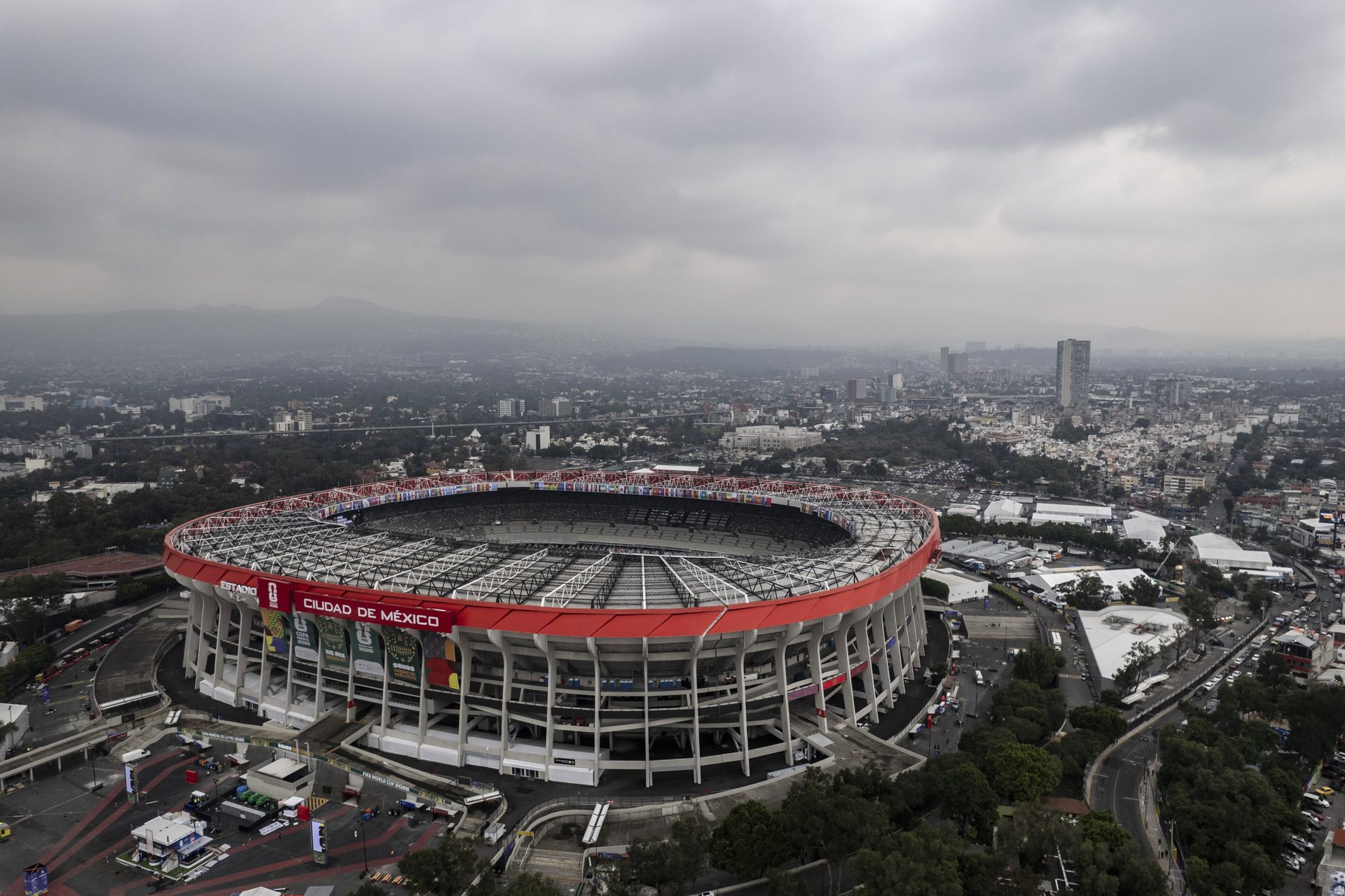
England overturned a first-half deficit to defeat DR Congo 2-1 at Atlanta Stadium, with Harry Kane scoring his second goal of the match to seal the win. The result sets up a daunting round of 16 meeting against Mexico — and it will be staged at the legendary Azteca Stadium.
Known as El Tri, Mexico boast an extraordinary record at this iconic football venue, both in general competition and particularly at the World Cup.
The Azteca, officially referred to as Mexico City Stadium for FIFA tournaments, holds a unique distinction as the only stadium worldwide to have hosted matches in three different World Cups. It staged the opening fixture of the 2026 World Cup, as well as the finals of the 1970 and 1986 editions.
Mexico have contested ten World Cup fixtures at the famous Azteca, remaining unbeaten throughout those matches despite facing formidable opponents such as the Soviet Union in 1970 and Belgium in 1986.
Having already defeated South Africa, Czechia, and Ecuador at the Azteca during this World Cup, Javier Aguirre’s Mexico will now face Thomas Tuchel’s England in a round of 16 match that kicks off at 1 am UK time on Monday.
While Ecuador’s players were used to high-altitude conditions, England will have to contend with the Azteca’s elevation — a factor that often serves as Mexico’s unofficial twelfth man.
The Azteca sits 2,200 metres above sea level — equivalent to 7,220 feet — comfortably above the altitude level at which physiological changes begin to impact player performance. This elevation gives acclimatised teams a clear edge over those unaccustomed to such conditions.
As altitude rises, both atmospheric pressure and air density drop. Once above the 2,000-metre threshold, athletes experience a noticeable decline in aerobic capacity — meaning their bodies have reduced access to oxygen.
This reduction forces the heart, lungs, and muscles to work harder and less efficiently, leading to faster fatigue and slower recovery during high-intensity play.
“In sports medicine, high altitude is considered anything greater than 1,500 metres,” notes Physiopedia. “At altitude, the partial pressure of oxygen in the lungs decreases. The oxygen gradients between the alveoli and blood, and between the blood and tissues, are reduced.”
Though the effects become far more pronounced at extreme altitudes, the main challenge around 2,000 metres is the reduced aerobic performance. However, for athletes who have adjusted to these conditions, the thinner air can be an advantage — offering less resistance and enabling faster movement.
England entered the tournament aiming to top Group L and build momentum as the World Cup progressed.
Despite showing limited improvement against DR Congo, facing Mexico at the Azteca in the round of 16 was always part of Tuchel’s projected path. The team’s preparations reflect this strategy.
Reports indicate that England will travel to Mexico City two days before the match to help their players adapt to the altitude. While full acclimatisation in such a short period is unrealistic, the move could help minimise the effects of the thinner air. However, the team is not expected to stay longer, as returning to their World Cup base in Kansas City remains a logistical priority.