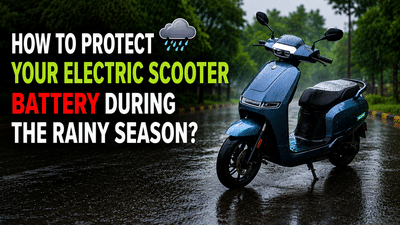
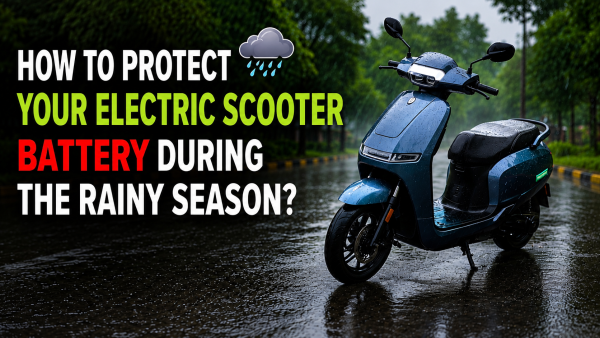
The battery is the heart of an electric scooter and one of its most expensive components. Although modern electric scooters are designed with water-resistant features, prolonged exposure to rain, moisture, and standing water can still impact the battery and electrical system.
Regular maintenance during the monsoon can help prevent unnecessary wear, maintain efficiency, and reduce the chances of expensive repairs.
Whenever possible, avoid riding through flooded streets. Excess water can enter sensitive electrical areas, including the charging port and wiring, potentially causing damage. If you must travel in the rain, ride slowly and choose routes with minimal water accumulation.
2. Charge Only After the Scooter Is DryNever plug in your electric scooter immediately after it has been exposed to rain. Allow the vehicle to dry completely before charging, and always charge it in a dry, sheltered location. Using the manufacturer-approved charger is equally important for safe and efficient battery performance.
3. Clean Off Mud and MoistureRainwater often leaves behind mud, dirt, and moisture that can accumulate around the scooter's body and electrical components. After every wet ride, wipe the scooter with a soft, dry cloth. Avoid using high-pressure water sprays near the battery compartment, charging socket, or wiring, as they may force water into sensitive areas.
4. Park in a Covered and Dry LocationWhere you park your scooter is just as important as how you ride it. Always keep your EV in a covered, well-ventilated area during the monsoon. Prolonged exposure to rain and humidity can lead to moisture buildup, which may affect the battery, connectors, and other electrical components over time.
5. Don't Let the Battery Drain CompletelyIf you don't plan to use your scooter for several days, avoid leaving the battery completely drained. Check the battery charge level periodically and keep it adequately charged to maintain battery health and prolong its lifespan.