Connectivity has long influenced how cities grow. In Dubai, it is now expected to play an equally important role in shaping the next phase of the property market. As the city expands its rail network through the Blue Line and the planned Gold Line, transport infrastructure is emerging as one of the city's biggest drivers of real estate demand. Improved connectivity is expected to influence where people choose to live, where businesses establish themselves, where developers build and where investors see the strongest long-term potential.
The shift comes as Dubai continues to attract new residents, businesses and investment, placing greater emphasis on well-connected, integrated communities. Beyond making journeys easier, the expanding metro network is expected to unlock new development corridors, strengthen existing residential and commercial districts, and support the city's long-term urban growth ambitions.
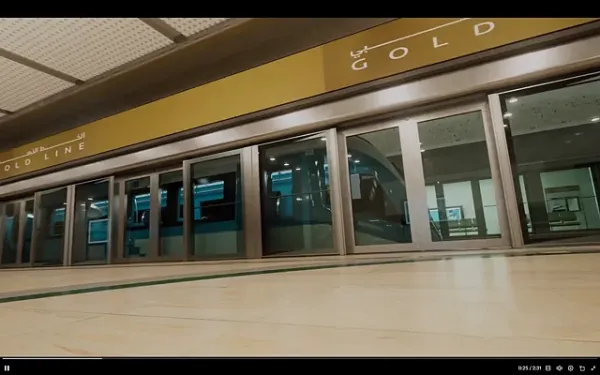
The 30-kilometre Blue Line, featuring 14 stations and scheduled to open in September 2029, will connect some of Dubai's fastest-growing communities, including Dubai Creek Harbour, Dubai Festival City, International City, Dubai Silicon Oasis, Academic City, Mirdif and Al Warqa. Meanwhile, the proposed 42-kilometre Gold Line will further expand the network, linking key residential and commercial districts such as Business Bay, Meydan, Al Barsha South, Jumeirah Village Circle and Jumeirah Golf Estates, while integrating with Etihad Rail and supporting future urban expansion across the emirate.
The Next Growth Corridor
With construction progressing on schedule, the Roads and Transport Authority (RTA) expects the Blue Line to reach 30% completion by the end of 2026, ahead of its planned opening on September 9, 2029.
Modern urban infrastructure is increasingly becoming a driver of efficiency, convenience and quality of life.
For the RTA, however, the project represents far more than an expansion of Dubai's public transport network. "The Dubai Metro Blue Line is one of RTA's most strategic projects. The line connects the Red and Green Lines and serves districts expected to house nearly one million residents by 2040," says Mattar Al Tayer, Director-General and Chairman of the Board of Executive Directors of RTA.
The economic impact is expected to be equally significant. According to RTA estimates, the Blue Line will generate more than Dh56.5 billion in economic benefits by 2040 through savings in travel time, fuel consumption and reduced traffic accidents. Land and property values around metro stations are projected to increase by up to 25%, while congestion along key corridors could decline by 20%.
Al Tayer adds that the project reflects Dubai's broader Transit-Oriented Development (TOD) strategy and supports the objectives of the Dubai Economic Agenda D33, reinforcing the city's long-term ambition to create more connected, sustainable and economically competitive urban centres.
Vivek Bhavsar, Director – Consulting at JLL Mena.
Around the world, major metro expansions have consistently been linked to stronger property values, higher rental demand and the growth of vibrant, transit-oriented communities. Dubai now appears to be entering a similar phase, where connectivity itself is becoming a premium.
"Historically, across global cities, we have seen how connectivity and accessibility bring a value shift to properties in transport corridors, increasingly influencing occupancy rates, rental yields and tenant demand. This is true for Dubai as well," says Vivek Bhavsar, Director – Consulting at JLL Mena.
"The Blue Line and Gold Line metro expansion plans will certainly unlock new corridors of demand for properties positioned or coming up along these strategic locations. This planned growth framework bridges connectivity gaps, bringing previously overlooked districts into the investment mainstream, as investors recognise the long-term growth potential of transit-oriented developments. With every construction milestone, we can expect to see increased buying activity and capital appreciation, leading to sustainable growth across previously under-leveraged areas."
A New Driver of Demand
For years, Dubai's residential market has largely been driven by waterfront locations, established communities and lifestyle amenities. Increasingly, however, infrastructure itself is becoming a deciding factor for both buyers and tenants.
As new metro corridors extend into areas once considered secondary locations, they are improving accessibility, broadening the pool of potential residents and creating fresh opportunities for developers. Commercial projects, in particular, stand to benefit as businesses increasingly prioritise accessibility for employees and customers, while residential communities become more attractive to long-term end users seeking shorter commutes and greater convenience.
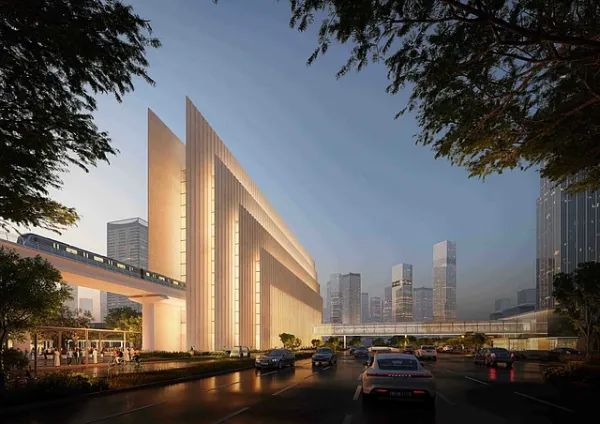
Bhavsar believes this marks an important shift in the maturity of Dubai's property market. "Infrastructure development redefines neighbourhoods, boosting demand and building value beyond prime markets. In Dubai, the expanding metro infrastructure in previously secondary locations has made these attractive to buyers, tenants and long-term investors."
"Given Dubai's accelerated growth, transit access has shifted from a 'nice to have' to a non-negotiable in buying and renting decisions. Especially in the initial stages, metro proximity will define the positioning of upcoming developments, particularly in the commercial sector, differentiating these from non-proximity areas. In the residential sector, the shift from location-based demand to infrastructure-led demand is a sign of the market's evolution into a more mature phase."
Modern urban infrastructure, he adds, is increasingly becoming a driver of efficiency, convenience and quality of life.
"Hence, the question we are likely to hear going forward will be: 'How far is the walk to the metro?', and not, 'Is there a metro nearby?'"
While rising property values are likely to dominate headlines, the broader impact of Dubai's metro expansion could prove far more significant.
Around the world, successful metro systems have encouraged the growth of walkable, mixed-use communities where residential, commercial, retail, education and healthcare facilities are concentrated around transport hubs. Such developments reduce dependence on private vehicles, encourage more sustainable lifestyles and support stronger community interaction.
Sheikh Mohammed inaugurates work for Dubai Metro Blue Line tunnels 'Huge difference': Dubai residents expect Blue Line to cut travel time by 40 mins Dubai Metro Blue Line: 14 stations, largest underground interchange revealed in new designs