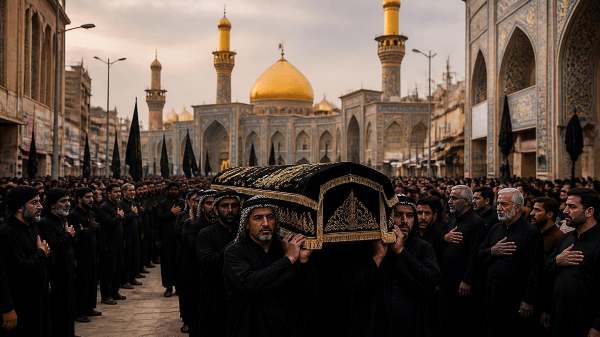
The coffin of the late Iranian Supreme Leader Ayatollah Ali Khamenei was brought to the Imam Khomeini Grand Mosalla in Tehran, where his body lay in state for public viewing and official ceremonies. The Mosalla's significance is as much political as it is religious. It has hosted speeches by senior officials, national ceremonies and mass events aimed at showing unity and support for the state.
Iran has announced the funeral journey of its former Supreme Leader, Ayatollah Ali Khamenei. The country has begun the funeral ceremonies for Iran’s late Supreme Leader, Ayatollah Ali Khamenei, on Saturday, July 4, 2026, culminating in his burial in Mashhad on July 9, 2026. The funeral procession will take place in various places and it will pass through a series of locations that reflect the religious, political and ideological pillars of the Islamic Republic. The funeral will pass through revered Shia holy cities of Qom in Iran to Karbala in Iraq before the final burial rites. The route holds deep religious and symbolic significance, reflecting Khamenei’s lifelong association with Shia Islam and Iran’s religious establishment. Keep on reading to know more.
Khamenei'sFuneral begins in Tehran
The coffin of the late Iranian Supreme Leader Ayatollah Ali Khamenei was brought to the Imam Khomeini Grand Mosalla in Tehran, where his body lay in state for public viewing and official ceremonies. The Mosalla's significance is as much political as it is religious. It has hosted speeches by senior officials, national ceremonies and mass events aimed at showing unity and support for the state. Mosalla is a neighbourhood that is known for being home to the sprawling Imam Khomeini Mosalla Mosque, where worshippers gather for religious ceremonies and weekly prayers.
Holding the public viewing there highlights Khamenei’s role both as a religious authority and as the head of a political system founded on clerical rule.