In June 2024, Thanh sold her home in the northern province of Ha Giang and moved to Hanoi to live with her daughter. One day, she received a call inviting her to attend a tourism seminar. Although she refused, a travel company employee obtained her address and arrived at her home to pick her up.
At the event, she was persuaded to purchase a 20-year “holiday ownership” contract worth VND230 million (US$8,746), with promises that it could be resold for a profit within one or two months.
Thanh had originally intended to use the proceeds from selling her house to help her daughter buy an apartment. Instead, believing the investment could generate extra income, she transferred more than VND1 billion to buy five vacation packages.
“Back then, I thought it would be nice to gain a little extra money to buy a house for my daughter,” she said.
|
Members of Thanh’s group prepare documents and petitions to submit to authorities seeking assistance in 2025. Photo courtesy of Thanh |
She soon realized she had fallen victim to a scam and repeatedly requested to cancel the contracts. The company promised to return her money within a week, but she is still waiting.
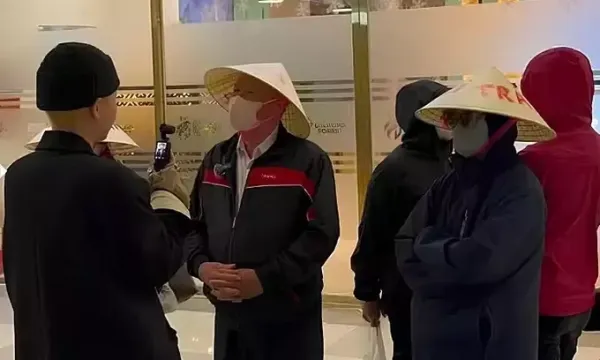
Over the past two years, Thanh has filed complaints with multiple authorities and joined a group of nearly 300 victims to seek refunds and warn others about similar schemes.
Around 90% of the group members are elderly. Some lost several hundred million dong, while others lost as much as VND20 billion.
“Many people say we were scammed because we were greedy,” Thanh said. “But at our age, what is there to be greedy for? We can no longer work and only hoped to earn a little more to support our children and grandchildren.”
Her contracts were among 17,000 timeshare agreements linked to 27 Hanoi-based travel companies, which allegedly misappropriated about VND2.7 trillion from thousands of customers. The case has since been prosecuted by the Hanoi police.
In HCMC, nearly 200 travel company employees and executives have also been accused of using similar methods to trick customers into signing more than 5,500 contracts and stealing over VND600 billion.
Police said scammers often target elderly people through free gifts, discounted trips, seminars and meals at luxury hotels and restaurants.
After gaining victims’ trust, they convince them to buy vacation ownership packages by promising high returns. Once contracts are signed, victims are pressured to upgrade their memberships or pay additional fees for supposedly greater profits.
 |
|
Authorities charged 187 defendants in June 2026 over 21 property fraud cases involving timeshare ownership and resale brokerage schemes. Photo by Linh Dan |
Assoc. Prof. Dr. Vu Manh Loi, former deputy director of the Institute of Sociology, said loneliness is a major reason older adults are vulnerable to fraud.
Many seniors face declining health and shrinking social networks, while their adult children often have limited time to communicate with them due to the demands of modern life.
Their growing need for attention and companionship makes them more likely to trust scammers who appear caring and understanding, Loi said.
At the same time, many elderly people want to remain financially independent and continue supporting their families, making them vulnerable to investment schemes promising easy profits.
That was the case for Trinh Thi Lieu, 78, from Hanoi.
After her husband died in 2018, she moved in with her children but still felt increasingly isolated.
“My children take good care of me physically, but we rarely sit down to talk and connect,” she said.
In 2021, she accepted an invitation to a travel seminar because she wanted an opportunity to go out and meet people.
There, she was persuaded to buy a 20-year vacation package worth VND231 million, with promises that she could resell it for a profit or leave it to her children and grandchildren.
With her family depending mainly on her monthly pension of VND7 million, she believed the investment could help improve their finances.
Dr. Bui Thi Lien, a criminal psychologist at the People’s Security Academy, said fraudsters manipulate older victims by first building emotional connections through attention, compliments and care.
Once victims trust them, they introduce investment offers with claims of exclusive deals, limited availability and the need for immediate payment. This creates anxiety and pushes victims into rushed decisions, she said.
Many seniors also hide the truth after being scammed because they fear criticism from their families.
After losing billions of dong through dozens of contracts, she continued borrowing money in the hope of recovering her losses. Whenever the victims’ group went to demand refunds, she hid if she saw people recording.
“I was stupid, so I’ll take the blame, and I won’t let my children find out and stress over it,” she said.
A year after being deceived, Lieu’s health deteriorated due to heart disease and high blood pressure. When she tried to resell her contract to pay medical bills, she was instead convinced to upgrade to a VIP package and buy additional contracts.
She eventually spent around VND2 billion, including about one-third from borrowed money.
Even after suspecting she had been scammed and reporting the case to police, she borrowed from a loan shark in June to pay another VND40 million after being promised her package would be sold within a month.
“They sounded so sincere and convincing that I let my guard down and trusted them,” she said.
She finally realized the truth after seeing media reports warning about timeshare scams.
“They are afraid of their children’s blame and judgment, so they secretly borrow more money in a desperate bid to recover their losses, only to sink deeper into the trap,” Lien said.
Among the victims fighting alongside Thanh is the mother of a government prosecutor.
After losing billions of dong through dozens of contracts, she continued borrowing money in the hope of recovering her losses. Whenever the victims’ group went to demand refunds, she hid if she saw people recording.
“I was stupid, so I’ll take the blame, and I won’t let my children find out and stress over it,” she said.
A year after being deceived, Lieu’s health deteriorated due to heart disease and high blood pressure. When she tried to resell her contract to pay medical bills, she was instead convinced to upgrade to a VIP package and buy additional contracts.
She eventually spent around VND2 billion, including about one-third from borrowed money.
Even after suspecting she had been scammed and reporting the case to police, she borrowed from a loan shark in June to pay another VND40 million after being promised her package would be sold within a month.
“They sounded so sincere and convincing that I let my guard down and trusted them,” she said.
She finally realized the truth after seeing media reports warning about timeshare scams.
|
Members of Thanh’s group gather outside the timeshare company’s headquarters to demand refunds. Photo courtesy of Thanh |
Loi said preventing scams targeting seniors requires stronger support from both families and communities.
Regular conversations, emotional support and encouraging elderly people to discuss financial decisions with relatives can significantly reduce the risk, he said.
Lien advised families to keep older members informed about new scam methods and suspicious offers.
When scams happen, relatives should avoid blaming victims and instead help them cut contact with fraudsters, report the case to authorities and recover emotionally.
Thanh now thinks twice before answering calls from unknown numbers. “I turn down all gift offers and seminar invitations,” she said.
*Characters’ names are changed.