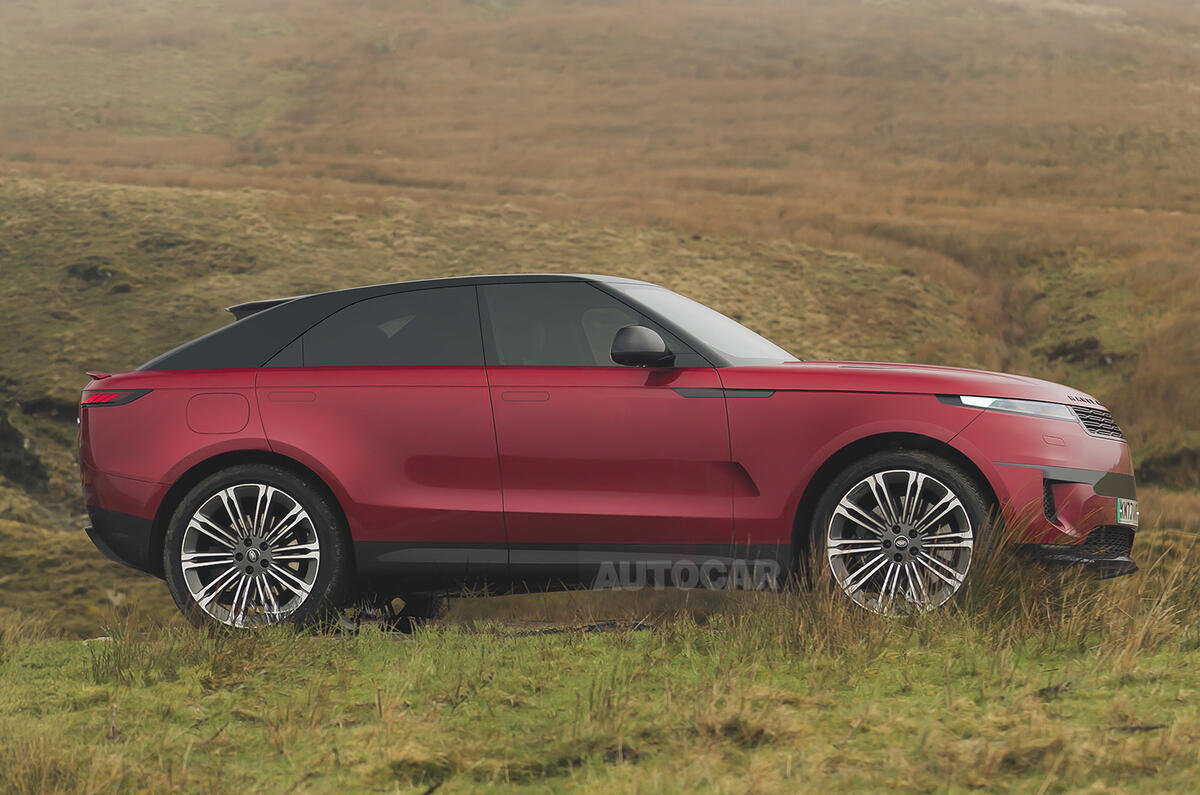
Range Rover is preparing to unveil one of its most significant models in recent years as it takes aim at the BMW iX3, Mercedes-Benz GLC, and Volvo EX60 with a stylish new electric SUV that will replace the Velar. The brand has also confirmed that a combustion-powered version will follow later.
The upcoming crossover, currently in an advanced testing phase, is expected to make its global debut within the next six months.
This launch will mark the beginning of a new product wave for Jaguar Land Rover (JLR), ending a long pause since the last all-new model, the Range Rover Sport, was introduced in 2022.
At present, JLR’s focus remains on the much-anticipated Range Rover Electric and Jaguar Type 01 flagships, both due for unveiling by the end of this year.
Following these launches, JLR will roll out more volume-oriented electric models, including a sleek crossover designed to rival the BMW iX3 and a compact entry-level 4x4, provisionally named the Defender Sport. Both models have been previewed in design renderings.
These new vehicles will be the first to use JLR’s new EMA platform, originally conceived as an electric-only architecture. However, it has now been adapted to support hybrid powertrains, offering buyers greater flexibility across the company’s range.
According to JLR, while future Jaguar models will be exclusively electric and the full-size Range Rover lineup will include both ICE and EV options, the first EMA-based vehicle — a smaller Range Rover crossover — will be designed to allow future hybrid-electric propulsion systems.
This hybrid setup is described as a “unique new addition to JLR’s propulsion portfolio,” indicating that it will be distinct from the current internal combustion engines used in the lineup.
The upcoming Range Rover crossover will be followed by a new addition to the Defender family — the Defender Sport — which will also feature hybrid and electric versions.
JLR’s decision to retain internal combustion options recognises continued global demand for such powertrains and marks a return to the company’s earlier plan of making the EMA platform multi-fuel compatible.
It remains uncertain whether JLR will offer smaller models with a range-extender system, an idea that had previously been discussed.
The new crossover, among the last models developed under former design chief Gerry McGovern, represents a bold departure from traditional Range Rover design language. Instead of a conventional high-riding SUV profile, it adopts a more streamlined and coupe-like silhouette, reminiscent of the Polestar 4 and DS N°8 in profile, giving it the stance of a modern saloon.
The roofline slopes sharply toward the rear, culminating in a compact, saloon-style tail section that enhances the width and muscularity of the rear haunches. Camouflaged prototypes suggest that the new SUV might replace the traditional rear window with a digital rear-view camera system, similar to that used in the Jaguar Type 01.
This design improves rear headroom by eliminating the bulky upper frame needed for conventional glass windows. While JLR hasn’t commented officially on the final design, this distinctive approach will clearly separate it from other Range Rover models.
This styling evolution aligns with JLR’s broader strategy to give each of its core families — Range Rover, Defender, Discovery, and Jaguar — a distinct identity, with the Range Rover line focusing more on refinement and long-distance comfort rather than pure off-road ability.
The crossover’s unique “segment-blending” design could prove advantageous in a market where rivals such as BMW, Mercedes, and Audi often sell both saloon and SUV versions based on shared technology — for instance, the BMW i3 and iX3, Mercedes GLC and C-Class EVs, and Audi A6 and Q6 e-tron.
Though the new model’s proportions are close to the current Velar’s, it has yet to be confirmed whether it will retain the Velar name. JLR is currently repositioning its major sub-brands — Discovery, Range Rover, Defender, and Jaguar — to stand alone with their own distinct model lines, which could impact the naming strategy for this vehicle.
Since the Velar nameplate has only been in use since 2018, its future role in this structure remains uncertain.
The new mid-size Range Rover crossover is expected to become one of JLR’s top-selling models and a key player in its electric lineup alongside the smaller, possibly more affordable Defender Sport. To effectively compete with German and Swedish rivals, however, it must deliver cutting-edge technical specifications.
Competitors like BMW, Volvo, and Mercedes offer ranges approaching 500 miles and support ultra-fast 300kW charging, making them highly attractive to long-distance drivers.
While JLR has yet to release technical details for its EMA-based models, it’s anticipated that the platform will incorporate 800V electrical architecture, allowing charging speeds on par with the fastest EVs currently available — such as the upcoming electric Range Rover.
It remains to be seen if the smaller Range Rover EV, expected to be around 4.8 metres long (similar to the current Velar), will use the same large 118kWh battery pack as its larger sibling. However, since EMA is engineered as an “electric-first” platform, it may be able to accommodate a substantial battery within a shorter wheelbase. For context, the BMW iX3 and Volvo EX60 both offer over 110kWh of capacity in their extended-range versions.
It’s unclear whether JLR will opt for a single-motor layout to prioritise efficiency and cost, as the brand has historically favoured all-wheel-drive systems. Two-wheel-drive configurations were last seen in the entry-level Freelander and Evoque models over a decade ago.
Battery production will be handled by Tata-owned Agratas at its upcoming £4 billion Somerset gigafactory. The facility, scheduled to open next year after several delays, will have an annual capacity of up to 500,000 EV batteries. It will supply JLR’s Solihull plant, which produces Range Rover and Jaguar EVs, and the Halewood facility, where the new mid-size SUV will be built.
Currently, Halewood manufactures the Discovery Sport and Evoque, but it is undergoing a £500 million transformation to accommodate EV production. The Velar-sized SUV and Defender Sport are expected to be the first to roll off its upgraded assembly lines, potentially replacing their petrol-powered predecessors in time.
Importantly, Halewood will retain the capability to produce hybrid and combustion models alongside EVs, reflecting JLR’s flexible approach to powertrain strategy. This means that both electric and hybrid versions of the new Velar successor and Defender Sport will likely be built in sequence at the site.
The upcoming crossover will also be the first all-new JLR model developed under the leadership of PB Balaji, who took over as CEO last year. Previously Tata Motors’ chief financial officer, Balaji’s appointment was widely viewed as a move to strengthen Tata’s strategic oversight of its British subsidiary.
Balaji faces a challenging environment, with JLR still recovering from last year’s cyberattack that disrupted production, while also contending with US import tariffs, stiff competition in China, and looming European trade regulations that could impact UK-built vehicles.
Launching a high-volume model positioned below the flagship Range Rover and Defender lines will be crucial for maintaining market share and accelerating JLR’s transition toward electrification, especially as demand for luxury EVs remains unpredictable.
The electric version of this Velar-sized SUV will launch around the same time as the electric Range Rover, Range Rover Sport, and Jaguar Type 01 GT. However, while those will cost upwards of £100,000 and target the luxury segment, this new mid-sized SUV is expected to attract buyers from BMW, Volvo, and Mercedes’ mid-range electric offerings.
Unlike its German rivals, JLR’s new SUV will not serve merely as an electric variant of a best-selling combustion model — an advantage as the Velar’s sales have historically been modest compared to other Land Rover models. Nonetheless, it will play a vital role in sustaining the brand’s presence in a key segment during its shift to electric mobility.
Global demand for luxury EVs has softened in recent years, prompting brands like Aston Martin, Bentley, Lotus, and Porsche to delay full electrification plans. JLR itself postponed its flagship EV launches to better align with expected market recovery.
That said, electric powertrains are finding stronger traction in premium mid-tier segments, where performance and sound are less critical. BMW, for instance, has already increased production of the iX3 to meet demand, selling over 10,000 units in its first two months. Similarly, Volvo ramped up EX60 output, and Mercedes recorded record GLC EV orders in its initial production phase.