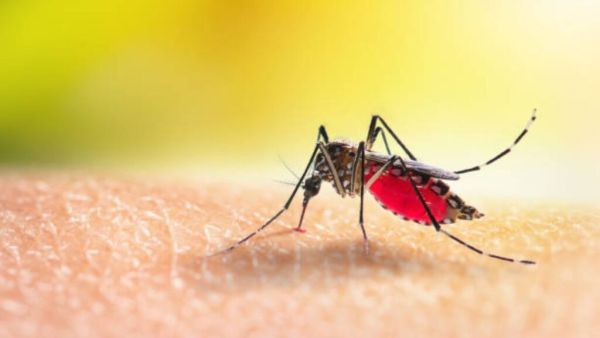
The public health system in India has undergone significant changes in the last few years. Today, more emphasis is placed on preparedness to prevent health threats than merely responding to them. however, Dengue And measures against insect-borne diseases such as fever, however, lack this approach. Because efforts in this regard are often temporary and only responsive to emerging situations rather than being consistent and preventive. Subrata Pal, Head – Fumigant Business and Public Health Business, UPL SAS has given more information about this. (Photo courtesy – istock)
Women’s Health: These 5 habits that affect women’s health the most, change in time or it will be damaged
Globally, mosquito-borne diseases kill more than one million people and infect up to 70 crore people every year. Dengue outbreak has become very widespread in the country. According to a report by the ‘National Center for Vector Borne Diseases Control’ (NCVBDC), 94,198 cases of dengue infection were reported in India till September 17, 2023.
The effects of climate change and increasing urban density are increasing the risk of mosquito populations every year, all of which are disrupting rainfall patterns and increasing the intensity of floods. Despite increased awareness and coordinated mosquito control through public health agencies, preventive measures are often focused only on the most fertile seasons for infection. This raises an important question: Can dengue prevention become less reactive and more preventive?
Management of dengue has traditionally focused on reducing the number of adult mosquitoes; Therefore, these measures are usually taken after the mosquitoes appear or the disease increases. Although these measures still play an important role today, more attention is now being paid to addressing the problem early in the mosquito’s life cycle. This approach takes into account an important reality: if mosquito breeding is stopped at an early stage, more effective and sustainable measures can be taken to prevent the spread of disease.
Today’s urban environment creates many conditions conducive to the growth of mosquitoes. Stagnant water in construction areas, roofs of buildings, coolers, various household utensils, sewage drains and neglected public spaces become breeding grounds for mosquitoes. Factors such as increasing population and changing environmental conditions highlight the need for more rapid and consistent measures to control mosquitoes.
From epidemiologic control to preventive measures, a multi-pronged approach is needed to build more efficient mechanisms to combat dengue. Changes in disease transmission patterns have increased reliance on environmental management, collective public awareness, and scientific innovation to prevent dengue.
As disease transmission patterns change, collaboration between scientific innovation, environmental management and public awareness is becoming increasingly important for effective prevention. This thinking has led to a move towards comprehensive vector management (insect-carrier control) measures; These measures focus not only on combating outbreaks, but also on preventing the threat of disease at its source.
Going beyond conventional preventive measures, there is increasing emphasis on devising new strategies to reduce mosquito populations at their initial stages of generation. These include natural ingredients obtained from fermentation based methods and the growing trend towards more targeted measures for public health. However, innovative solutions alone are not enough to achieve sustainable results; So it requires the continuous participation of people to create responsible water management and healthy society.
Along with scientific advances that develop new ways to prevent disease, our daily habits are equally important. Things like removing stagnant water, improving drinking water storage, making waste management more effective or regular inspection of public places are the foundations of effective dengue control measures. The common spaces we use – such as residential areas, schools, workplaces, government offices and our homes – all play an important role in preventing mosquito-breeding factors. Instead of taking only seasonal preventive measures, a continuous campaign for public health based on awareness, responsibility and daily habits can help create a healthier environment.
Rectal Bleeding: Seeing blood clots in stool? Hemorrhoids are not always caused by several diseases, including Fisher
As India progresses and develops, there is a need to rethink how to create and maintain a cleaner and healthier urban environment from a public health perspective, particularly with regard to dengue prevention. In order to reduce risk in the long term, it is necessary to adopt a more proactive and sustainable approach, rather than merely addressing the disease after an outbreak. This includes creating a clean environment and fostering a sense of responsibility and community participation to ensure consistent efforts to eliminate mosquito breeding sites. Ultimately, the success of our solutions will depend not only on how effectively we deal with dengue outbreaks, but also on how consistently and comprehensively we eliminate the conditions that support mosquito breeding. We want to build cities that focus on prevention, not just reaction. This requires increased awareness, shared responsibility and making prevention a part of our daily habits through consistent actions by all citizens.