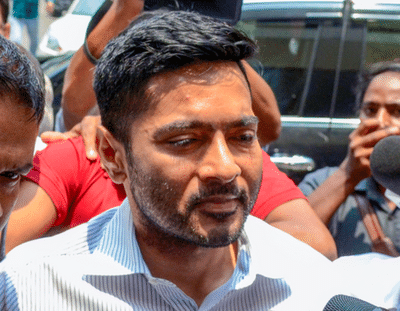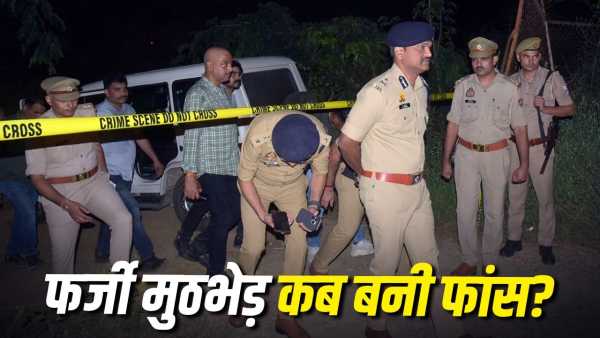
Bharat Tiwari encounter case has once again sparked a debate regarding police encounters in the country. After the death of Bharat Tiwari in an encounter on June 17 in Bhojpur, Bihar, his family members called it a fake encounter. The matter gained so much momentum that questions started being raised on the police action. Later, on the complaint of Bharat Tiwari's mother, an FIR for murder was registered against five policemen including SDPO, SHO and the state government also ordered a judicial inquiry. Talking about reports, 27 policemen were arrested in fake encounter cases between 2017-2022.
This is not the first case when the police themselves have come under the scanner after an encounter. However, many such encounter cases have raised the question that when is a police encounter considered a legal action and when does a murder case get registered against the police because of that action. For this reason, the Supreme Court and the National Human Rights Commission (NHRC) have set strict guidelines for encounter cases, so that along with taking action against the criminals, law and human rights can also be protected.
Encounter cases in India (Sakib Ali/HT via Getty Images)
Bharat Tiwari died in a police encounter on 17 June 2026 in Bhojpur, Bihar. Police claimed that he opened fire in retaliation, while family members alleged that it was a fake encounter. After the growing controversy, a case of murder was registered against five policemen and a judicial inquiry was ordered. This case once again reminds us that an impartial investigation of every encounter is necessary.
There were many such cases in the country in which questions were raised on the police action.
In June 2004, Ishrat Jahan and three others were killed in a police encounter in Gujarat. The police claimed that these people were plotting to murder the then Chief Minister. Later questions were raised on the matter and investigation was conducted on the orders of the court. CBI in its investigation called it an alleged fake encounter and filed a charge sheet against several police officers. This case continued in the courts and investigating agencies for a long time and is included in the most talked about encounter cases of the country.
In November 2005, the police claimed that Sohrabuddin Shaikh was a dangerous criminal and he opened fire on the police, in response to which he was encountered. Later investigation revealed allegations that this encounter was fake. The case was investigated first by state agencies and then by CBI. During the investigation, action was taken against many police officers and the then senior officers. This case is counted among the most talked about alleged fake encounter cases of the country.
In the year 2019, four accused arrested in the case of rape and murder of a female veterinarian in Hyderabad died in a police encounter. Police claimed that the accused were taken to the crime scene to collect evidence, where they snatched weapons and tried to run away. In retaliation the police opened fire and all four died. However, questions were raised on this encounter and the Supreme Court formed an independent commission to investigate the matter. The commission said in its report in 2022 that all four accused died due to police firing and raised serious questions on the police's claim of self-defense. After this, legal action was recommended against the concerned police officers.
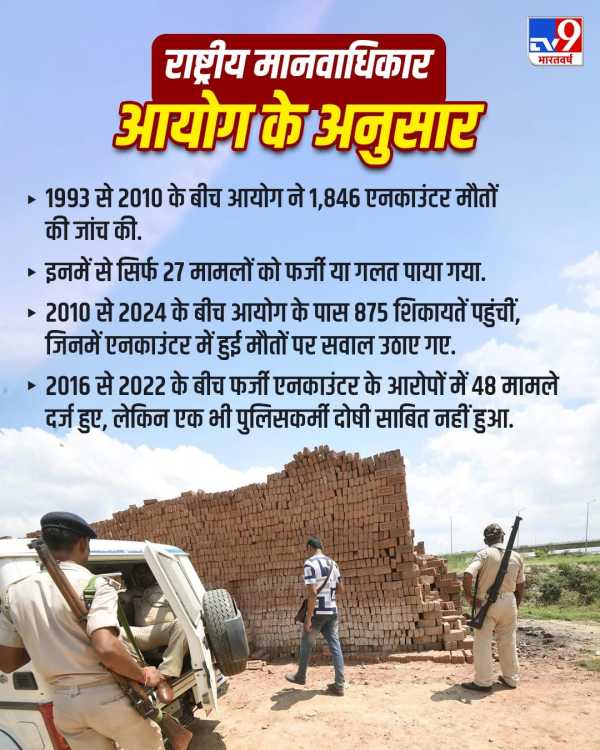
National Human Rights Commission report (Santosh Kumar/HT via Getty Images)
In the year 2014, in the PUCL vs Maharashtra Government case, the Supreme Court said that it is not appropriate to consider every police encounter as correct. If a person dies in an encounter, it is necessary to have a fair and independent investigation. The court issued 16 guidelines for the entire country. These include registering an FIR after the encounter, getting an investigation done by an independent agency, conducting a magisterial inquiry, giving information to the Human Rights Commission and keeping all the evidence safe. The Supreme Court made it clear that the police are not above the law and the legality of every encounter should be investigated as per the law.
National Human Rights Commission (NHRC) data shows that not every encounter is fake. The commission investigated 1,846 encounter deaths between 1993 and 2010, of which only 27 cases were found to be fake or false. At the same time, between 2016 and 2022, 48 cases were registered on allegations of fake encounters, but not a single policeman was proved guilty. According to NHRC, 875 complaints related to fake encounters were received between 2010 and 2024. According to the records of the Commission, 87 to 206 encounter cases were registered every year between 2011-12 to 2023-24, which shows that such cases are continuously monitored and investigated.