AI Generated Summary
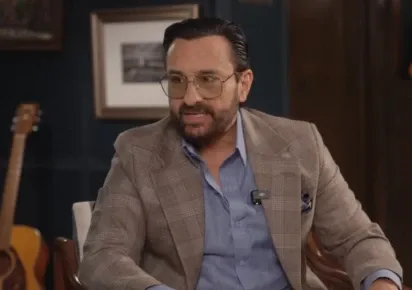
As two of his most iconic films, Dil Chahta Hai and Omkara, celebrate over two decades of cinematic legacy, actor Saif Ali Khan has opened up about the starkly contrasting experiences that defined these landmark projects. In a candid conversation, the veteran star reflected on the technical discipline required for one and the raw creative liberation offered by the other, offering a rare glimpse into the evolution of his 33-year career.
For Khan, Farhan Akhtar’s 2001 coming-of-age drama was a masterclass in precision. It introduced him to a world of filmmaking that was as disciplined as it was exciting. He recalls the novelty of working with live sound on set—a technique that demands absolute vocal control. “Farhan told us, ‘When you swallow water, I can hear it,’” Khan remembered. “You can’t do these things in dubbing. You have to take your time and figure out how to use your voice.” This lesson in vocal nuance was a pivotal moment, marking the first time the “discipline of voice acting” entered his craft.
Beyond the technical aspects, the ethos of the production left a lasting impression. The cast and crew adopted a commendable civic-mindedness while filming in Goa. Khan recounted a specific memo regarding a volleyball sequence that instructed the team, “Please leave the beach slightly cleaner than you found it.” True to the directive, they diligently picked up litter that wasn’t even theirs, an act of environmental consciousness that set a new, respectful tone for the entire shoot.
In stark contrast, the making of Vishal Bhardwaj’s Omkara was a journey into the unknown, characterized by immense creative freedom. Khan described the 2006 adaptation of Shakespeare’s Othello as a unique melting pot, where mainstream commercial actors shared the screen with classically trained performers from the National School of Drama. “Vishal brought together people who probably wouldn’t have shared the same cinematic universe otherwise,” he noted, praising the collaborative atmosphere that encouraged a rich exchange of ideas. This fusion of styles was liberating, allowing him to inhabit a character that felt worlds apart from his previous roles. Learning a new dialect and embodying a menacing, rustic persona provided a sense of artistic escape.
One particularly amusing memory from the Omkara set involved a suggestion from Bhardwaj that nearly pushed Khan out of his comfort zone. He recalled, “I have a very long dialogue in front of a mirror, where my character was speaking to his own reflection. Vishal ji asked, ‘Would you mind doing it naked?’” The proposition was as exciting as it was shocking. Laughing, Khan retorted, “If you direct me naked, I’ll do it,” to which the director swiftly replied, “No.” While the moment remains a funny anecdote, Khan admits that with the benefit of hindsight, he wonders if he should have been more adventurous and taken the director up on his suggestion.
Looking at the industry today, Khan observes a significant shift in audience appetite. While his own philosophy for choosing projects has remained steadfast—prioritizing stories that genuinely move him—he recognizes that viewers are now more receptive to bold, original narratives. He feels there is a newfound freedom and luxury in filmmaking, but the greatest reward comes from witnessing the audience embrace projects that are crafted with unmistakable passion and a touch of difference. For him, the industry’s priority lies not in formulas, but in the authentic connection between a filmmaker’s vision and a viewer’s open mind.
We welcome your contributions! Submit your blogs, opinion pieces, press releases, news story pitches, and news features to opinion@minutemirror.com.pk and minutemirrormail@gmail.com