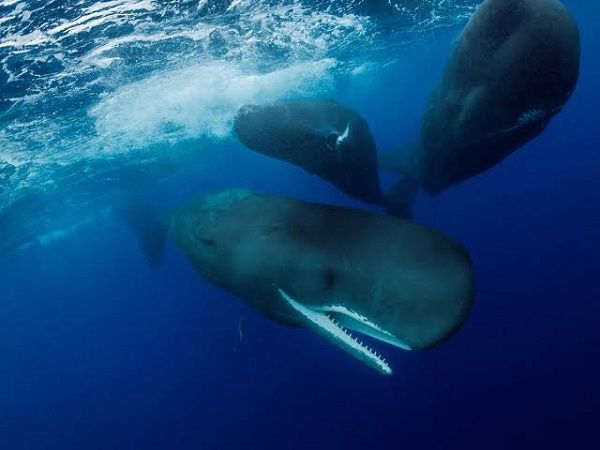
New Delhi. Do only humans have their own language, dialect and culture? A new research by scientists challenges this notion. The study revealed that Sperm Whale Due to living in different areas, have also developed their own “dialects”. Researchers say the way these sea creatures communicate has changed over time, just as human languages and dialects evolve.
This study was published in the scientific journal Proceedings of the Royal Society B The study, published in 2007, analyzed nearly two decades of behavior and sounds of sperm whales living in the Mediterranean Sea.
Sperm whales make continuous clicking sounds to communicate with each other. Scientists understand these sound patterns ‘Coda’ They say. This is a specific sequence of clicks that whales use to send messages to each other.
During the research, scientists 20 years collected in 5,291 coda recordings Analysed. This revealed that whales living in different areas convey the same type of message at different speeds and rhythms.
Earlier it was believed that all sperm whales in the Mediterranean Sea adopted almost the same communication system. But the new study found that eastern whale living around greece The same sound sequences are repeated much faster than whales living in the western Mediterranean Sea, especially near Spain.
Researchers believe that this difference may be a sign of regional dialect that has developed over time.
An interesting finding of the study was that the whales of the eastern region, despite adopting the new fast style, sometimes also use the old slow style. Scientists compare this to people who do not forget to speak their mother tongue even after learning a new language.
According to researchers, this group of sperm whales is approximately 20,000 years ago Reached the Mediterranean Sea through the Strait of Gibraltar. After this, due to their settlement in different sea areas, their groups became geographically separated from each other. In the long run, this isolation led to changes in their way of communication and new regional dialects developed.
Scientists say that this research is not limited to the behavior of marine creatures only. It can also help us understand how language and culture develop over time in social groups. The study also indicates that complex social behavior and cultural traditions are not limited to humans, but may have evolved in some other intelligent species as well.
According to experts, the sperm whale population in the Mediterranean Sea remains limited and the species faces conservation challenges in many areas. In such a situation, understanding their behavior, communication and social structure is being considered important for future conservation plans.