Can E20 Damage Your Car? Centre Answers FAQs On Price, Vehicle Safety
Sneha July 11, 2026 12:41 AM
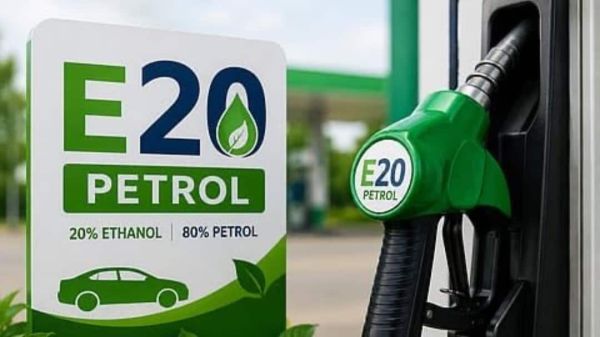
The Centre has issued a detailed clarification defending India's Ethanol Blended Petrol (EBP) Programme, rejecting concerns over the rollout of E20 fuel, vehicle compatibility, pricing and consumer choice. The Ministry of Petroleum and Natural Gas (MoPNG) said the programme has been implemented through a "carefully planned, gradual and scientifically validated" process rather than a hurried transition.
The clarification follows continued questions over ethanol blending despite an earlier press release issued on June 23 and explanations by automobile manufacturers during a July 4 press conference.
'India Did Not Rush E20 Rollout'
Rejecting claims that India moved too quickly towards E20 compared to countries like Brazil, the Centre said ethanol blending has been part of India's fuel policy for over two decades.
According to the ministry, the pilot programme began in 2001, was formally announced in 2004 and E5 fuel was introduced in several states by 2006. A formal policy framework was notified in 2013 under the UPA government, but ethanol blending remained around 1.5% until 2014.
The government said the turning point came after the National Policy on Biofuels was introduced in 2018, followed by coordinated efforts involving multiple ministries, oil marketing companies, automobile manufacturers and financial institutions.
Dedicated Ethanol Plants (DEPs), long-term procurement agreements, public sector bank financing and NITI Aayog's 2021 ethanol roadmap helped expand production capacity, enabling India to progressively increase blending from 8.1% in 2020-21 to 20% in 2025-26.
The ministry said Brazil took decades because it pioneered the world's first large-scale ethanol ecosystem, while India benefited from existing global experience and proven technologies.
Why Consumers Cannot Choose Pure Petrol Or E10
Addressing concerns over the absence of multiple fuel options, the Centre said automobile manufacturers were consulted throughout the transition from E10 to E20.
It said E20 underwent extensive testing covering engine durability, emissions, fuel systems, drivability and material compatibility before nationwide rollout.
The ministry cited field data from Maruti Suzuki, which serviced 2.84 crore vehicles during FY 2025-26, including nearly 1.5 crore older non-E20-certified vehicles, without reporting any E20-related corrosion, abnormal wear or component damage. Similar observations were reported by Hero MotoCorp.
The government acknowledged that some vehicles may experience a 3-5% reduction in fuel economy but argued that E20 offers higher octane, improved anti-knock performance, smoother acceleration, cleaner combustion and nearly 40% lower lifecycle carbon emissions.
It also said maintaining separate nationwide supply chains for pure petrol, E10 and E20 would create major logistical and operational challenges across India's network of over one lakh fuel stations.
Why E20 Isn't Cheaper Than Petrol
Responding to a common question about pricing, the ministry said ethanol is currently procured at remunerative rates to ensure fair returns for farmers.
Maize-based ethanol, for example, is purchased at around ₹71.86 per litre before GST, transportation and storage costs.
According to the Centre, when international crude oil trades at around $70 per barrel, producing E20 is actually more expensive than refining pure petrol. Only when crude prices rise above $120-130 per barrel does ethanol become relatively cheaper.
The ministry argued that the real benefit of ethanol blending is not cheaper petrol on a given day but reduced exposure to volatile global crude prices.
Nearly 20% of every litre of petrol sold in India is now domestically produced ethanol, whose price remains insulated from international oil market fluctuations.
Centre Links Ethanol To Lower Fuel Price Rise
The government claimed ethanol blending helped moderate retail fuel prices during periods of global volatility.
According to official data, petrol prices in Delhi increased by only 5.58% between June 2022 and June 2026, compared with 39.77% in Pakistan, 36.66% in Sri Lanka, 42.69% in Bangladesh and 20.35% in Nepal.
The Centre also highlighted broader benefits of the Ethanol Blended Petrol Programme, saying it has:
Saved over ₹1.97 lakh crore in foreign exchange.
Replaced nearly 316 lakh metric tonnes of crude oil imports.
Reduced around 952 lakh metric tonnes of carbon emissions.
Transferred over ₹1.66 lakh crore directly to Indian farmers.
"Our farmers are no longer merely Annadatas (food providers); they have become Urjadaatas (energy providers), contributing directly to India's energy security," the ministry said.
Centre Rejects Claims That E20 Damages Older Vehicles
The ministry also dismissed concerns that E20 damages rubber components, corrodes fuel systems or affects older vehicles labelled as "E10 compatible".
It described such claims as misinformation and said India's transition followed years of scientific testing involving ARAI, SIAM, oil companies and automobile manufacturers.
According to the Centre, vehicle manuals mentioning E10 reflect the fuel specification applicable when the vehicle was originally certified and do not imply the vehicle becomes unsafe after fuel standards evolve following regulatory approval.
The government said India's ethanol supply chain follows strict Bureau of Indian Standards (BIS) specifications with quality checks from production to retail outlets.
It added that state governments have been asked to enforce strict monitoring of fuel quality and maintain zero tolerance towards adulteration.
The ministry urged consumers not to rely on "misinformation, scaremongering or unverified content circulating on social media", reiterating that E20 is a scientifically validated, cleaner and safe fuel backed by automobile manufacturers, testing agencies and oil marketing companies.