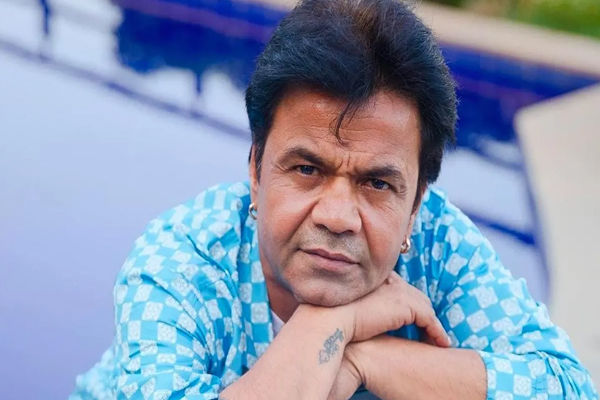
New Delhi, July 10. Bollywood actor Rajpal Yadav could not get major relief from Delhi High Court in check bounce cases. The High Court has refused to interfere in the decision of the lower court and has upheld his sentence. The court said that the actor was given several opportunities to repay the dues, but he did not comply with his assurances. As per the court order, all his sentences will run concurrently and he will have to undergo a jail term of three months. However, he has been given two months to challenge the decision in the Supreme Court.
Commenting on the conduct of Rajpal Yadav, the bench of Justice Swarnakanta Sharma said that he was repeatedly given opportunities for payment, but he failed to pay the amount. The court has imposed a fine of Rs 1.05 crore in each of the seven cases. In this way the total fine becomes Rs 7.35 crore.
According to the court order, Rs 1 crore 4 lakh 75 thousand will be given to the complainant in each case, while Rs 25 thousand will be deposited in the account of the state government. The court also clarified that if the actor wants to challenge this decision, he will get two months to file an appeal in the Supreme Court.
This matter is to the production of Rajpal Yadav’s film ‘Ata Pata Lapata’. In the year 2010, he had taken a loan of Rs 5 crore from Murali Projects Private Limited for the production of the film. The film was not successful at the box office and the loan could not be repaid on time. Later, several checks issued for payment bounced, following which the company filed seven separate check bounce cases against Rajpal Yadav and his wife.
In this case, the trial court had sentenced Rajpal Yadav and his wife to six months’ imprisonment. Later the Sessions Court also upheld this decision. After this the matter reached Delhi High Court, where first an interim stay on the sentence was imposed and time was given for a compromise. But despite repeated assurances, due to non-payment of outstanding amount, the High Court now upheld the sentence and dismissed the petition.