There are two moments in life when otherwise intelligent people stop thinking rationally. The first is when someone they love is lying in a hospital bed. The second is when their child is navigating their career and choosing a university.
Both moments are clouded by stress, anxiety and fear. Both involve life-changing decisions. And both have become billion-dollar industries built around selling false hope.
Healthcare and education have become the most exploitative businesses in the world.

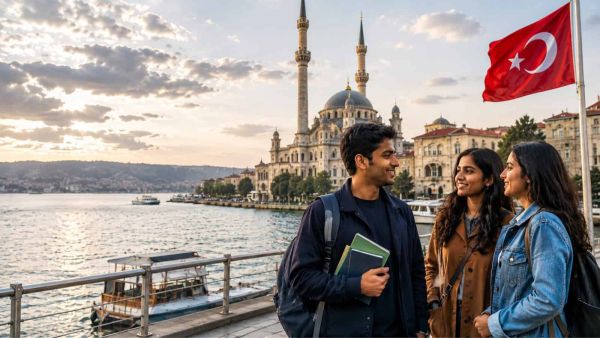
Every year, thousands of parents across Hyderabad, willing to spend lakhs or crores to send their children abroad, scramble from one “study abroad fair” to another. What many don’t realise is that they are not choosing a university. They are choosing a sales pipeline.
India has become the largest market for such consultancies. For many education consultancies, the student is not the client. The university is.
A large number of consultancies have recruitment agreements with nameless value-less private universities. Every student they enrol earns them a commission, usually USD 100 to USD 200 for private nameless Turkish universities.
The more students they send, the more money they make.
This doesn’t mean every consultancy is dishonest or every private university is bad. Some provide genuine guidance and some private universities are excellent.
But incentives matter.
And unless parents understand those incentives, they cannot make an informed decision.
Here’s the irony. Most students don’t actually need a consultancy. For undergraduate admissions, Turkey has a transparent system.
Students sit for the TR-YÖS examination. Based on their scores, they become eligible to apply to Turkish universities. The examination is conducted internationally in 90 locations, including in Delhi.
The current application window is running from July 9 to August 3 2026. Full details are available on the official TR-YÖS website.
Public universities in Turkey are significantly cheaper than many private institutions because of its welfare system. There is also the Türkiye Bursları scholarship programme, one of the world’s most generous government-funded scholarship schemes for international students.
No middleman is required.
Graduate admissions work differently. Each university announces its own application period and admission requirements. Usually, you need examinations such as the GRE or TOEFL, alongside a strong academic record.
The point is simple.
Apply directly.
Read the university’s website. Email the admissions office. Ask questions.
You’ll often receive better information from the university itself than from someone trying to earn a commission.
If you’re serious about studying in Turkey, start by researching institutions with established academic reputations rather than simply accepting the first option suggested by an agent.
My personal recommendations are:
Don’t ask, “Which university can I get into?” Ask, “Which university is best and which competitive exams do you need to write for it?”
Those are two completely different questions.
There is one reality no consultancy can change. If you want to build a long-term career in Turkey, learn Turkish.
Turkey never experienced European colonial rule in the way many countries did. As a result, daily life and the labour market function overwhelmingly in Turkish.
The language is not just useful. It is an investment.
The good news is that degrees from reputable Turkish universities are also respected across much of the Gulf, giving graduates options beyond Turkey itself.
Turkey is a paradise for researchers in social sciences, but, inflation remains high. Currency fluctuations affect living costs. Students should calculate their finances carefully before making the move.
Studying abroad is an investment. Like every investment, it carries risks.
Your child’s future is worth more than someone’s commission cheque. Do your own research.
Compare universities. Speak directly to admissions offices. Talk to current students. Read rankings.
Then make a decision.
Because universities educate students. Consultancies sell them.