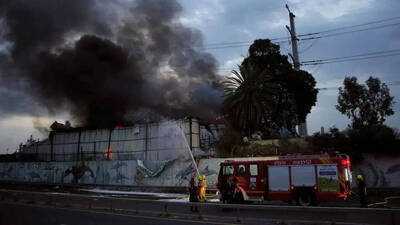
Early Sunday, multiple cities in southern Iran experienced a series of explosions following new military strikes by the United States, as reported by Iranian state media and US officials. This incident marks a significant escalation in the ongoing tensions surrounding the Strait of Hormuz. According to Iran's state broadcaster IRIB and other affiliated outlets, explosions were noted in various locations, including:
The US Central Command (CENTCOM) announced that its forces executed a third round of strikes against Iran at 7:15 PM ET, following an attack by Iran's Islamic Revolutionary Guard Corps (IRGC) Navy on the Cyprus-flagged container ship M/V GFS Galaxy in the Strait of Hormuz. The US military reported that the vessel sustained significant damage to its engine room and experienced an onboard fire, with one civilian crew member currently missing.
Earlier, Iran's Foreign Minister Abbas Araghchi met with Oman's top diplomat in Muscat to discuss maritime security and safe passage through the Strait of Hormuz, but no public commitments were made following their discussions. Subsequently, Iran announced that it had fired warning shots at a container ship, accusing it of attempting to navigate the strategic waterway via an "unapproved route" and disregarding instructions to change course through Iranian territorial waters. The IRGC declared its intention to close the Strait of Hormuz "until the end of US interference in the region" and cautioned that any further military actions by the US would provoke a "forceful response." These recent developments occur amidst ongoing diplomatic efforts to avert a broader conflict, with Oman mediating discussions between Iran and Qatar aimed at reducing tensions over the Strait of Hormuz, a crucial route for global energy shipping. However, the latest military exchanges have cast new doubts on the potential for de-escalation.