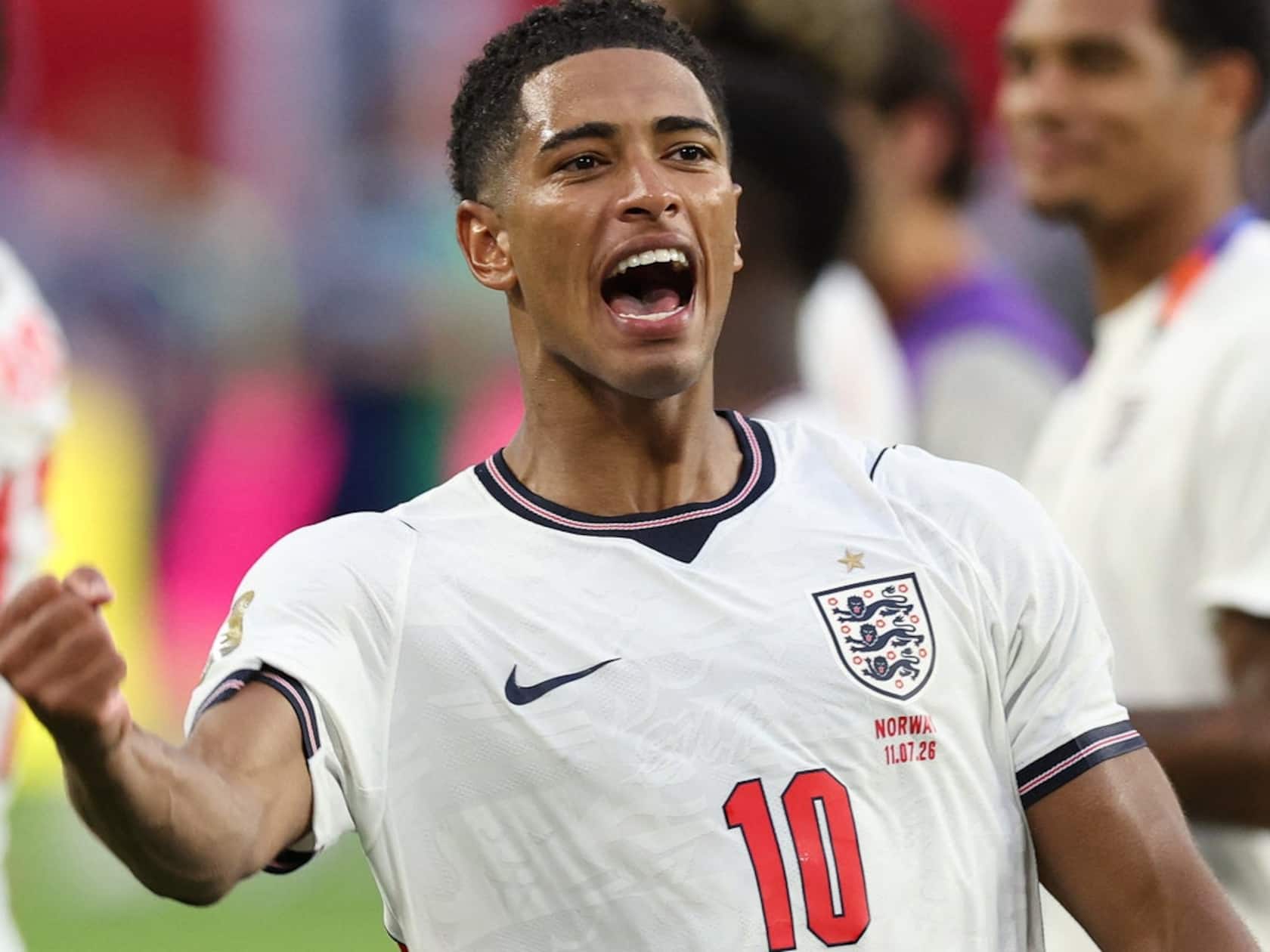
Jude Bellingham continues to scale new heights, seemingly through sheer determination alone, as he drives a faltering England side into their fourth-ever World Cup semi-final.
The grandest stage in football is now within reach, and Bellingham appears more than prepared for it.
England’s No.10 once again delivered a brace, building on his heroics from Mexico, to complete a 2-1 comeback victory over Norway. His tally now stands at six goals, placing him alongside Kylian Mbappe and Lionel Messi. Yet, those statistics pale compared to the significance of how he shaped, decided, and rescued this match for England.
"We need to be better," said Thomas Tuchel afterwards. But it is difficult to imagine how Bellingham himself could have been.
There was symbolism too, as Erling Haaland left the field in tears at half-time of extra-time, just as Bellingham was determining the outcome.
Norway can hold their heads high, having created a moment of national pride, though they will feel there was more to be taken from this encounter.
That made Bellingham’s display even more extraordinary than his performance against Mexico, despite that match being played in the rarefied air of the Azteca rather than Miami’s oppressive humidity.
When England’s legs grew heavy, he bore the burden.
When problems arose, he provided answers.
When confusion reigned, he brought clarity.
And that final quality may be the most vital. It highlights the ongoing concern for Tuchel, even as the number of matches left for those flaws to be exposed diminishes.
Bellingham’s star-turn contributions in a World Cup filled with individual brilliance encapsulate both the excitement of this tournament and the worrying pattern in England’s campaign.
Such moments of genius have been necessary because so many teams have looked disjointed — a description that fits nearly all on this side of the draw, and England most of all among the semi-finalists.
If that assessment seems harsh given how rare England’s semi-final appearances have been, it is relevant in light of their loftier ambitions.
The details of this game tell the story.
England boast players of higher calibre than Norway, with superior technique and depth, yet they allowed the contest to devolve into a battle they could easily have lost.
For long stretches, especially in the second half, Norway controlled possession and looked the more composed side.
That was hardly surprising, given England’s tactical imbalance: a centre-back playing at right-back, a right-back in central midfield, a No.10 stationed on the left, and multiple shifting central combinations.
Ironically, one of the standout performers after Bellingham was Djed Spence — originally a right-back but deployed at left-back — who provided energy and intent when England needed it most.
He might even have earned a penalty had a fall not been overturned.
Overall, it seemed Tuchel was constantly forced to correct his own tactical missteps.
This was not the first time in this World Cup, but never had it looked so self-inflicted.
With the match finely poised and Norway dominating midfield due to Declan Rice’s fitness concerns, Tuchel surprisingly introduced playmaker Eberechi Eze.
England’s midfield, already under pressure, collapsed entirely, creating a domino effect as subsequent substitutions further unsettled the side.
There were glaring issues across the pitch.
Yet again, England already had the solution on the field — Bellingham.
He didn’t just exhibit individual brilliance; his sheer willpower lifted the entire team.
That was the defining narrative of this tie.
Consider his first goal, which arrived just as England looked most vulnerable.
After Andreas Schjelderup had fortuitously put Norway ahead — his attempted cross deceiving Jordan Pickford — England’s composure wavered. Pickford, who has been outstanding across four major tournaments, finally appeared due a lapse. This might well have been it.
The goalkeeper never truly recovered, and neither did England — until Bellingham intervened.
Just before half-time, with Norway determined to hold their lead into the break, Bellingham surged forward, shrugging off two defenders before rifling a shot past Orjan Nyland.
The goal epitomised pure determination — a refusal to accept defeat.
There was a brief dispute over whether Nyland’s clearance had brushed an overhead TV cable, but FIFA confirmed the ball’s sensor detected no contact.
Regardless, Bellingham’s alertness was unquestionable.
Even deep into extra-time, while others struggled physically, he remained sharp and decisive.
Norway’s back-up goalkeeper, who had scarcely been tested, faltered when faced with a fierce Morgan Rogers effort. The ball slipped, and Bellingham was quickest to react — quicker than anyone else on the pitch.
While Haaland endured a quiet, frustrating evening, the England fans erupted in celebration.
Tuchel still faces numerous tactical puzzles, but Bellingham continues to provide the clarity — and now, a place in the World Cup semi-final.