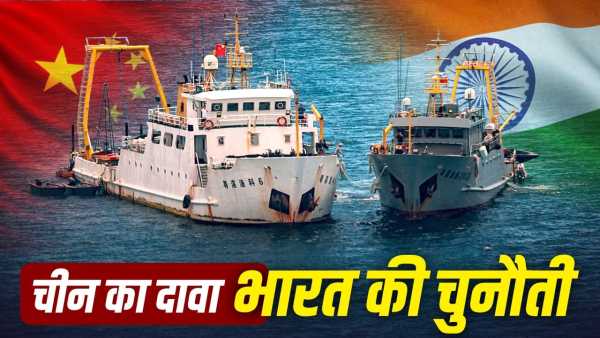
The South China Sea has once again become a center of conflict between the world's major powers. A total of 14 countries including America, Britain, Australia and Japan have issued a joint statement saying that China's extensive claims on the South China Sea are not in accordance with international law. These countries supported the decision of the International Arbitration Tribunal (Permanent Court of Arbitration) in 2016 and said that China should respect the maritime law.
However, China has already rejected this decision and says that it has historical rights over the South China Sea. In such a situation, this dispute is not limited only to the maritime border, but it has become a big issue related to global politics, trade and security. This is the reason why this joint statement is being seen as increasing international pressure against China. In the coming time, its impact may not only be on China but also on the entire Indo-Pacific region including India.
The South China Sea is one of the busiest sea routes in the world. A large part of global maritime trade passes through this route. China claims almost the entire South China Sea, while the Philippines, Vietnam, Malaysia, Brunei and Taiwan also claim parts of it. In 2016, the Hague-based International Tribunal, while giving its verdict on the Philippines' petition, had said that China's so-called historical right has no basis in international law.
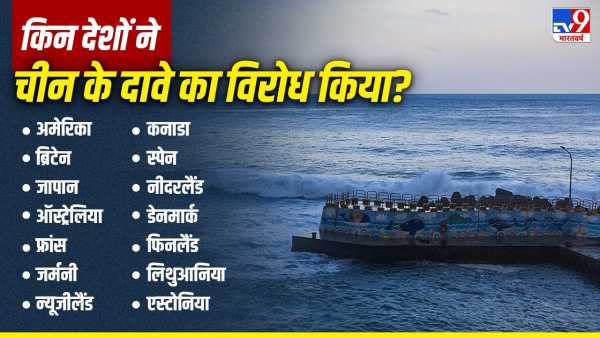
14 countries object to China's claim (Daniel Ceng/Anadolu via Getty Images)
The South China Sea is a marine area spread over about 35 lakh square kilometers. China claims about 90 percent of the land on the basis of the so-called 'Nine-Dash Line'. On the other hand, Philippines, Vietnam, Malaysia, Brunei and Taiwan also claim rights over different islands and maritime areas. In 2016, the International Arbitration Tribunal had clearly stated that this broad claim of China is not in accordance with international law (UNCLOS). China had refused to accept this decision.
Despite this decision, China is continuously building artificial islands, strengthening military infrastructure and increasing its presence in the region. Now with the coming together of 14 countries, the message has been sent that China's claim is not getting widespread international support. Due to this, the possibility of increasing regional tension and diplomatic tension has also increased.
The joint statement of these countries will first increase diplomatic pressure on China. This will send a message that a large part of the international community does not agree with China's claims in the South China Sea. This may affect China's global image. Also, naval activities of America and its allied countries may increase further in this region. However, at present the chances of China backing down from its claim appear slim. On the contrary, it can increase its military presence and patrolling, which will increase the risk of tension in the area.
India is not directly on any side of this maritime dispute, but its strategic and economic interests are linked to it. India's major maritime trade with East Asia and ASEAN countries passes through the South China Sea. If tension increases in this region or sea routes are affected, India's import-export and shipping costs may be affected.
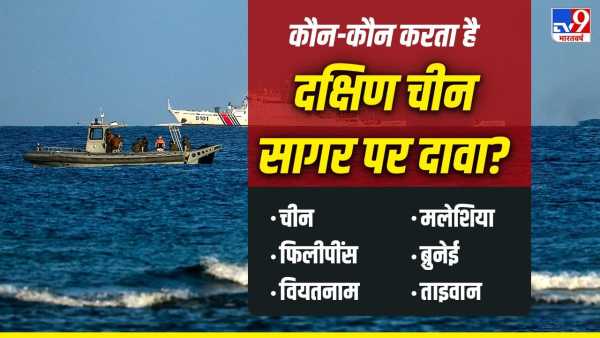
South China Sea dispute (Daniel Ceng/Anadolu via Getty Images)
Apart from this, India has long been supporting the rules-based maritime order and freedom of sea lanes. In such a situation, India's Indo-Pacific strategy may become more important amid increasing tension in the South China Sea. India's QUAD cooperation with America, Japan and Australia can also come into more discussion in this context.
If China tries to enforce its claims more aggressively, the possibility of conflict with countries like the Philippines may increase. America has already sent its warships to this region several times. If both sides increase their military activities, there will be a risk of a small incident turning into a major conflict. 14 countries have declared China's claim illegal, which is considered a major diplomatic blow for Beijing. This matter is important for India because its business and strategic interests are directly linked to the Indo-Pacific region. If tension increases, it may also affect the global supply chain, maritime trade and the security system of Asia.