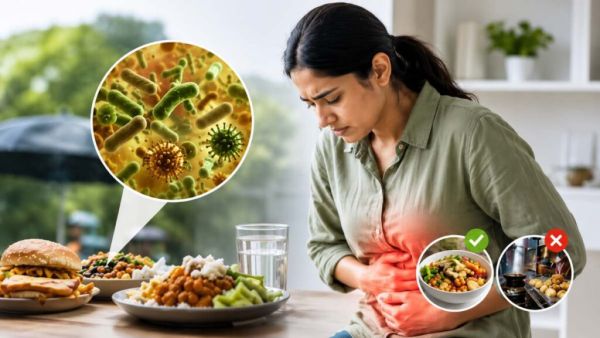
Lifestyle Desk – While the rainy season brings relief from the heat, it also increases the risk of many infectious diseases. During monsoon, bacteria, viruses and other harmful microorganisms grow rapidly due to moisture and dirt. This has a direct impact on diet. This is the reason why there is a rapid increase in cases of stomach ache, vomiting, diarrhea and food poisoning in hospitals during this season. Consumption of juices available on the roadside, cut fruits, food kept outside for a long time or contaminated water can become the main cause of this problem.
However, stomach pain is not always a sign of food poisoning. Sometimes this may also be due to general indigestion or gas. In such a situation, it is important to understand the difference between the two, so that proper treatment can be provided in time. Let us know in detail.
If within a few hours of eating food or within 1-2 days you suddenly start feeling severe stomach pain, repeated vomiting, persistent diarrhea, nausea, fever or weakness, then it can be a sign of food poisoning. Some people may also complain of stomach cramps, headache and body ache.
The biggest danger in food poisoning is the lack of water and electrolytes in the body i.e. dehydration. If there is frequent vomiting and diarrhea, dry mouth, less urination, dizziness or feeling of extreme weakness, then it should not be ignored.
In general indigestion, problems like feeling heavy in the stomach, gas formation, mild pain or sour belching usually occur, which get cured after some time or with mild medicine. Whereas in food poisoning the symptoms are more serious and vomiting and diarrhea may occur repeatedly. In many cases, fever may also occur and the patient’s condition may deteriorate rapidly.
It is not right to take antibiotics or painkillers without doctor’s advice as soon as stomach ache or diarrhea starts. Not every food poisoning requires antibiotics, and taking the wrong medicine can worsen the infection or cause other side effects. Apart from this, medicines to prevent diarrhea should also not be taken without medical advice, because sometimes the body is in the process of expelling the infection.
Always eat fresh and well-cooked food during monsoon. Avoid food kept outside for a long time, food items sold in open, roadside juices and cut fruits. Drink only clean and safe water and wash hands with soap before eating and after using the toilet.
A little caution during the rainy season can save you from serious problems like food poisoning. If symptoms like vomiting, diarrhea and fever are seen along with stomach pain, then the safest option is to seek medical advice on time instead of ignoring it as normal indigestion.