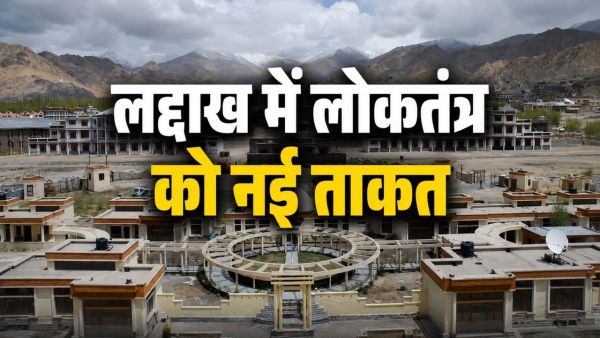
A major decision has been taken towards strengthening local governance in Ladakh. The Union Territory Administration has announced that Autonomous Hill Development Councils will now be formed in all the seven districts of Ladakh. With this, the new districts will also get the same rights, which till now only Leh and Kargil Hill Councils had. This step is being considered to give new impetus to democratic decentralization and local development at the grassroots level.
Chief Secretary Ashish Kundra told in the press conference held in Leh that under the Ladakh Autonomous Hill Development Council (LAHDC) Act, there is already a provision to form a council in every district. Now the government will complete its formal process. For this, necessary amendments and delimitation of constituencies will be made.
In April 2026, seven districts were created in Ladakh instead of two. These include new districts like Sham, Nubra, Changthang, Zanskar and Dras. Now all these districts will also get Hill Council with full powers like Leh and Kargil.
The new Hill Councils will be given important powers like land allotment, land ownership, recruitment and promotion of district cadre within the district. Apart from this, each council will have its own separate fund and will also be able to levy taxes and fees.
The priorities of health, education, tourism, local infrastructure and social welfare schemes will also now be decided at the district level. With this, development plans can be made according to local needs and the decision making process will be more effective.
The administration also clarified that there is a proposal to create a new representative body at the Union Territory level over the seven Hill Councils. It is being considered to give it legislative, administrative, financial and executive powers under a special framework in accordance with Article 371.
The outline of this new model will be decided after discussion between the representatives of Ladakh and the Government of India. However, Panchayat Raj institutions will continue to function as before. That is, the system of elected representation will continue in Ladakh at all three levels – village, district and union territory. This decision is being considered an important step towards strengthening local self-governance in Ladakh and making the development process more participatory and decentralized.