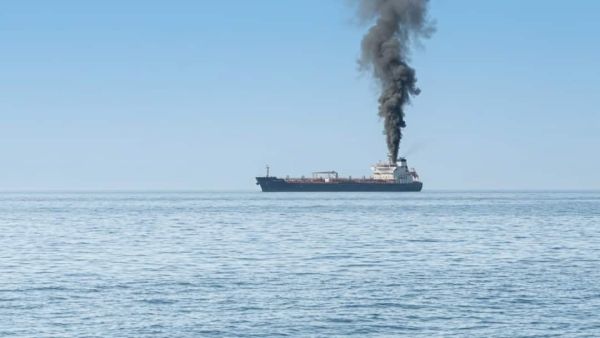
The renewed tensions between the United States and Iran are once again putting the Strait of Hormuz at the centre of global attention. The ceasefire reached in June has begun to unravel, and fresh restrictions on Iranian shipping and new conditions for vessels passing through the strategic waterway have raised concerns across energy markets.
The impact is already visible. Brent crude prices have climbed back to around USD 81-82 per barrel, and the International Energy Agency has described the disruption as one of the most significant supply risks in the history of the global oil market.
For India, the developments are particularly important because the country remains heavily dependent on imported energy. A large share of India's crude oil and LPG requirements comes from overseas, and any prolonged disruption in the Strait of Hormuz could affect household budgets, fuel prices, industry, financial markets and government finances.
Though it appears as a narrow sea passage on the map, the Strait of Hormuz is one of the world's most critical energy chokepoints.
Key facts:
Nearly 20 million barrels of crude oil pass through the strait every day.
That accounts for roughly 25% of global seaborne oil trade.
About 20% of the world's LNG exports also transit through this route.
As tensions have increased, several vessels have reportedly reduced or suspended passage through the strait. Shipping traffic has fallen sharply, while some oil tankers have turned off their tracking systems for security reasons.
Marine insurance premiums have surged by around 50%, making the transportation of oil significantly more expensive.
India is the world's third-largest consumer of oil but imports 85-90% of its crude oil needs.
More importantly, an estimated 30-45% of India's total crude imports passes through the Strait of Hormuz.
If the route remains disrupted for an extended period, India could face not only higher prices but also potential supply challenges, forcing it to source oil from alternative suppliers at higher transportation costs.
Whenever tensions rise in Hormuz, crude oil prices tend to move up first.
March-April 2026 ~USD 120/barrel
Indian oil companies purchase crude from international markets. If prices remain elevated, the government may have to either reduce taxes or allow retail fuel prices to rise.
In May 2026, petrol and diesel prices were increased by a cumulative Rs 7.5 per litre in four stages. A prolonged Hormuz crisis could keep upward pressure on fuel prices.
The LPG situation is even more sensitive.
India imports 60-67% of its LPG requirements.
Around 90% of those imports pass through the Strait of Hormuz.
A disruption in the route could affect domestic cylinder supplies and push prices higher.
As of June 2026, state-run oil companies were reportedly absorbing losses of Rs 500-700 per household LPG cylinder. If global LPG prices rise further, the government may have to increase subsidies or raise cylinder prices.
State-run companies such as Indian Oil Corporation, Bharat Petroleum and Hindustan Petroleum often cannot immediately pass on higher costs due to political and social considerations.
By June 2026, their combined under-recoveries had reportedly reached Rs 2.19 lakh crore, reflecting prolonged sales of fuel below cost.
India buys oil in US dollars. Higher crude prices therefore increase the country's foreign exchange outflow.
Every USD 10 rise in crude
Adds ~USD 13-14 billion
Estimated increase in India's annual import bill
India's trade deficit had already widened to USD 30.4 billion in June 2026, with expensive imports of oil and fertilisers playing a major role.
As oil companies buy more dollars to pay for imports, demand for foreign currency rises.
That tends to weaken the rupee, making not only oil but also electronics, machinery, medical equipment and other imported goods more expensive.
Diesel is the backbone of India's transport and supply chain network.
Higher diesel prices increase freight costs, which eventually affect the prices of:
Fruits and vegetables
Milk and grains
Cement and steel
Most daily-use goods
Retail inflation stood at 4.38% in June 2026, while food inflation was 5.32%. A fresh spike in oil prices could add further inflationary pressure.
Likely losers:
Airlines
Paint manufacturers
Chemical companies
Tyre makers
Logistics firms
Likely beneficiaries:
ONGC
Oil India
These producers benefit when crude prices rise because they can sell oil at higher rates.
The crisis has reinforced the need for larger strategic reserves.
Current position:
5.33 million metric tonnes of Strategic Petroleum Reserve.
Enough for only about 9.5 days of demand.
The International Energy Agency recommends reserves sufficient for around 90 days.
Government plans include:
A new 1.75 MMT reserve at Mangaluru.
An agreement with ADNOC for storage of 30 million barrels of oil.
A long-term target of 120 million barrels of strategic crude reserves.
A separate 30-day LPG reserve.
The Strait of Hormuz may be thousands of kilometres away, but it is closely linked to India's economic health.
A disruption there is not just an oil story. It affects energy security, inflation, the rupee, the trade deficit, government finances and household expenses.
That is why every escalation in Hormuz forces India to reassess not only its energy imports but also its broader economic strategy.