Keeping track of your health often begins with paying attention to your own body. While a home thyroid check cannot diagnose thyroid disease, it can help you notice unusual changes early, allowing you to seek medical advice before a condition progresses.
Your thyroid gland is located at the front of your neck and plays a vital role in regulating metabolism, energy levels, body temperature, and hormone production.
A simple self-check may help you notice:
Women are more likely than men to develop thyroid disorders, making regular self-monitoring especially important.
Follow these simple steps:
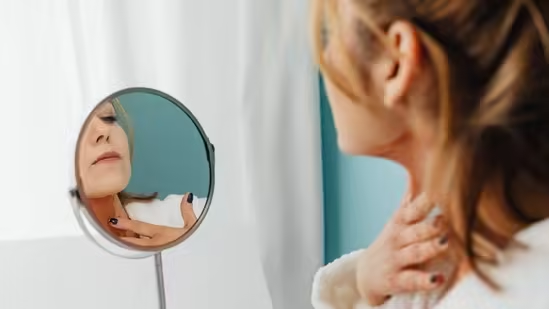
Position yourself in good lighting and look at the lower front of your neck, just above your collarbones where the thyroid gland is located.
Gently tilt your head backward to make the thyroid area easier to observe.
Drink a small sip of water.
As you swallow, carefully watch your neck in the mirror.
Look for:
Repeat the swallowing test two or three times to confirm whether you notice the same abnormality consistently.
Consult a healthcare provider if you notice:
Most thyroid nodules are benign, but some require medical evaluation through physical examination, blood tests, or ultrasound.
If you’ve previously been diagnosed with thyroid nodules, ask your doctor to show you exactly where they are. This can help you monitor any future changes in:
Report any noticeable changes to your healthcare provider promptly.
In addition to neck swelling, thyroid disorders may cause:
If you experience these symptoms, consult your doctor for a proper evaluation.
A thyroid self-check is a quick and simple way to become more aware of changes in your neck. While it cannot diagnose thyroid disease, it can help detect visible abnormalities early and encourage timely medical consultation. Regular self-awareness, combined with professional healthcare, plays an important role in maintaining thyroid health.
Disclaimer: This article is for informational purposes only and should not be considered a substitute for professional medical advice. A thyroid self-examination cannot diagnose thyroid disease. If you notice any unusual changes or have concerns about your thyroid health, consult a qualified healthcare professional for proper assessment and treatment.