At present, the shortage of crude oil is not as big a problem for the world as the problem of converting it into petrol and diesel. Ever since the start of the Iran war, economists were worried about the supply of crude oil. But now a new and more serious crisis has arisen between the blockade of the Strait of Hormuz by America and Iran and oil prices crossing $ 80 per barrel. This crisis is a decline in the world's capacity to produce petrol and diesel.
The millions of barrels of oil coming out of the Persian Gulf are of no use in themselves. Refineries are needed to convert crude oil into petrol, diesel, jet fuel (ATF) and asphalt. But at present the global refining capacity has been badly affected. Iran has attacked dozens of refineries in the Middle East, Ukraine has destroyed Russian energy bases with drones. Also, due to high temperature, the cooling systems of the refineries have failed. All these together have broken the global refining chain. According to JP Morgan data, refineries around the world are processing 8.4 million barrels less crude oil every day than before the war started. This simply means that fuel production in the world has fallen by 10%.
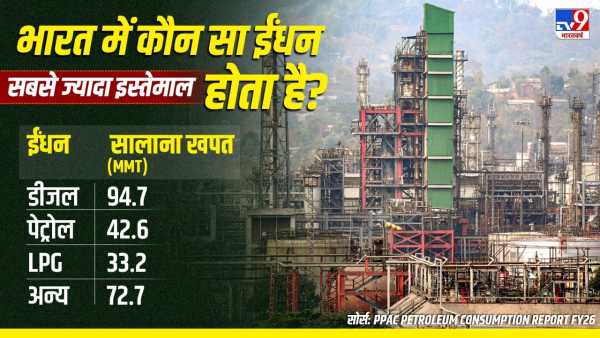
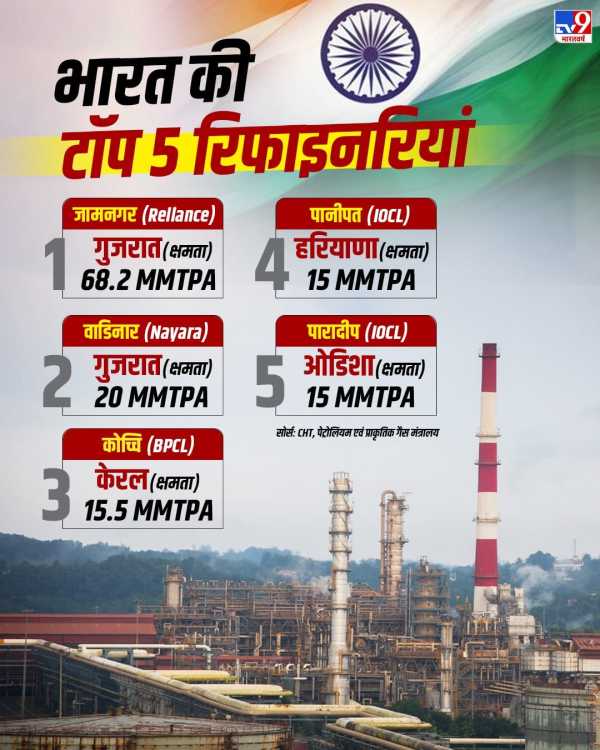
India is the world's third largest energy consumer, fourth largest refiner and fifth largest exporter of petroleum products. India's position as per the latest and authentic data (FY 2025-26) of Petroleum Planning and Analysis Cell (PPAC), Ministry of Petroleum and Natural Gas (Government of India) is as follows
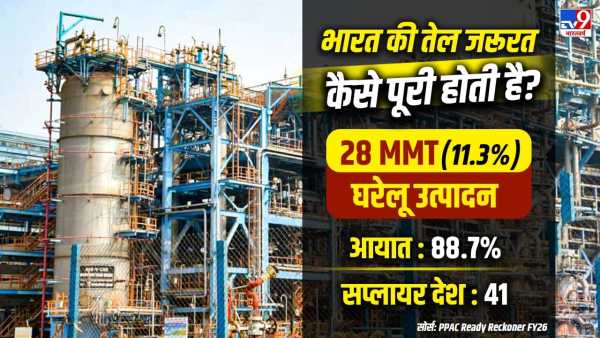
India has limited reserves of crude oil in its territory, from which only 28 million metric tons (MMT) of oil is produced annually. These reserves are in Assam, Mumbai High and Rajasthan. But India's refineries are so big that they process more than 258 MMTPA of oil annually by importing crude oil from abroad. There are a total of 23 refineries in India, of which 18 are in the public sector and 3 are in the private sector.
Diesel is at the forefront in India in terms of consumption. Of the country's total oil consumption (243.2 MMT), diesel alone accounts for 39% (94.7 MMT) and petrol accounts for about 17.5% (42.6 MMT). More than 1,03,023 petrol pumps (retail outlets) across the country cater to this huge demand. Reliance Industries' refinery located in Jamnagar (Gujarat) is the world's largest refining complex.
Why is India's position better than America and Europe amid the worldwide fuel crisis? There are four major strategic reasons behind this…
While old refineries are closing in America and Europe, India has continuously increased its refining capacity. India has a refining capacity (258+ MMT) much more than its domestic consumption (243 MMT). For this reason, when the diesel-petrol crisis arose in Europe and Asia, India's exports of refined products took over the global market.
While reducing its dependence on Gulf countries, India has increased the number of its crude oil supplier countries from 27 to 41 countries. India's strategy of purchasing oil from Russia at concessional rates and processing it in its state-of-the-art refineries (like Jamnagar and Vadinar) not only saved billions of dollars, but also kept the prices of petrol and diesel stable in the domestic market.
India has achieved the target of mixing 20% ethanol (E20) in petrol ahead of schedule. This has saved the country more than ₹ 1.55 lakh crore of foreign exchange in the import of crude oil and has reduced the pressure on the net demand of petrol.
In times of crisis, the Government of India has allocated ₹5,597 crore for the second phase expansion of the Indian Strategic Petroleum Reserve (ISPRL), so that in the event of any war or maritime blockade, the country can run without interruption for at least 70 to 90 days.
Also read: From war to joining SpaceX… who is Anil, who is going to space?