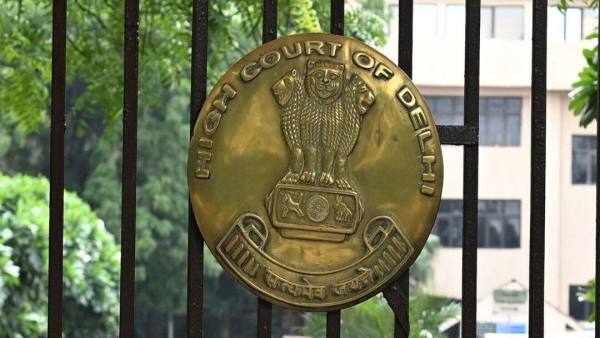
The Delhi High Court on Wednesday issued notices to the Union Public Service Commission (UPSC) and other respondents after hearing a Public Interest Litigation (PIL) that seeks stricter rules for appointing scribes in the Civil Services Examination. The petition calls for safeguards to prevent former UPSC aspirants and civil services coaching faculty from serving as scribes for candidates with disabilities.
A Division Bench comprising Chief Justice Devendra Kumar Upadhyay and Justice Tejas Karia issued the notices after considering preliminary submissions made by Advocate Rahul Bajaj, who appeared on behalf of the petitioner organisation, Deepstambh Foundation.
During the hearing, Bajaj argued that while the petitioner fully supports the right of persons with disabilities (PwBD) to use a scribe, the existing UPSC rules allow individuals who have previously appeared for the Civil Services Examination or those associated with coaching civil services aspirants to perform the role of a scribe.
According to the petitioner, such individuals possess specialised knowledge of the examination process, answer-writing techniques and evaluation standards, creating a possible conflict of interest that could affect the fairness of the examination.
The PIL urges the court to direct the UPSC not to permit anyone who has appeared in the Civil Services Examination at any stage of Preliminary, Mains or Personality Test/Interview to act as a scribe for PwBD candidates.
It also seeks directions preventing people who are currently engaged, or have previously been engaged, in teaching or coaching civil services aspirants from serving as scribes.
In addition, the petition requests that every scribe should submit an undertaking confirming that they have neither appeared for the UPSC Civil Services Examination nor coached candidates preparing for it. It also seeks appropriate legal consequences if any such declaration is found to be false.
According to the petition, the UPSC currently permits candidates with benchmark disabilities, including blindness, low vision, locomotor disability and cerebral palsy, to use the assistance of a scribe.
However, the existing eligibility criteria only require that a scribe should not hold qualifications higher than the minimum educational qualification prescribed for the examination and must have at least passed the matriculation level.
The petitioner argues that these conditions allow graduates who have previously attempted the Civil Services Examination, as well as faculty members from UPSC coaching institutes, to qualify as scribes.
It further contends that such individuals may go beyond simply writing down dictated answers and could subtly influence the structure, content, and quality of responses because of their familiarity with the examination.
The petition also claims that misuse of the scribe facility is widespread, with informal "scribe services" allegedly operating in coaching hubs. It argues that this practice affects the level playing field for both non-disabled candidates and genuine PwBD candidates, while also weakening public confidence in the merit-based nature of the Civil Services Examination.
At the same time, the petitioner has clarified that it is not seeking a blanket ban on personal scribes for candidates with disabilities. Instead, it seeks to prevent what it describes as "conflicted scribes" individuals who have previously appeared in the UPSC examination or have coached civil services aspirants while ensuring that the rights and accessibility needs of persons with disabilities remain fully protected.
The petition further states that Deepstambh Foundation had submitted a representation to the UPSC on April 11, 2026, requesting measures to address the issue. As no action was taken on the representation, the organisation approached the Delhi High Court by filing the present PIL.