Australia’s World Cup winning players are expected to slide back into action for the opening stretch of the 2026-27 Women’s National Cricket League (WNCL), startin on September 29. Cricket Australia have also bumped up the count of day-night games in the tournament, so players get more go at that whole international preparation thing.
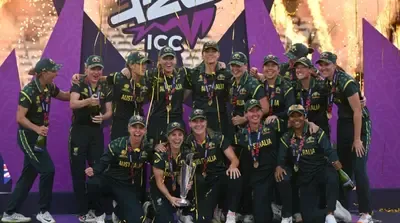
This new season is coming on the back of Australia’s good run in the ICC Women’s T20 World Cup campaign. A bunch of the players who held up the trophy at Lord’s are likely to feature in the early WNCL matches, before Australia kicks off its home international window with a three-match ODI series vs Bangladesh starting October 9.
Still though, Cricket Australia has been honest that it’s getting harder to carve out room for the very top players to show up regularly in domestic cricket, mainly because their international workload just doesn’t slow down.
Busy Calendar Leaves Less Time for Domestic Cricket
Right now, the women’s cricket calendar feels like it’s been packed tight with international fixtures, Australia A tours, the Women’s Big Bash League (WBBL), the Women’s Premier League (WPL) and ICC events, all stacking up.
After the first round of the WNCL, the T20 Spring Challenge kicks off before the WBBL gets going later in October. Then the WNCL will take a breath until December. With that setup, some domestic players might only get two 50-over appearances before Christmas, and not much more.
Another hiccup is Australia’s A tour of India in September. For players picked for the white-ball games, they may return in time for the first WNCL round. But the ones involved in the four-day match in Dharamshala will miss the domestic season start.
Meanwhile the WBBL runs through November, and then ends in early December. After that, several leading Australian players are expected to head to India’s Women’s Premier League in January. Then, February brings the ICC Champions Trophy, and Australia’s home series against New Zealand and South Africa will add even more pressure to an already hectic schedule.
Cricket Australia Explains the Challenge
Cricket Australia scheduling manager Peter Roach said trying to balance domestic and international cricket has gotten tougher, especially as the women’s game keeps growing.
Peter Roach said:
“It’s a growing challenge that we’ve got more A cricket and international cricket being played across the breadth of our summer.”
“As the women’s game has grown, that challenge has become more prominent and the WPL as well you could include as ‘international’ content. We try and balance that across the season, so no teams are affected more than others.”
He Added:
“As the years go by, it’s becoming a little bit more like the men where finding opportunities for them to compete in domestic cricket – where it used to be the norm, and used to be unusual for them not to be playing, now it’s probably the opposite.”
“Teams expect their (players) in Australia’s best XI not to be playing. That was probably the interesting thing about the A tour – there were more concerns from teams around losing that next band of players than actually their (Australia regulars).”
Roach’s remarks, in plain terms, highlight how fast the women’s game has expanded, with players now spending more time on international duty than on domestic circuits.
Also Read | BBL Introduces Game-Changing Rule That Could Bring Record-Breaking Scores
More Day-Night Matches Added to WNCL
One of the bigger alterations for the 2026-27 WNCL is the jump in day-night fixtures. At least 16 matches will be held under lights, which is double what they had last season. Cricket Australia could add even more games in Queensland and Tasmania, too depending on logistics.
Victoria will stage all six of its home matches as day-night games after lights were put in at Junction Oval. Cricket NSW is also working on lighting at Cricket Central, where night cricket is expected to begin from October.
Roach said the reason behind the shift is to help players handle international cricket, where most one-day matches are played under lights.
He added further:
“This is a competition that we use … ideally to prepare players to perform well in international cricket, and we know that the big games in international cricket are generally day-night in one-day cricket, or night games in T20.”
“Giving (players) the opportunities wherever we can to play night cricket is an absolute priority.”
The T20 Spring Challenge is also set to contain three night matches in its third season. The long term look of the competition still isn’t fully decided, with Cricket Australia continuing plans to privatise WBBL teams.
Roach added that the tournament is still a key stepping stone for players getting ready for the WBBL.
He further said:
“We know it’s valued in terms of providing opportunities for players, Because there are a few more teams, the talent is spread a little bit wider, so the opportunities are spread at the same time.”
“Certainly in preparation for the WBBL, it’s seen as a valuable tool by WBBL teams and the states for that. What the future holds, we don’t know. There’s obviously a bit going on in the T20 space at the minute, so we’ll wait and see where that goes.”