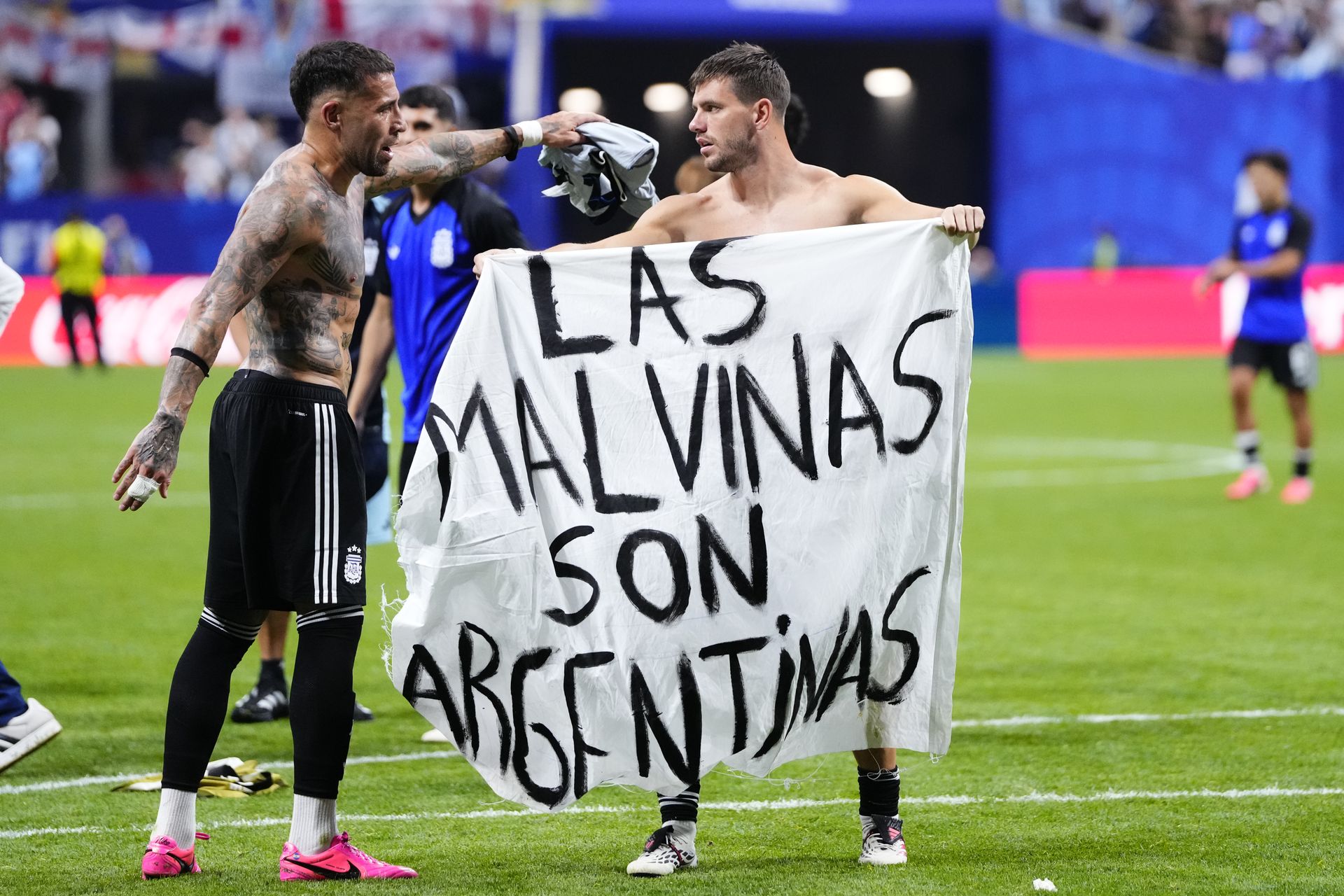
Former Tottenham Hotspur midfielder Giovani Lo Celso was photographed holding a banner referring to the Falkland Islands after Argentina’s semi-final victory in the World Cup.
Argentina secured their place in the World Cup Final on Wednesday evening with a dramatic comeback win over England.
The Three Lions had gone ahead in the second half through Anthony Gordon but were unable to resist a late Argentine surge, conceding two goals in the closing minutes.
This marked England’s second World Cup semi-final exit in the last three tournaments, having previously led in both matches – a record unmatched by any other nation.
Goals from Enzo Fernandez and Lautaro Martinez turned the game around for Argentina, leaving England with little opportunity to respond before the final whistle.
After nine minutes of injury time, Argentina’s players celebrated enthusiastically on the pitch before a predominantly Argentine crowd.
During the post-match celebrations, unused substitute and Real Betis midfielder Lo Celso was seen displaying a banner that read ‘Las Malvinas son Argentinas’, a direct reference to the 1982 Falklands War.
In English, the banner translates to: “The Falklands are Argentinian.”
Argentina ultimately lost the 1982 conflict after invading the British Overseas Territory, though public sentiment in Argentina continues to hold that the islands in the South Atlantic rightfully belong to them.
Lionel Messi and his teammates will face Spain in the World Cup Final at the New York New Jersey Stadium on Sunday.
It remains uncertain whether the Argentine Football Association (AFA) or Lo Celso will face disciplinary action for the political message displayed after the match.
FIFA regulations clearly state: “Items of a political, offensive, sexual, discriminatory or commercial nature are strictly prohibited and may result in expulsion from the stadium.”
Earlier, Haiti were compelled to redesign their home kit ahead of their 2026 World Cup opener against Scotland, following concerns that the original design allegedly referenced an event linked to the nation’s independence from France.