When Spain’s players stepped onto the pitch in Dallas on Tuesday, their motivation went beyond simply reaching a World Cup final. They wanted to do it in a way that made a statement — one that would settle a wider debate about their footballing philosophy as much as it would decide a semi-final.
Spain were well aware of the buzz surrounding France’s dynamic attack, with some critics dismissing the European champions as a lesser side by comparison. But Spain’s mission was not only to prove their superiority on the scoreboard, but also to demonstrate that their vision of football remains the most sophisticated.
Their 2-0 victory over France was remarkable not just for the result, but for the confidence with which it was achieved. This was not a metaphor — it was visible in every movement. Despite the fear surrounding France’s attacking power, Luis de la Fuente’s men boldly played through tight spaces, refusing to abandon their principles. It was courage in the purest footballing sense. Every pass forward made a statement, and for many in Spain, it felt like La Selección had come full circle.
The second goal — a perfectly orchestrated one-two finished by Pedro Porro — was hailed as a reflection of the kind of move that once defined Spanish dominance. Back in October 2007, under Luis Aragonés, Spain had begun to shed their old insecurities. In a Euro 2008 qualifier against Denmark, a stunning 28-pass sequence ended with Sergio Ramos lifting the ball over Thomas Sorensen. That was when their footballing concept truly took shape.
Porro’s goal, much like that move in 2007, has been celebrated as the reaffirmation of Spain’s footballing identity — this time refined and modernised. Elements of Tuesday’s display echoed the intensity and assurance of the Euro 2012 final, as if Spain were once again playing to prove a point.
Porro’s celebration seemed to ask, “Are you not entertained?” Because this is not just about re-establishing a Spanish idea, but also reviving the debate around it. As in the 2010 World Cup and Euro 2012, murmurs have resurfaced about Spain’s possession-heavy game being “boring.” That sentiment was amplified by the contrast with France’s more flamboyant approach, adding extra narrative weight to Spain’s win.
Of course, much of this criticism stems from personal taste. The mechanics of Spain’s football have always been more complex than they appear. During the 2010–2012 period, many overlooked how tactical trends evolve. Spain’s Euro 2008 champions were once as exhilarating as France’s current side, largely because opponents hadn’t yet figured out how to contain them. By 2010, however, everything had changed. José Mourinho’s Inter Milan had shown how to frustrate Pep Guardiola’s Barcelona, and Spain found themselves facing deep defensive blocks unlike anything seen before. Even Brazil’s 1970 team might have struggled under such conditions.
This tactical shift tested Spain’s patience and exposed their vulnerability to counterattacks. Vicente del Bosque’s solution was a double pivot featuring Sergio Busquets and Xabi Alonso, pushing Xavi and Andrés Iniesta higher up but sacrificing width. Spain’s “carousel” of passing often became circular — technically brilliant but lacking penetration.
After their golden era from 2008 to 2012, Spain grew stale. Their obsession with possession turned rigid, and creativity suffered. The low point came with their elimination to Russia in 2018. It took 16 years for Spain to finally win another World Cup knockout tie. Evolution was overdue.
Luis Enrique began that evolution, but it was Luis de la Fuente who truly understood how to bring Spain’s identity into the modern game. A long-time servant of the national setup since 2013, De la Fuente has deep roots in Spanish football. Around the same time, UEFA’s technical study group marvelled at Spain’s coaching structure. Gines Melendez, a key architect of their youth system, was famously open about sharing their methods — except for what he called the “secret formula.”
That formula isn’t so secret: Spain’s football culture was born on the streets, in small-sided games that fostered exquisite close control. After the 1992 Barcelona Olympics, this culture became institutionalised through a nationwide coaching network. Generations grew up mastering technique before tactics, and De la Fuente now benefits from that legacy.
It helps that he has talents like Nico Williams and Lamine Yamal — players he knows intimately. Having coached most of this current squad through multiple youth levels, including seven who started under him in the 2020 Olympic final (held in 2021), De la Fuente enjoys a rare understanding with his players. That continuity amplifies his tactical approach.
It was vital early in this World Cup, when injuries, including to Williams, left Spain short of attacking options. A goalless draw with Cape Verde hinted at old problems resurfacing. But De la Fuente doubled down on Spain’s core identity, elevating it with his nuanced understanding of the system. Rodri embodied this evolution — calm, precise, and commanding in midfield. Opponents unable to match Spain’s technical execution were forced deeper and deeper.
So the question is less about whether Spain are “boring” and more about whether their brilliance simply exposes others’ limitations. France’s attempt to press high only made them vulnerable. Spain don’t just pass sideways — they pass through you.
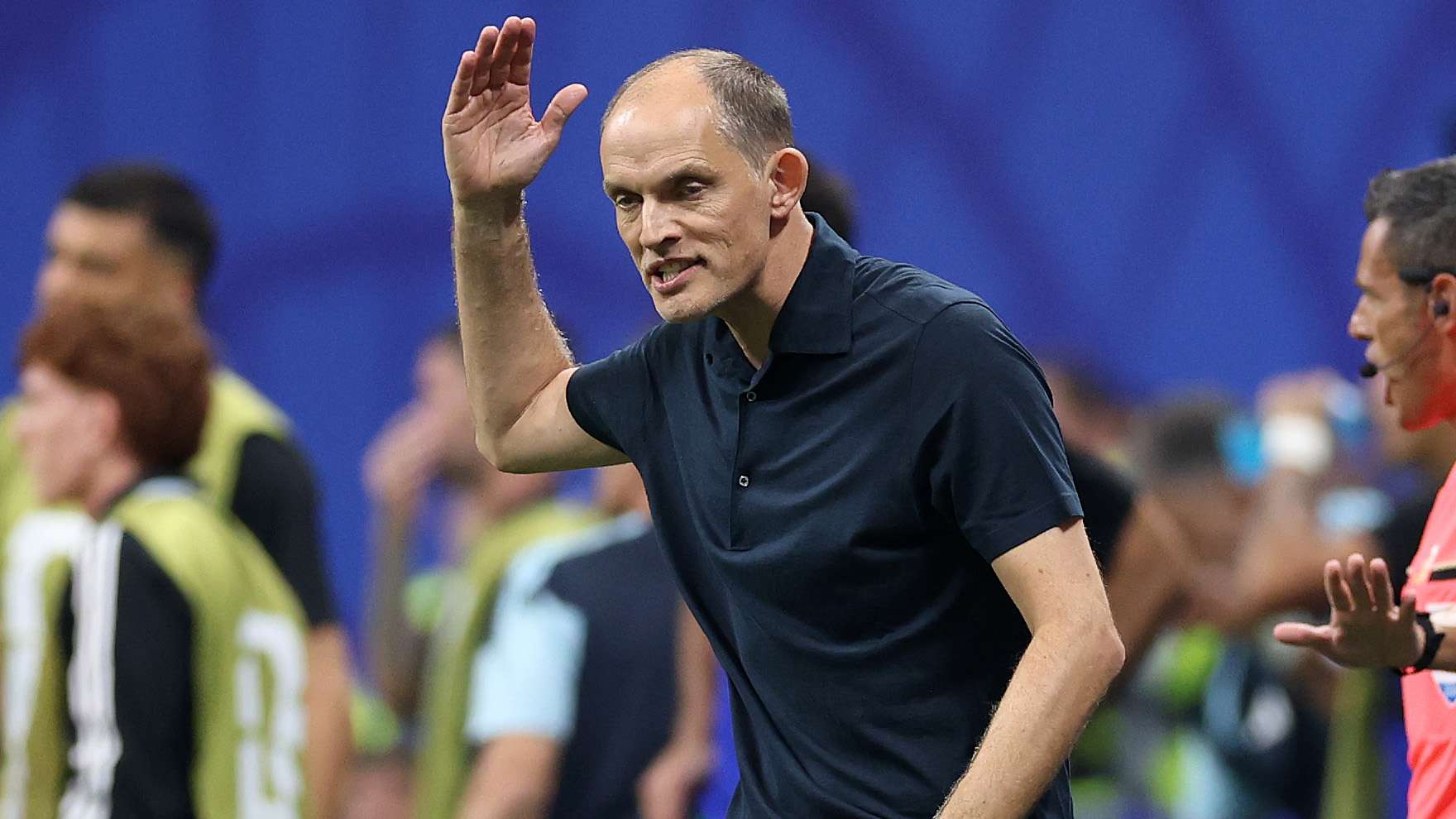
European football insiders note that Spain’s player development continues to advance. Young talents are increasingly comfortable under pressure, their decision-making and technical ability improving year after year. Few nations can produce players like these, as Thomas Tuchel has observed — and Spain are now producing entire squads of them. They’ve just dominated the Under-19 Euros. As one observer quipped, Tuchel would love to be bored like this.
Looking ahead, Spain’s opponents in the final, Argentina, present a fascinating contrast. Lionel Scaloni’s side have also revived their traditional “la nuestra” ethos — a style built around quick, short passing. The question is whether Scaloni will meet Spain on those terms or adopt a more pragmatic, defensive approach that his team have mastered.
Spain, for their part, have the tools to frustrate the world champions while adding their own layers of complexity. Their style gives them the best chance of success, though it guarantees nothing. For all their technical mastery, gaps remain — and to triumph, Spain will need to show not just precision, but courage. In the end, every great idea needs form, and there is no stage grander than the World Cup.