The political repercussions of Argentina’s thrilling 2-1 win over England have extended far beyond the football pitch, reaching the corridors of global diplomacy. As FIFA deliberates on possible disciplinary action concerning a controversial banner, the White House has taken the unusual step of defending Argentina’s players on the grounds of free expression. The incident has revived long-standing tensions between London and Buenos Aires during the world’s largest football event.
White House Cites Free Speech Protections
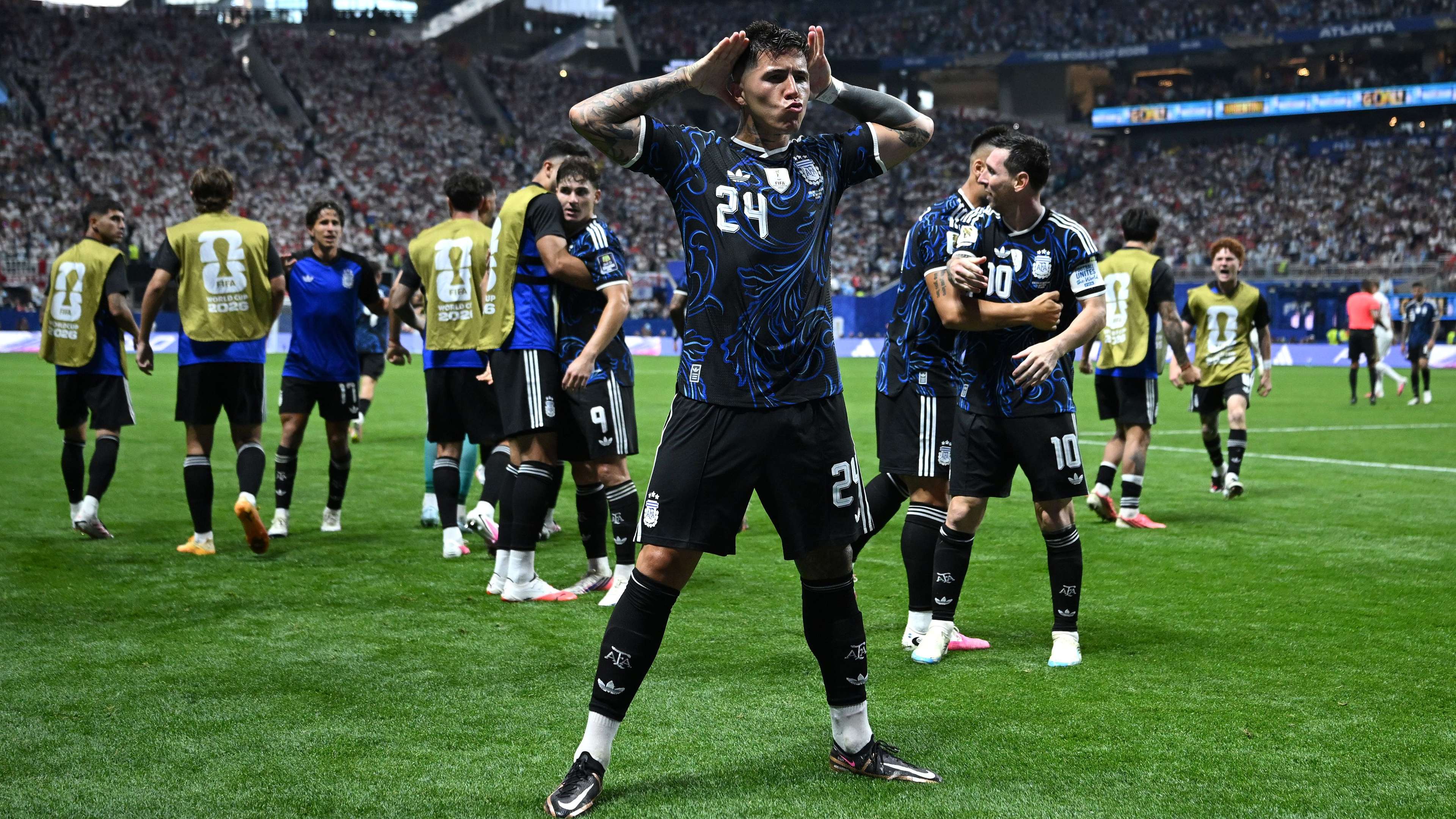
In an unexpected turn, the White House has come forward to support the Argentinian national team’s right to display a banner asserting sovereignty over the Falkland Islands. The controversy began when players unveiled a sign stating, “Las Malvinas son Argentinas” — meaning “The Falklands are Argentine” — during celebrations following their World Cup semi-final victory over England last Wednesday. The gesture has placed the U.S. administration at odds with British officials, who have urged FIFA to conduct a detailed inquiry.
Andrew Giuliani, who leads the White House’s FIFA task force, spoke to reporters on Friday, emphasising that the United States would not penalise such expressions. When asked whether the players had acted improperly, Giuliani replied, “We believe in our First Amendment rights here in the United States of America.” He added that the Argentinian squad had both the “opportunity and the right” to express themselves while competing on U.S. soil, referencing the constitutional protection of free speech.
FIFA Mulls Possible Sanctions
Despite the backing from Washington, Argentina’s football federation still faces potential disciplinary proceedings from FIFA. The governing body enforces strict rules prohibiting political, religious, or personal statements during official matches, and the display of the banner is widely regarded as a breach of these codes. These regulations are intended to ensure that football remains focused on the sport itself, rather than being used as a platform for political or territorial messaging.
Downing Street Responds Firmly
The British government has reacted sharply to the incident, supporting calls for FIFA to fully investigate. A spokesperson for the Prime Minister reaffirmed the United Kingdom’s unwavering stance on the Falklands’ sovereignty, noting that the islands remain a British overseas territory. The Downing Street representative stated, “The World Cup might not be ours, but the Falkland Islands definitely are. Our commitment to the Falklands will never waver.”
Business Secretary Peter Kyle echoed this sentiment, urging FIFA to take the lead in addressing what he described as a deliberate provocation. Number 10 clarified that any disciplinary measures against Argentine players would be “a matter for FIFA,” but confirmed that the government fully supports an investigation into what it characterised as an unnecessary politicisation of sport. The UK government also reiterated that the 2013 referendum — in which 99.8% of Falkland Islanders voted to remain part of the United Kingdom — had conclusively resolved the question of self-determination.
Falkland Islanders Call for an End to 'Political Football'
The Falkland Islands government expressed exasperation at the recurring use of the islands as a political tool in football-related controversies. In a formal statement, it said the community was “disappointed but not surprised” by the banner’s appearance. The statement added, “We do not wish to see politics brought into sport. Nor do we wish the Islands and their people to be used as a political football in every discussion about England and Argentina.”
The situation was further inflamed by remarks from Argentine Vice-President Victoria Villarruel, who publicly praised the players after the match. In a post on X, she declared, “It wasn’t just another match,” accompanied by a video of Argentine soldiers. She added, “The Falklands are Argentine. They banned bringing them to the stadium and forgot that we carry them in our blood and our hearts.”