When referee Slavko Vincic blew the final whistle at the World Cup on Sunday evening, it did more than just mark the end of one of the most disappointing finals in recent memory. It symbolised the conclusion of a tournament that not only met but, in many ways, amplified the pre-existing concerns that surrounded it long before the first ball was kicked.
Although the competition offered a few memorable moments on the pitch, these were heavily overshadowed by the negative narratives that dominated the event. From corruption allegations to questionable decision-making, this edition of the World Cup may have steered football down an unsettling path.
While it might feel unfair to dampen Spain’s celebrations so soon after their triumph, the controversies emerging from this World Cup are far too significant to be overlooked.
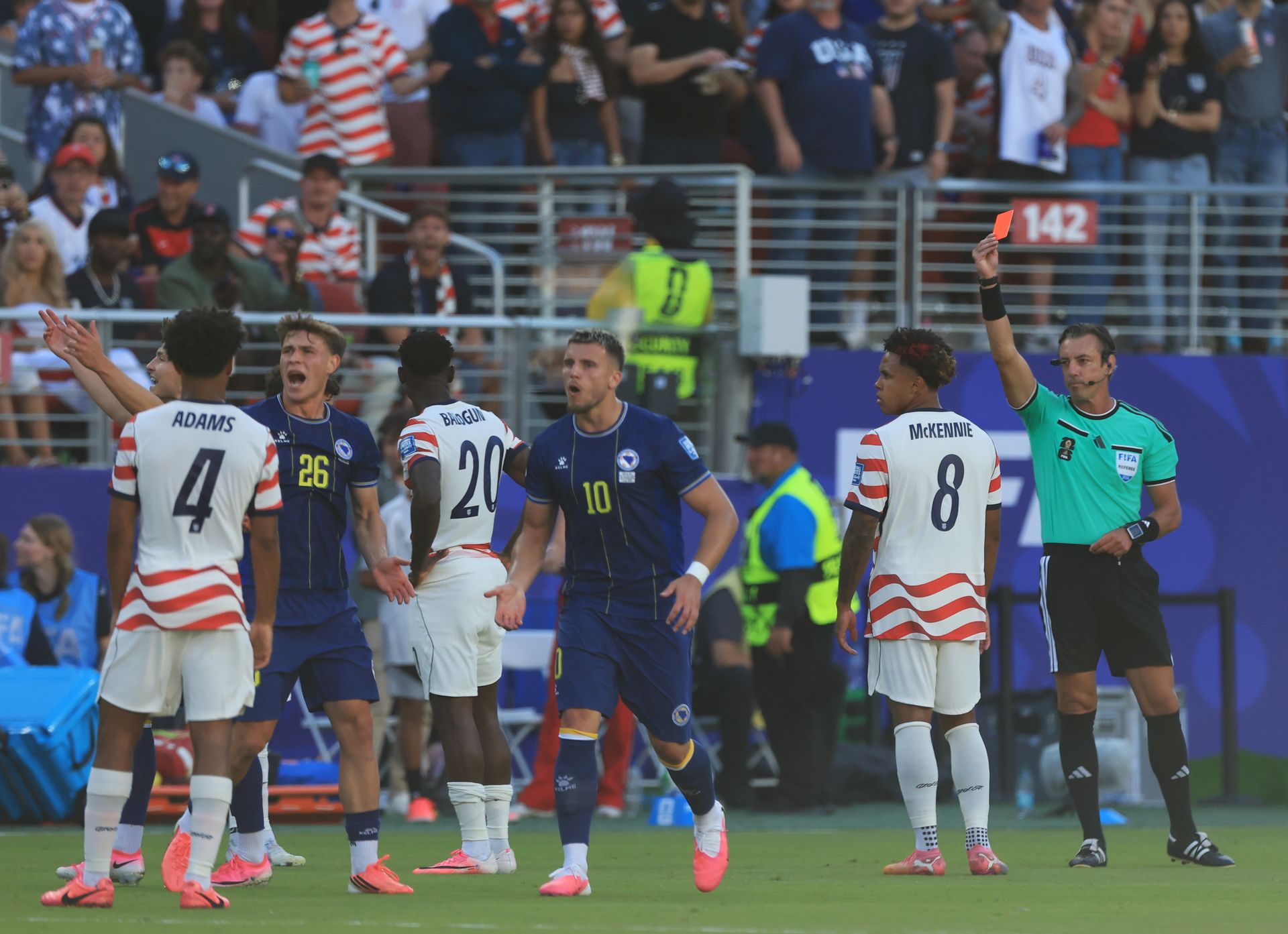
At the forefront of these controversies was the apparent influence of external political powers, most notably U.S. President Donald Trump, who allegedly convinced FIFA to overturn Folarin Balogun’s suspension. This move blatantly contradicted established football regulations and exposed the increasingly troubling nature of FIFA’s governance.
This intervention not only cast FIFA in a negative light but also dragged the U.S. Men’s National Team and Balogun into an unwanted scandal. The goodwill they had earned through solid performances was quickly lost. Their heavy defeat to Belgium was viewed by many neutrals as poetic justice, but the deeper issue remains unresolved. FIFA and its president, Gianni Infantino, have yet to properly address concerns surrounding what many consider one of the most disheartening moments in modern World Cup history.
Sadly, this came as no shock. From the outset, Infantino appeared unable—or unwilling—to exert meaningful control over the tournament he was meant to oversee.
Somali referee Omar Artan should have been heading home with pride after fulfilling his duties on football’s grandest stage. Instead, he was humiliated, denied entry for questionable reasons, and forced to watch from afar. He was not alone in facing difficulties. Fans saw their visas revoked at the last minute, the Iranian team had to vacate American venues immediately after matches and relocate to Mexico, and countless supporters drained their savings to afford exorbitant ticket costs.
When questioned about these issues, Infantino’s dismissive response—telling critics to “relax and chill”—did little to restore confidence. As the tournament progressed, he made no visible effort to address these concerns, leaving many to question his leadership.
If these problems are brushed aside, it sets a dangerous precedent. Infantino already enjoys the support of over 200 FIFA members ahead of the upcoming presidential election in March, a clear indication that the organisation is content to overlook such failings. Any hope for internal reform appears naïve at this stage, highlighting the urgent need for external accountability since internal checks seem unlikely to ever materialise.
Beyond these governance failures, the tournament suffered from a series of poor structural decisions. The expanded team format provided initial excitement but soon became tiresome, with fans growing weary of the endless fixtures by the closing stages. Yet, FIFA’s leadership appears intent on pushing forward with even larger formats, proposing a 64-team World Cup in the near future—an idea that prioritises profit over the sport’s integrity.
Equally baffling was the choice of MetLife Stadium for the final over iconic venues like the Azteca Stadium or Sofi Stadium. The New York/New Jersey arena lacks the footballing heritage and aura that Mexico City’s Azteca commands, making the decision feel like a neglect of football tradition.
The spectacle inside the stadium did little to redeem the event. The half-time show, widely criticised and even branded “crap” by Wayne Rooney, was a low point that many fans hope never to see replicated at a World Cup final.
Following the match, Donald Trump hinted at bidding for future hosting rights, declaring, “we will be requesting it again immediately.” Given FIFA’s recent trends, it is not difficult to imagine a future where such a request is granted, with mainstream pop acts like Shakira and Justin Bieber becoming as closely associated with World Cup finals as football legends like Diego Maradona and Marco Tardelli—a prospect that no longer seems far-fetched.
The absurdity began even before kick-off, with actor Tom Cruise declaring that football “brought the world together.” In truth, this was one of the most divisive World Cups ever staged—alienating fans, dividing supporters by wealth and access, and exposing blatant inconsistencies in treatment and policy.
This is not what a World Cup should represent. The world’s greatest sporting event should unite and inspire, not alienate and frustrate. Instead, what we witnessed was a hollow spectacle—rife with theatrics, diluted quality, and a governing body that repeatedly demonstrates its failure to understand what football truly stands for. The sport deserves far better, but given the current trajectory, the future looks increasingly bleak.