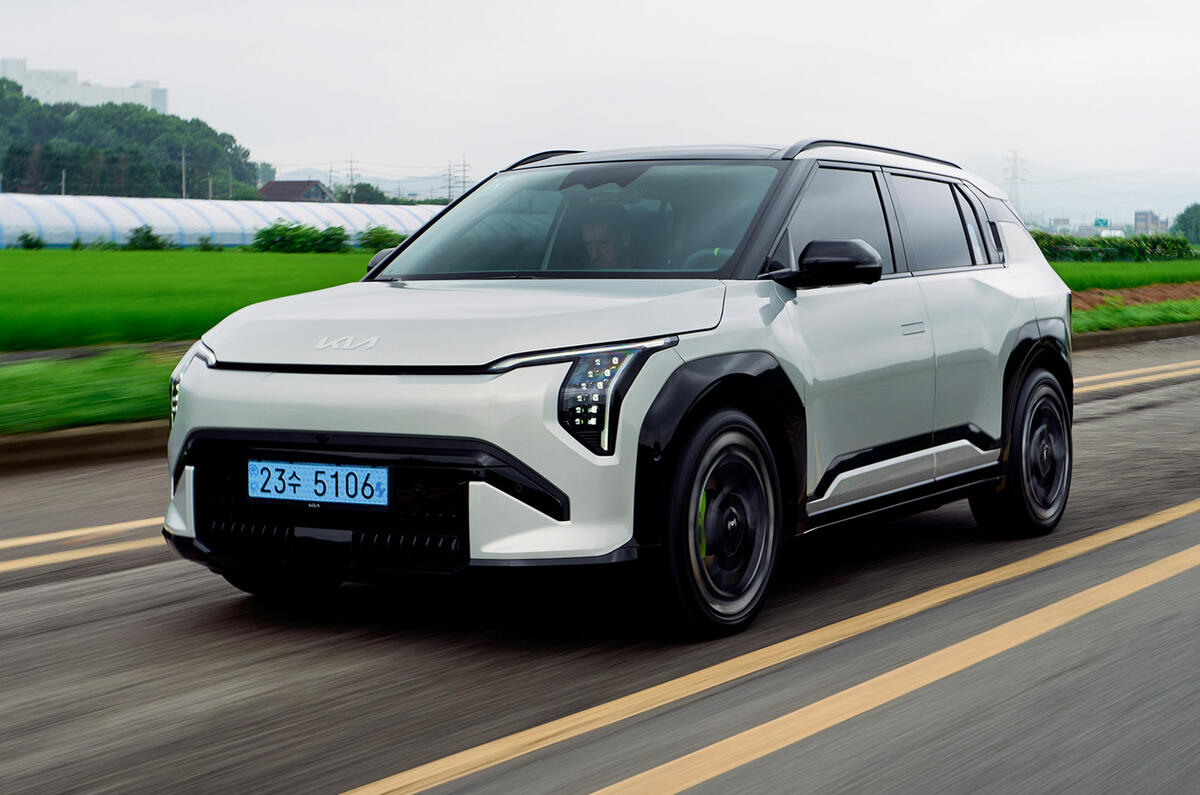
The Kia EV3 GT marks a significant step forward for Kia’s performance-focused GT sub-brand.
Until now, the GT range has been limited to high-end models such as the EV6 GT and the large EV9 GT. Both serve as halo products but are rarely seen on roads due to their price tags. By introducing the GT badge to the smaller EV3, Kia brings its performance division into the sub-£50,000 segment, making this the most accessible and potentially most important GT model yet.
Beyond the eye-catching acid-green highlights, restyled bumpers, side skirts, and Pirelli P Zero tyres, the EV3 GT has plenty of substance beneath its exterior upgrades. It draws power from the same 81.4kWh battery pack used in the EV3 Long Range, offering a claimed range of 311 miles and a peak charging speed of 128kW. The electric setup includes a front motor producing 194bhp—precisely 100bhp more than the rear motor—resulting in a combined output of 288bhp.
This powertrain propels the EV3 GT from 0–62mph in just 5.7 seconds, despite its hefty kerb weight of over 2,010kg.
When it comes to driving character, Kia’s approach with its GT models is more restrained than the aggressive tuning of Hyundai’s N performance cars. Kia aims to deliver approachable, everyday performance EVs that offer more excitement than the standard cars without compromising comfort or usability.
A short drive around Kia’s Namyang R&D centre highlighted this philosophy. The three-mode adaptive dampers and the car’s substantial feel make it more grand tourer than hot hatch in spirit. Those expecting an electric equivalent of the Toyota GR Yaris may find it too relaxed, but that doesn’t mean it lacks appeal. Steering is precise, body control is tidy, and cabin ergonomics are excellent. However, due to its powertrain layout, the EV3 GT feels more like a front-driven hot hatch, unlike Kia’s larger, rear-biased GT models. The rear motor mainly helps balance handling rather than enabling playful oversteer.
There’s no mechanical differential lock at the front; instead, the EV3 GT relies on a torque-vectoring system that uses both braking and regenerative force to aid cornering. Traction remains strong, and during testing in Korea, there was no sign of wheel hop or torque steer. However, during tighter corners, the torque-vectoring setup can feel a bit coarse when pushed hard.
The EV3 GT is best enjoyed on flowing roads, maintaining momentum through sweeping bends. The model tested in Korea was not the final European specification. European versions will receive updates for a more engaging steering feel and revised damper settings for firmer body control and livelier responses.
Even without those tweaks, the EV3 GT remains enjoyable, if somewhat one-dimensional. It delivers brisk performance in a calm, composed manner rather than being overtly thrilling.
One standout feature is the Virtual Gear Shift (VGS) system, designed to simulate a six-speed dual-clutch transmission. It can be activated through the touchscreen—though there was slight lag in the test car—and automatically engages when GT mode is selected. The system mimics the revs of a turbocharged four-cylinder engine, complete with artificial gear changes.
While initially entertaining, the VGS shines during relaxed driving in automatic mode, where it adds a natural rhythm to acceleration and deceleration. Though purely synthetic, it complements the EV3 GT’s easygoing personality and lends a unique charm to the experience.
The EV3 GT will compete with a diverse range of electric performance crossovers and hatches, including the Mini Countryman JCW Electric, Skoda Elroq vRS, Volkswagen ID3 GTX, Abarth 600e, Cupra Born VZ, and the upcoming Alpine A290. While it’s not the most powerful, striking, or affordable among them, its balanced performance and clever VGS system make it an intriguing all-rounder. If Kia’s goal was to create a more versatile and engaging evolution of the EV3, it appears to have succeeded.
Kia EV3 GT – Verdict: A well-balanced and capable addition to the electric hot hatch segment, though it may not deliver the high-intensity thrills of traditional performance models.
| Price | £48,500 (estimated) |
| Engine | Two permanent magnet synchronous motors |
| Power | 288 bhp |
| Torque | 345 lb ft |
| Gearbox | Single-speed reduction gear, 4WD |
| Kerb weight | 2010 kg |
| 0–62 mph | 5.7 seconds |
| Top speed | 105 mph |
| Battery | 81.4 / 78.9 kWh (total/estimated usable) |
| Range, efficiency | 311 miles, 3.9 mpkWh (estimated) |
| CO₂ emissions, tax band | 0 g/km, 4% |
| Main rivals | Skoda Elroq vRS, Cupra Born VZ |