An “objection” preserved the reigning world champion’s dignity against Egypt.
The 2026 World Cup may be over, but the heartbreak still lingers for Egyptian supporters. The tournament delivered unforgettable moments that reshaped Egypt’s football narrative and crushed their dreams of international glory.
Leandro Paredes has now turned one of those painful memories into a personal symbol. The Argentine midfielder has immortalised that defining instant with a painting displayed in his home—an emblem of a tournament where Argentina’s journey ended in the final loss to Spain.
A historic tribute to the Argentine star
Argentina fell to Spain in the final, narrowly defeated by a Ferran Torres strike. Yet, the Albiceleste squad returned home with their heads held high, proud to have defended their title all the way to the deciding match.
Upon returning, Paredes received a touching surprise from his family, who chose to honour him in a special way. His wife, Camila Galante, revealed a painting through personal photographs that captured Leandro’s most memorable moments from the tournament.
The artwork depicts the defining scene where Omar Marmoush was denied the chance to rewrite Egyptian football history in the Round of 16. With the match tied 2-2 deep into stoppage time, Marmoush launched a blistering counterattack that could have propelled Egypt into their first-ever World Cup quarter-final.
Paredes stood as the last line of defence. With a perfectly timed tackle, he stopped Marmoush in his tracks—a moment many described as the “turning point” of the match. That interception flipped what looked like a certain Egyptian goal into a lightning-fast Argentine counter, ending with Enzo Fernández scoring the winner that sent Argentina through and left Egypt heartbroken.
A defensive masterpiece that saved the champions
Paredes’ intervention did not go unnoticed. Global analysts hailed it as a masterclass in defensive awareness. “The Athletic” went as far as to call it the most iconic defensive moment of the entire competition, labelling it an act of pure brilliance.
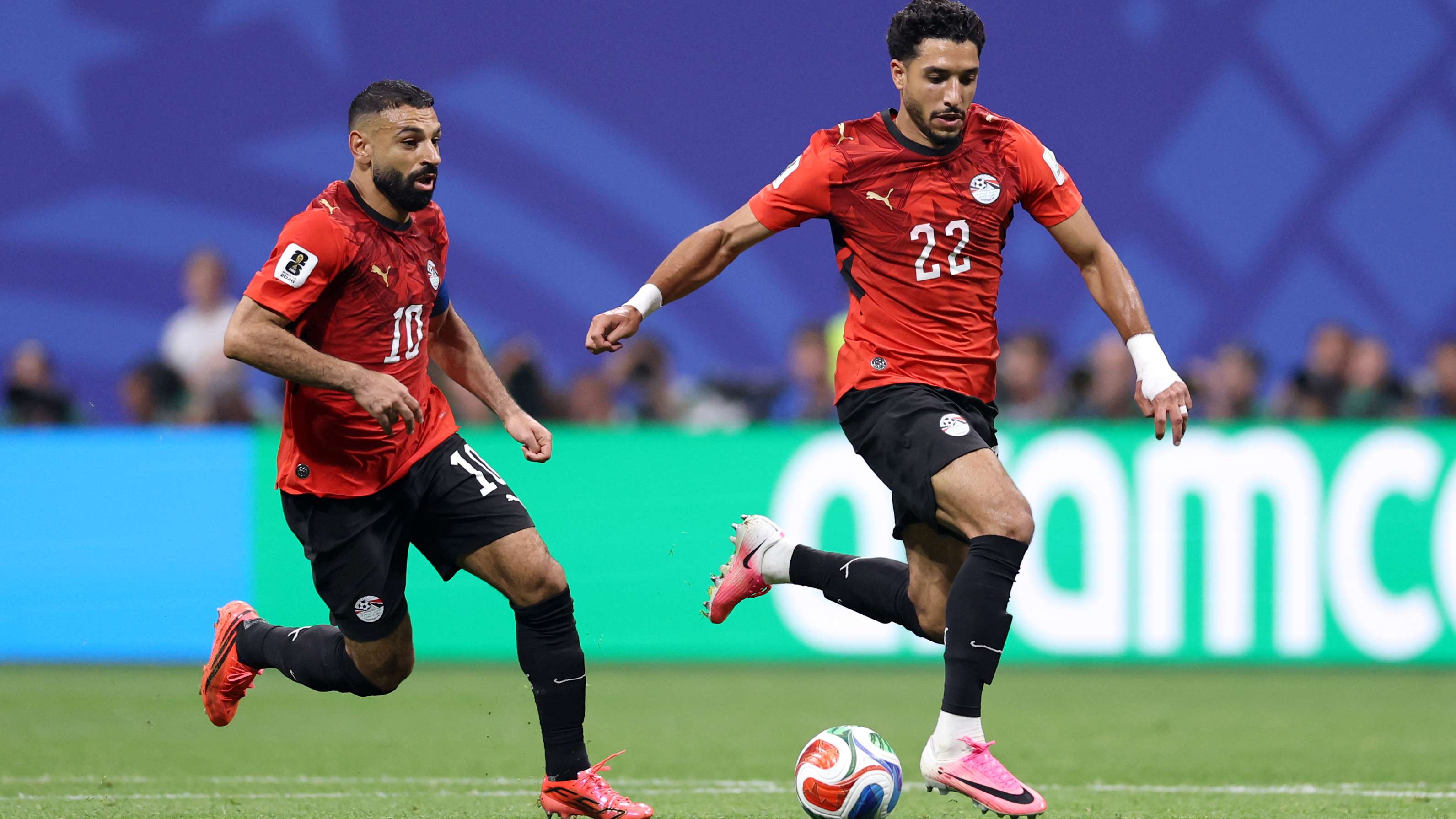
The outlet detailed how Paredes faced a desperate three-on-one against Mohamed Salah, Omar Marmoush, and Mahmoud Hassan “Trezeguet”. With calm composure, he read Salah’s intended pass towards Trezeguet and executed a flawless interception at the critical moment.
Such technical precision fills Paredes with immense pride. In Argentina, many fans regard that tackle as the “defensive miracle” that prolonged their title defence right up to their eventual showdown with Spain.
Now displayed in his home, the painting immortalises the episode that crushed Egypt’s hopes of a historic quarter-final berth—a feat that would have been one of African football’s greatest achievements—while preserving Argentina’s dream for just a little longer.
A controversial ending to a remarkable campaign
Despite his defensive heroics, controversy surrounded the end of Paredes’s World Cup journey. Following the final defeat to Spain, tensions flared as he became embroiled in a heated verbal and physical altercation with young Spanish star Gavi.
The incident drew harsh criticism from several football legends, including Zlatan Ibrahimovic, who condemned Paredes’s behaviour as “unprofessional.” Refusing to apologise, Paredes instead expressed immense pride in his contributions, declaring his gratitude for being part of what he called “the greatest generation in Argentina’s history.”
Initial reports claimed that Paredes had received a red card for his post-match actions, but FIFA later removed it from his official record. Investigations into the incident are still ongoing, with the episode sparking widespread debate across global football circles.
Egypt’s lasting pain—and Marmoush’s burden
For Egyptians, the image captured in that painting is a painful reminder of what might have been—a missed opportunity that could have rewritten the story of African football. For Paredes, it is a symbol of tactical discipline and leadership under pressure. Hanging proudly in his home, the artwork stands as a timeless reminder that football’s greatest heroes are forged in its smallest moments.
Every victory comes at someone else’s cost. In this case, that cost was borne by Omar Marmoush, who became a target of disappointment among Egyptian fans once the tournament ended. Across Egypt’s 120 million population, the consensus was harsh: Marmoush had been a “ghost” during the World Cup, failing to showcase the technical brilliance that once made him one of Egypt’s most prominent exports.
Had one decisive pass, one break through Argentina’s defence, or one dramatic finish gone differently, Marmoush could have been immortalised as a national hero—his name etched forever in Egyptian football folklore.