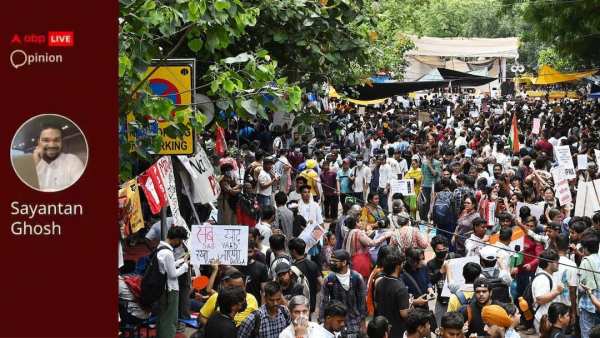
India's education system stands at a critical crossroads. The NEET-UG 2026 paper leak scandal, which led to the cancellation of an exam taken by over 2.2 million aspirants, has ignited widespread outrage and sustained protests. What began as demands for accountability over repeated irregularities has evolved into a broader youth movement against systemic failures. At least 12 students died by suicide amid the uncertainty, highlighting the human cost of a broken examination apparatus plagued by over 152 major leaks since 2014, affecting millions. Youth-led groups like the Cockroach Janta Party, alongside activist Sonam Wangchuk's prolonged hunger strike, have kept the issue alive at Jantar Mantar.
The escalation during a march toward Parliament, marked by alleged police brutality including lathi charges, tear gas, and physical assaults on women protesters, has drawn national attention and opposition support. The Bharatiya Janata Party (BJP)-led government faces sharp criticism for its initial silence and perceived reluctance to accept ministerial responsibility. This crisis transcends one exam; it questions the political establishment's commitment to India's vast youth demographic. As protests intensify, they signal a potential shift: youth will no longer tolerate being sidelined in a democracy where their futures—and votes—matter profoundly. The coming months will test whether parties respond with reforms or risk alienating a generation.
The NEET-UG 2026 scandal exposed deep flaws in India's examination system. The exam, held on May 3 for over 2.2 million aspirants, faced cancellation on May 12 due to a confirmed paper leak involving overlaps with a circulated "guess paper," particularly in coaching hubs like Sikar, Rajasthan. This led to arrests and a CBI probe. A re-exam occurred on June 21, with results declared on July 16. Youth-led groups, including the Cockroach Janta Party (CJP), organized sustained protests at Jantar Mantar in Delhi, demanding Education Minister Dharmendra Pradhan's resignation and systemic reforms.
Activist Sonam Wangchuk's hunger strike, lasting over 25 days, amplified calls for accountability. These actions highlight frustration among students who invest years and significant family resources in preparation, only to face uncertainty and repeated irregularities. The protests gained momentum as the parliamentary session began, with students marching toward Parliament. This shift underscores a broader youth awakening.
India's young population, often sidelined in policy priorities, is now organizing and demanding change, signaling that traditional vote-bank politics may no longer suffice. Opposition parties, including Congress and Aam Aadmi Party, supported the protests, reflecting resonance across families affected by exam chaos.
The Delhi Police's response to the parliament march escalated tensions dramatically. Reports describe ruthless actions: male officers beating women protesters, slaps, lathi charges with nails, tear gas, and pellet guns. This crackdown, one of the most severe against youth demonstrators in recent years, has shocked public conscience and galvanized further support. The Bharatiya Janata Party (BJP) government attempted to discredit protesters by labeling them "anti-national," a tactic that has proven ineffective here and historically backfired.
Instead of quelling anger, police actions have strengthened resolve, drawing more participants and nationwide attention. CJP called for further protests, rejecting certain government talk offers and insisting on accountability. Such state response raises serious questions about handling dissent. Youth protests, rooted in legitimate grievances over education integrity, deserve dialogue, not suppression. Brutality risks alienating an entire generation, pushing them toward sustained activism.
Paper leaks represent a systemic crisis. Reports indicate 152 major leaks since 2014, impacting around 7.5 crore students, with NEET repeatedly affected. The government admitted a "breach in the command chain" in the 2026 case, yet convictions remain rare and reforms lag.
Students face years of preparation, lakhs in coaching fees, mental health strain, and suicides linked to uncertainty. At least 12 NEET aspirants died by suicide between the May cancellation and June re-exam, with families citing stress and dashed hopes. The BJP-led NDA, holding a historic mandate and governing most states, has not prioritized decisive action like the Education Minister's resignation or immediate structural fixes.
Pradhan's responses have been criticized as inadequate or poetic deflections. Contrast this with West Bengal: The 2016-2021 SSC teacher recruitment scam led to the Supreme Court invalidating appointments, affecting thousands. Accountability issues contributed to Trinamool Congress's (TMC) defeat in the 2026 assembly elections.
Ignoring youth anger and corruption carries electoral costs, a lesson the BJP must heed amid its strong position. The NDA's refusal to negotiate until parliamentary pressure mounted questions its commitment to education as a priority. Fast-track courts announced by PM Modi are a step, but broader reforms—secure digital systems, frequent testing options, and reduced coaching dependency—remain pending.
Neither the ruling BJP nor opposition Congress has centered youth issues like secure exams, unemployment, coaching costs, and mental health. Rahul Gandhi and Congress highlighted leaks and campaigned from Kota, but structural fixes lag. When in power or influence, parties like TMC in West Bengal faced similar scrutiny over delayed responses to scandals (e.g., RG Kar case).
Opposition support for protests is welcome, but questions persist: What concrete actions did parties take during their tenures to prevent leaks? Vote-bank politics often trumps overhaul. AAP and others joined calls, but systemic change requires cross-party commitment beyond optics. Youth are informed and organized; parties ignoring them risk long-term erosion of trust.
CJP protests and Wangchuk's stand demonstrate today's youth refuse sidelining. They are digitally savvy, coordinated, and vocal on governance failures. Mainstream parties must adapt or face a generational shift in political allegiance. Education must become a core agenda—transparent testing, mental health support, skill-based alternatives to reduce exam pressure. The BJP, with its mandate, can lead reforms: Strengthen NTA, enforce accountability (including ministerial responsibility), and address suicides through counseling.
Opposition must move beyond disruption to collaborative solutions. Ignoring youth is no longer viable in a democracy where they form a massive voting bloc and societal force. This moment signals the end of youth-ignoring politics. Protests from hunger strikes to clashes reflect deeper demands for fairness. India's future depends on listening to its young citizens, turning anger into actionable policy for equitable education and opportunity.
[Disclaimer: The opinions, beliefs, and views expressed by the various authors and forum participants on this website are personal and do not reflect the opinions, beliefs, and views of ABP News Network Pvt Ltd.]