Experts have raised doubts over FIFA’s assertion that World Cup 2026 went through without any ‘suspicious betting activity’ or signs of match-fixing linked to any of the tournament’s 104 matches in June and July.
The governing body’s Integrity Task Force made its findings public on Tuesday, hailing a clean tournament with no questionable gambling concerns.
However, contradictory findings from the Group of Copenhagen, an independent body associated with the Council of Europe and tasked with preventing match-fixing in sport, were reported by The Athletic on Wednesday.
The Group of Copenhagen report is expected to be published shortly, but sources told The Athletic that ‘potential irregularities’ were identified by its ‘integrity monitoring operation’ during the World Cup.
Altogether, seven yellow notices — cases that pointed to “several different indications of [betting] irregularities” — emerged from the monitoring process.
“The Group of Copenhagen’s notices can be explained by atypical behaviours such as changes in odds or hedging liquidities, there are many explanations that are not manipulations,” betting expert Christian Kalb told The Athletic.
“The major problem is when there may be a conflict of interest and potential inside information on those issues.
The best features, fun and footballing quizzes, straight to your inbox every week.
“When we speak of prediction markets, we can detect some unusual behaviours but we must be very careful as they can be used for hedging markets.”
The seven yellow notices reportedly included a market on whether Folarin Balogun would feature for the United States against Belgium after he was sent off against Bosnia and Herzegovina, with 14 other players sent off at the World Cup, and no similar markets were observed.
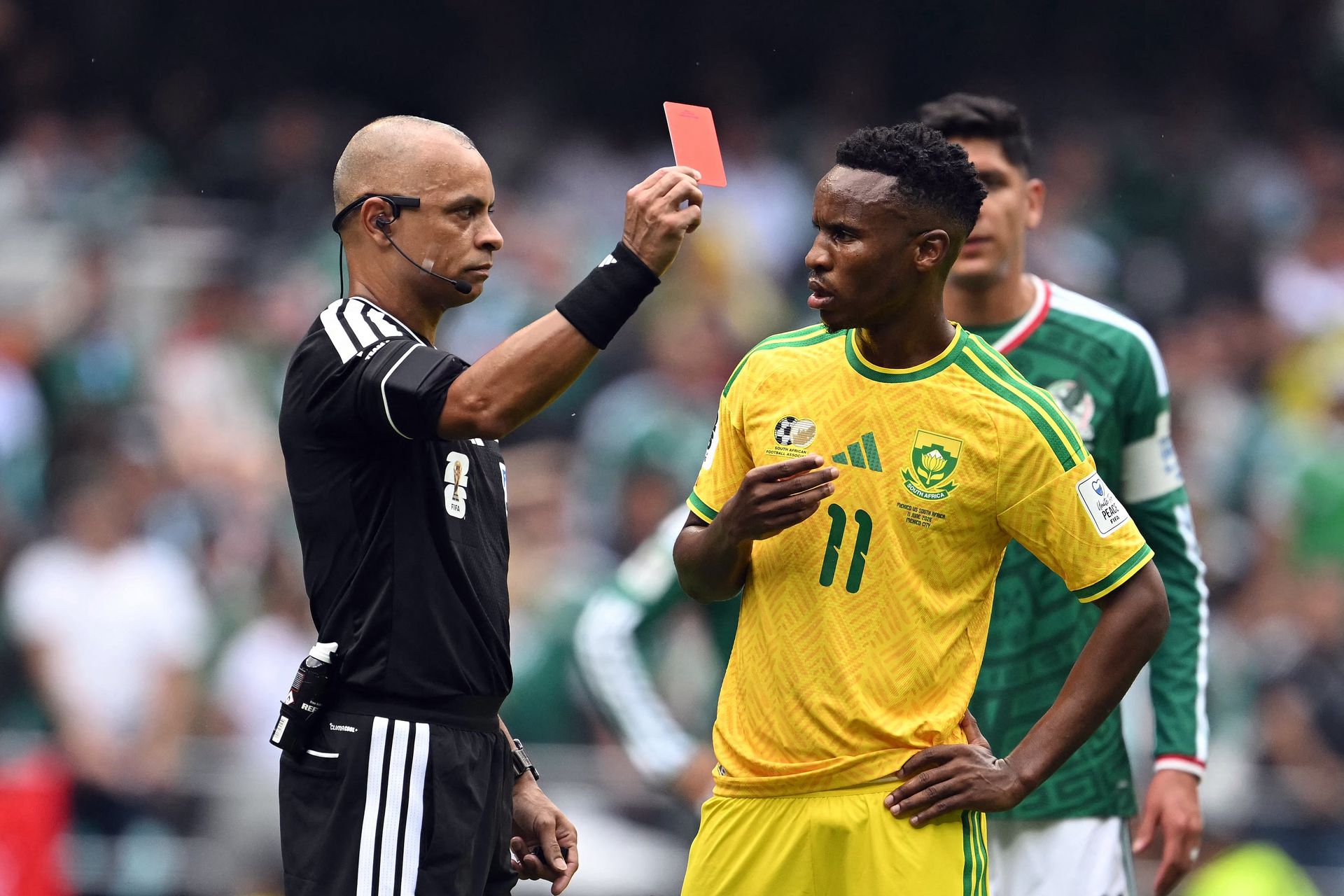
The Group of Copenhagen has also flagged Themba Zwane’s red card in South Africa’s opening match against co-hosts Mexico and the long VAR review that eventually ruled out Ferran Torres’ goal for Spain against Saudi Arabia in the group stage.
Polymarket, the cryptocurrency prediction market behind the flagged Balogun line, reportedly received more than £3.5 million in bets on Cape Verde beating or drawing with Spain in the group stage, a match that ended in a surprising 0-0 draw.
There is no direct claim that the seven notices show improper influence over matches, nor that the handful of matches ‘under increased surveillance’ in the final round of group-stage fixtures triggered alarm.
“The Group of Copenhagen estimates that $240bn was placed in bets across the World Cup, approximately twice the amount from the 2022 World Cup in Qatar,” reports The Athletic.
The rise in betting is explained partly by the expansion of the World Cup from 64 matches in 2022 to 104 matches in 2026, and such a huge total makes the possibility of irregularities almost inevitable by chance.
Even a total of flagged examples is close to normal for an event of this scale. On that basis alone, FIFA’s own claim that no suspicious betting patterns were seen is far from convincing.